Trump Issues Stern Warning to Iran Following Escalated Hostilities in Gulf Region
In a dramatic escalation of tensions, Iran has executed a series of coordinated attacks targeting Gulf Arab nations, including a significant drone assault on Saudi Arabia. These actions follow stern warnings from Iran's new supreme leader, Ayatollah Mojtaba Khamenei, who cautioned Gulf states against hosting American military installations. U.S. President Donald Trump responded with a vehement threat of major retaliation, amplifying the already volatile situation in the Middle East.
Iran's Aggressive Moves and Regional Fallout
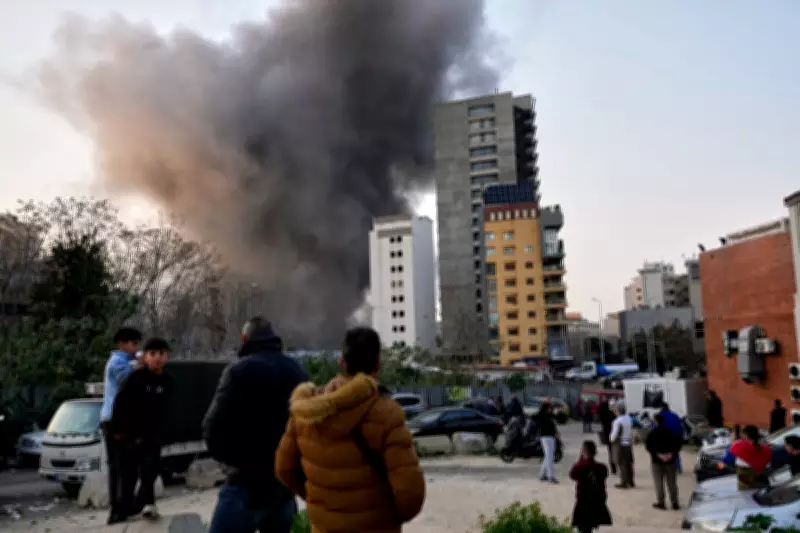
Early on Friday, Iran launched multiple attacks, with dozens of drones directed at Saudi Arabia. Sirens blared in Bahrain as warnings of incoming fire were issued, and black smoke engulfed an industrial area after debris from intercepted projectiles ignited a blaze. Saudi authorities reported downing nearly fifty drones throughout the morning hours, highlighting the intensity of the assault.
Simultaneously, Hezbollah claimed responsibility for rocket salvoes fired into northern Israel, resulting in nearly sixty minor injuries. In Lebanon, one person was killed in an Israeli strike in southwestern Beirut, and another attack left an apartment in the capital engulfed in flames. The Israeli army stated it was targeting a member of Iran-linked Hezbollah, underscoring the proxy dynamics at play.

Trump's Fiery Response and Economic Implications
President Trump took to social media to issue a stark warning, declaring, "Watch what happens to these deranged scumbags today." He boasted of decimating Iran's military capabilities, including its navy, air force, and missile systems, while claiming to have eliminated key leaders. Trump emphasized, "We are totally destroying the terrorist regime of Iran, militarily, economically, and otherwise," and framed his actions as a historic duty, stating, "They've been killing innocent people all over the world for 47 years, and now I, as the 47th President of the United States of America, am killing them."
The conflict has severely disrupted global oil markets, with Brent crude prices stubbornly exceeding $100 per barrel. Iran's blockade of the Strait of Hormuz, a critical waterway for a fifth of the world's oil transit, has driven prices up by approximately 40% since the war's inception on February 28. This stranglehold on shipping continues to threaten energy stability worldwide.
Casualties and International Incidents
The human toll of the conflict is mounting. Iranian authorities report over 1,300 fatalities, while Israel has confirmed twelve deaths. In Lebanon, more than 600 people have been killed, and nearly 800,000 are internally displaced, according to U.N. agencies. The U.S. military has suffered at least seven soldier deaths and eight severe injuries.
In Iraq, recovery efforts are underway after an American KC-135 refueling plane crashed, with five crew members on board; the cause remains unclear but is not attributed to hostile fire. This marks the fourth U.S. aircraft lost in operations against Iran. Additionally, a French soldier was killed in an attack in Iraq's Kurdish region, and six others were injured in a drone strike. British and Italian troops also faced incidents, with minor injuries reported among U.S. personnel and no casualties for Italy, respectively.
Supreme Leader's Defiant Stance
Ayatollah Khamenei, in his first public address since succeeding his father, who was killed at the war's onset, vowed to avenge Iranian deaths and warned Gulf nations that American protection is illusory. He affirmed Iran's commitment to blocking the Strait of Hormuz, exacerbating regional tensions and global economic concerns.
As the conflict intensifies, with the U.S. military striking over 6,000 targets including minelaying vessels, the situation remains highly unstable. The international community watches closely, with oil prices and regional security hanging in the balance amid these fierce exchanges.