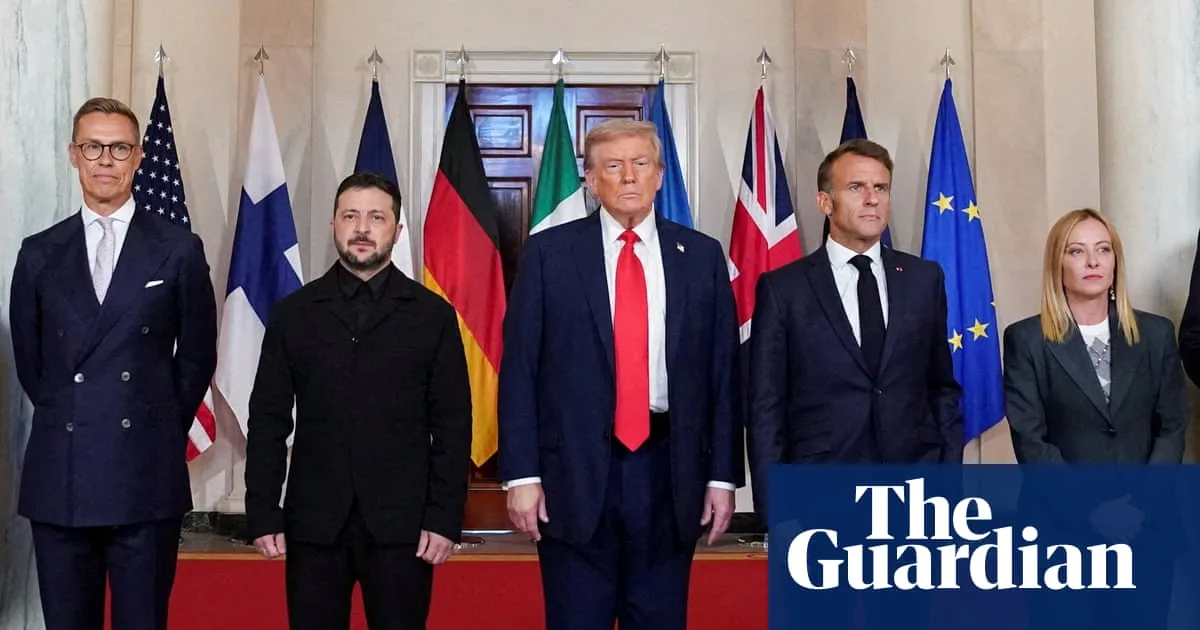
Trump's 'Civilisational Erasure' Warning to Europe Echoes Far-Right Conspiracy Theories
Trump Strategy Echoes Far-Right 'Great Replacement' Theory

A major US policy document, personally endorsed by Donald Trump, has sparked controversy by adopting rhetoric that closely mirrors far-right conspiracy theories about Europe's future. The strategy warns of the continent's potential "civilisational erasure" within two decades, blaming migration and EU integration.

A Roadmap Aligned with Nationalist Parties

The 33-page US National Security Strategy, released by the White House late on Thursday, is billed as a plan to keep America the "greatest and most successful nation." Its introduction is signed by the former president. The text makes Washington's support for Europe's nationalist parties explicit, arguing the US must "cultivate resistance" within European nations to their "current trajectory."

It claims Europe is in economic decline and faces deeper problems, including EU activities that "undermine political liberty and sovereignty," migration policies "transforming the continent," and the "loss of national identities." The document states that the "growing influence of patriotic European parties … gives cause for great optimism."

Endorsing the 'Great Replacement' Narrative

In language that has alarmed European allies, the strategy appears to espouse the racist "great replacement" conspiracy theory. It asserts it is "more than plausible" that within decades, some European NATO members "will become majority non-European," facing "the real and stark prospect of civilisational erasure."

"Should present trends continue, the continent will be unrecognisable in 20 years or less," the document claims. It argues Europe must "remain European" and "regain its civilisational self-confidence."

European Allies Reject 'Outside Advice'

The strategy's publication prompted a swift and firm rebuttal from key European figures. On Friday, Germany's Foreign Minister, Johann Wadephul, stated that while the US remains a vital security ally, "questions of freedom of expression or the organisation of our free societies" were a different matter.

"We see ourselves as being able to discuss and debate these matters entirely on our own in the future, and do not need outside advice," Wadephul declared, rejecting the American intervention.

The document also criticises Europe's stance on the war in Ukraine, accusing many on the continent of showing weakness towards Russia despite a "significant hard power advantage." It states a "core interest of the US" is to negotiate a quick end to hostilities, a position at odds with European officials with "unrealistic expectations."

This stance emerged hours after French President Emmanuel Macron reportedly warned Ukraine's Volodymyr Zelenskyy that the US could "betray Ukraine on territory." The strategy's thrust echoes a recent ideological attack on Europe by US Vice-President JD Vance at the Munich Security Conference.

The Trump administration has actively fostered ties with Europe's far-right, including Germany's Alternative für Deutschland (AfD), a senior member of which visited the White House in September. While acknowledging Europe's strategic importance to US prosperity, the document concludes Washington wants to "work with aligned countries that want to restore their former greatness."




