Trump Issues Stark Warning Over UK's China Trade Strategy
Former US President Donald Trump has delivered a blunt warning to the United Kingdom, describing its efforts to strengthen economic ties with China as "very dangerous." The comments came as Prime Minister Sir Keir Starmer concluded a historic three-day visit to Beijing, where he secured significant trade concessions and promoted what he termed a "more sophisticated" bilateral relationship.
Presidential Criticism Amid Diplomatic Mission
Speaking to reporters early on Friday, Mr Trump expressed strong disapproval of both British and Canadian approaches to Beijing. "Well, it's very dangerous for them to do that, and it's even more dangerous, I think, for Canada to get into business with China," he stated. The former president added that Canada was performing "poorly" economically and cautioned that "you can't look at China as the answer."
His remarks directly targeted Canadian Prime Minister Mark Carney, who visited China earlier in January to negotiate closer economic cooperation. During that visit, Ottawa and Beijing reached a preliminary agreement to reduce tariffs on selected goods. Mr Trump later threatened Canada with imposing 100 percent tariffs on its exports should it proceed with a formal free trade agreement with China, though Mr Carney has denied any such plans exist.

Starmer's 'Productive' Engagement with Xi Jinping
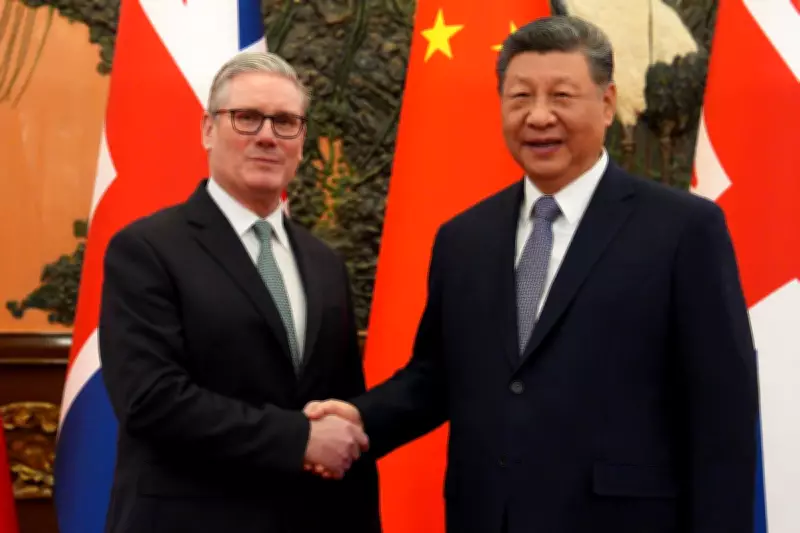
Meanwhile, Sir Keir Starmer met Chinese President Xi Jinping on Thursday during what Downing Street described as "productive" discussions. The Prime Minister emphasised the economic imperative of engaging with the world's second-largest economy, telling Bloomberg ahead of his trip: "I'm often invited to simply choose between countries. I don't do that."
He elaborated: "We've got very close relations with the US, of course we want to and we will maintain that business, alongside security and defence. Equally, just sticking your head in the sand and ignoring China when it's the second biggest economy in the world and there are business opportunities wouldn't be sensible."
Substantial Trade Agreements Announced
The visit yielded concrete outcomes, including:
- Tariff reductions: Chinese tariffs on Scotch whisky will be halved to 5 percent
- Visa liberalisation: UK citizens visiting China for fewer than 30 days will no longer require visas
- Major investment: AstraZeneca CEO Sir Pascal Soriot announced plans to invest 100 billion yuan (£10.4 billion) in China by 2030 to expand pharmaceutical manufacturing and research
Sir Keir addressed the UK-China Business Council in Beijing's Great Hall of the People, where he stressed the financial benefits of improved relations with a nation that represents a crucial component of global supply chains. Number 10 also indicated openness to a potential future UK visit by President Xi, whose last state visit to Britain occurred in October 2015.
Human Rights Discussions and Political Controversy
The Prime Minister's trip - the first by a British premier since 2018 - has not been without controversy. Sir Keir faced pressure to raise several sensitive issues with Chinese leadership, including:
- The imprisonment of Hong Kong pro-democracy campaigner Jimmy Lai
- The treatment of the Uyghur minority in Xinjiang
- Chinese sanctions against British MPs
- Beijing's purchase of Russian oil despite Western sanctions
According to the Prime Minister, he held a "respectful discussion" on these matters, describing such dialogue as "part and parcel of the reason to engage." Downing Street declined to provide specifics about the conversations but confirmed that the government's position calling for Mr Lai's immediate release remains unchanged.
Mr Lai's son has revealed that the 78-year-old British national has endured five years in solitary confinement under Hong Kong's national security law - treatment he describes as amounting to "torture."

Balancing Act Between Economic and Security Concerns
As Sir Keir prepared to travel from Beijing to Shanghai before departing for Tokyo to meet Japanese Prime Minister Sanae Takaichi, his approach represents a delicate balancing act. While pursuing economic opportunities with China, he must navigate complex geopolitical tensions and address human rights concerns, all while managing relationships with traditional allies like the United States.
The Prime Minister's political opponents have accused him of "kowtowing" to President Xi during the visit, highlighting the domestic political challenges of engaging with Beijing. Nevertheless, Sir Keir appears determined to pursue what he views as a pragmatic approach to UK-China relations, recognising both the economic opportunities and the need to address serious disagreements through diplomatic channels.