Trump's Cryptic Remarks on Greenland Acquisition Fuel International Concerns
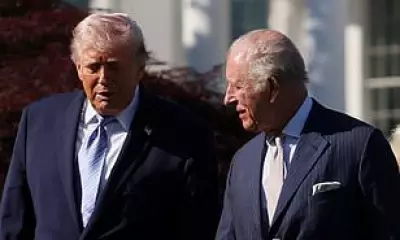
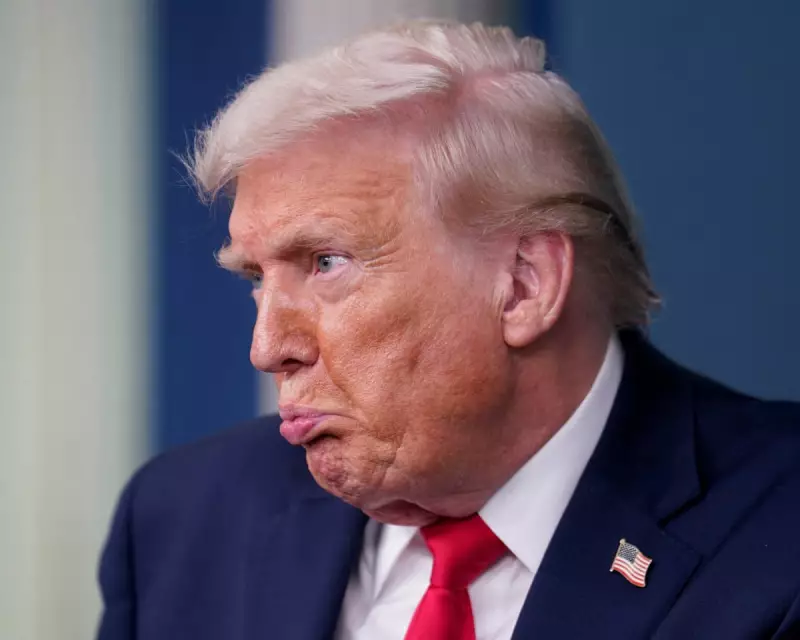
Former President Donald Trump has intensified global uncertainty regarding his ambitions to acquire Greenland while delivering pointed warnings about the NATO alliance's reliance on American power. During a lengthy White House press briefing on Tuesday, Trump offered characteristically vague responses when pressed about how far he would go to secure the Danish territory, simply stating "You'll find out" before moving to other questions.
NATO Stability Questioned Amid Greenland Pursuit
Trump notably declined to provide any reassurances about his commitment to NATO's stability, despite leaders within the transatlantic alliance seeking clarity following his threats to take over Greenland by force. The former president repeatedly asserted that he had done more for NATO than anyone else, suggesting this entitled him to significant influence over its future direction and territorial considerations.
When specifically asked whether dismantling NATO would be an acceptable price to pay for acquiring Greenland, Trump responded that whatever transpired would ultimately benefit the alliance. "I've made it so much better, so much stronger. It's so good now," he claimed. "Whether you like it or not, it's only as good as we are. If NATO doesn't have us, NATO is not very strong."

Diplomatic Fallout and Nobel Prize Controversy
The controversial remarks came just hours before Trump's scheduled departure for the World Economic Summit in Davos, Switzerland, where he was due to meet with global leaders. Earlier on Tuesday, Trump revealed on Truth Social that he had conducted a "good phone call" with NATO Secretary General Mark Rutte concerning Greenland, following his publication of a text from French President Emmanuel Macron requesting a meeting.
During the nearly two-hour briefing, Trump also promoted what the White House described as 365 achievements from the first year of his second term, while airing grievances about both the 2020 and 2024 elections. In a particularly striking moment, he explicitly stated that he deserved the Nobel Peace Prize, blaming the Norwegian government for his failure to receive the honour.
"Don't let anyone tell you that Norway doesn't control the shots, OK? It's in Norway. Norway controls the shots," Trump declared. "They say, 'We have nothing to do with it.' It's a joke. They've lost such prestige." Although the Nobel Peace Prize is awarded by an independent committee, Trump had previously connected his Greenland intentions to not receiving the award in a letter to Norwegian Prime Minister Jonas Gahr Støre.
Limited Options and Escalating Trade Tensions
Analysts suggest the Trump administration faces severely constrained options for acquiring Greenland, with possibilities limited to:
- Attempting to purchase the territory from Denmark
- Forcing a referendum on Danish governance
- Employing military force
The situation has already triggered significant diplomatic repercussions, with Trump threatening over the weekend to impose tariffs on European NATO members who oppose his Greenland ambitions. This move has provoked outrage from EU leaders and plunged trade relations between the United States and European Union into fresh chaos, compelling the bloc to consider retaliatory measures.
The escalating dispute has introduced new tensions within NATO, which has guaranteed Western security for decades. Meanwhile, the US Supreme Court is currently examining the legality of Trump's use of tariffs as leverage in foreign policy—a ruling that could substantially impact his ability to pressure Europe into supporting his Greenland objectives.
When questioned about potential adverse rulings from the justices, Trump indicated he would resort to "something else" but maintained that "what we're doing now is the best, the strongest, the fastest, the easiest, the least complicated." The combination of territorial ambitions, alliance warnings, and diplomatic friction continues to create substantial uncertainty in international relations.