Trump Threatens to Delay Beijing Visit Over Hormuz Security Demands
China has confirmed that diplomatic communication with the United States continues regarding Donald Trump's scheduled visit to Beijing, despite the US president suggesting he might postpone the trip if China fails to assist in securing the Strait of Hormuz. The vital trade route has become a flashpoint in the ongoing Middle East crisis.
Chinese foreign ministry spokesperson Lin Jian stated on Monday: "Head-of-state diplomacy plays an irreplaceable strategic guiding role in China-US relations. The two sides are maintaining communication regarding President Trump's visit to China." This comes after Trump hinted that his highly anticipated trip to Beijing this month could be suspended unless China responds to US requests for international assistance in protecting the strategic waterway.
Hormuz Blockade Creates Global Oil Crisis
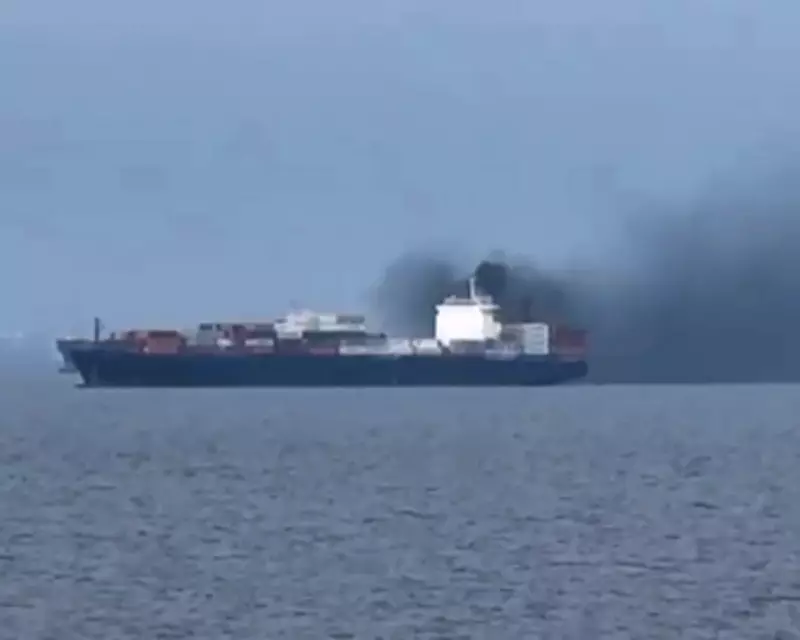
The Strait of Hormuz, through which approximately 20% of the world's oil passes, has been effectively closed by Iran in retaliation for US-Israeli airstrikes that killed Iran's supreme leader, Ali Khamenei. This blockade has created the largest oil supply disruption in history, sending global oil prices soaring and threatening international trade stability.
In an interview published by the Financial Times on Sunday, President Trump argued: "It's only appropriate that people who are the beneficiaries of the strait will help to make sure that nothing bad happens there. I think China should help too because China gets 90% of its oil from the straits." However, official data shows China actually imports about 50% of its crude oil through the Strait of Hormuz, not the 90% claimed by the US president.
Beijing's Cautious Response and Regional Diplomacy
China has declined to directly address Trump's weekend requests for other nations to deploy warships to help secure the vital shipping route. Instead, spokesperson Lin Jian called for an immediate ceasefire in Iran to "prevent further escalation of tensions, avoid turmoil in the region, and prevent greater impacts on global economic development."
Lin emphasized that China is "maintaining communication with all parties" about the volatile situation and remains committed to promoting "de-escalation and easing tensions." Beijing is reportedly engaged in discussions with Iranian authorities about allowing oil tankers to pass through from the Gulf, though no definitive agreement has been reached.
Upcoming Summit and Trade Negotiations
Trump is scheduled to travel to Beijing between March 31 and April 2 for meetings with Chinese President Xi Jinping. The two leaders previously met in South Korea last October, where they agreed to a temporary truce in the US-China trade war that had shaken the global economy throughout the previous year.
US Treasury Secretary Scott Bessent and Chinese Vice-Premier He Lifeng are concluding trade talks in Paris on Monday ahead of the planned Xi-Trump summit. These discussions have focused on potential agreements regarding agricultural and critical mineral trade, with Reuters reporting the negotiations have remained "remarkably stable" despite the chaotic international environment.
Chinese Media Reaction and Diplomatic Positioning
While China has not officially commented on how recent Middle East developments might affect the summit, nationalist commentators and state-aligned media have suggested the meeting could be reconsidered. Influential foreign affairs blog Niu Tanqin, which maintains ties to Chinese state media, claimed the "United States was actually begging China to help clean up the mess" created in Iran.
Nationalist commentator Ren Yi, whose views often align with Beijing's position, wrote on social media platform X: "The US openly tramples on international law, launching outrageous attacks against a sovereign state (which also happens to be China's friendly partner), drawing increasing condemnation and resistance from the international community. Under such circumstances, why expect China to 'roll out the red carpet' for Trump?"
A spokesperson for the Chinese embassy in Washington stated: "China will continue to strengthen communication with relevant parties, including parties to the conflict, and play a constructive role for de-escalation and restoration of peace." The face-to-face meeting between the two leaders is widely viewed as crucial for restoring stability between the world's two largest economies, even as geopolitical tensions complicate the diplomatic landscape.