In a significant development amid escalating tensions, US President Donald Trump has signalled his intention to engage in talks with Iran, even as the United States dispatches additional naval assets to the region. The geopolitical landscape further intensified as the European Union formally designated Iran's Islamic Revolutionary Guard Corps (IRGC) as a terrorist organisation, a move vehemently condemned by Tehran.
Trump's Ambiguous Stance on Dialogue and Military Posturing
Speaking to reporters, President Trump confirmed plans for potential discussions with Iranian officials, though he provided scant details regarding the timing, nature, or participants of such dialogue. "I am planning on it, yeah," Trump stated when questioned about the prospect of talks with Tehran.
Concurrently, the President underscored the ongoing military build-up, remarking, "We have a lot of very big, very powerful ships sailing to Iran right now, and it would be great if we didn't have to use them." This statement aligns with Pentagon chief Pete Hegseth's assurance that the US military stands ready to execute any decision made by the Commander-in-Chief.

EU's Landmark Terror Designation Draws Iranian Fury
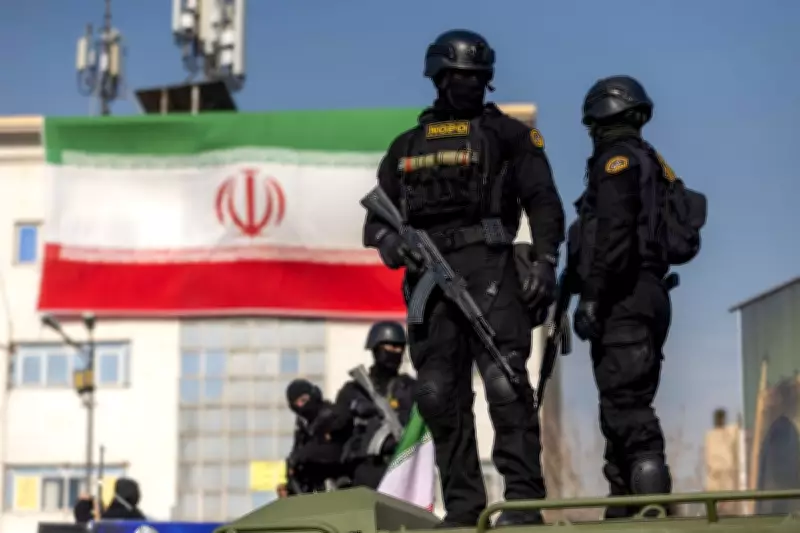
The European Union's decision to list the IRGC as a terrorist entity represents a major diplomatic escalation. EU foreign policy chief Kaja Kallas announced that foreign ministers across the 27-nation bloc unanimously agreed to the designation, placing the Iranian force "on the same footing" as groups like al-Qaida and ISIS.
Iran's foreign ministry swiftly denounced the move as "illegal and unjustified," warning that labelling a state's official military institution as terrorist constitutes a dangerous precedent. Iranian Foreign Minister Abbas Araghchi dismissed it as a "PR stunt," suggesting Europe could face repercussions, including potential surges in energy prices.
Stark Human Toll from Iran's Protest Crackdown
According to the US-based Human Rights Activists News Agency (HRANA), the violent suppression of recent anti-government protests in Iran has resulted in a devastating human cost. The group reports at least 6,479 fatalities, a figure that includes:
- Over 6,092 protesters
- 214 government-affiliated forces
- 118 children
- 55 non-protesting civilians
Additionally, more than 47,200 individuals have been arrested. HRANA verifies each case through an activist network on the ground, a methodology proven accurate during previous periods of unrest. In stark contrast, the Iranian government's official death toll stands at just 3,117, with authorities labelling many of the deceased as "terrorists." This disparity highlights a historical pattern of underreporting by Tehran's theocracy.
UK Political Pressure for IRGC Proscription
The EU's action has amplified calls within British politics for similar measures. The Conservative Party has urged the UK government to ban the IRGC, leveraging legislative powers announced last May by Foreign Secretary Yvette Cooper to proscribe state-backed groups deemed threatening.
Shadow Foreign Secretary Dame Priti Patel condemned the "brutality of the Iranian regime" as an "affront to humanity," criticising the Labour government's perceived silence on the issue. "Britain must stand up for the Iranian people and confront this vile regime with strength and resolve," Patel asserted.
Broader Regional and Immigration Implications
The crisis continues to ripple across international domains. Iran has issued warnings of upcoming military drills involving live firing in the strategically vital Strait of Hormuz, a chokepoint for approximately 20% of global oil shipments. Such exercises risk significant disruption to maritime traffic and energy markets.
Simultaneously, the United States has taken firm immigration stances, with Secretary of State Marco Rubio revoking US entry privileges for Iranian senior officials and their families. The State Department declared, "Those who profit from the Iranian regime's brutal oppression are not welcome to benefit from our immigration system." This follows the deportation of three individuals identified as former IRGC members.

As diplomatic manoeuvres, military posturing, and domestic crackdowns intersect, the situation remains highly volatile, with the potential for further escalation or, as President Trump hinted, an unexpected opening for dialogue.