Trump Excluded from Critical Iran Rescue Operation After Prolonged Outburst
A startling report has emerged detailing how former President Donald Trump was deliberately kept out of high-level Situation Room meetings during a critical rescue mission for downed American pilots in Iran. According to The Wall Street Journal, Trump's exclusion followed hours of him "screaming at aides" after learning two airmen were missing.
High-Stakes Mission Following F-15 Shootdown
The dramatic events unfolded on April 3, 2026, when an American F-15 fighter jet was shot down over Iranian territory. This incident immediately triggered a high-stakes rescue operation to locate and extract the two missing crew members. One pilot was swiftly recovered by U.S. forces after ejecting before the aircraft crashed, but the second crew member remained behind enemy lines for more than twenty-four harrowing hours before being safely extracted.
Back in Washington, D.C., President Trump's anxiety about the developing situation was reportedly "ramping up." The Journal cites a senior administration official who revealed that "Trump screamed at aides for hours" after being informed about the downed aircraft and missing personnel. Historical images of the 1979 Iranian hostage crisis—widely regarded as one of the most significant foreign policy failures of a modern presidency—were said to be "looming large in his mind" during this tense period.
Deliberate Exclusion from Situation Room Updates
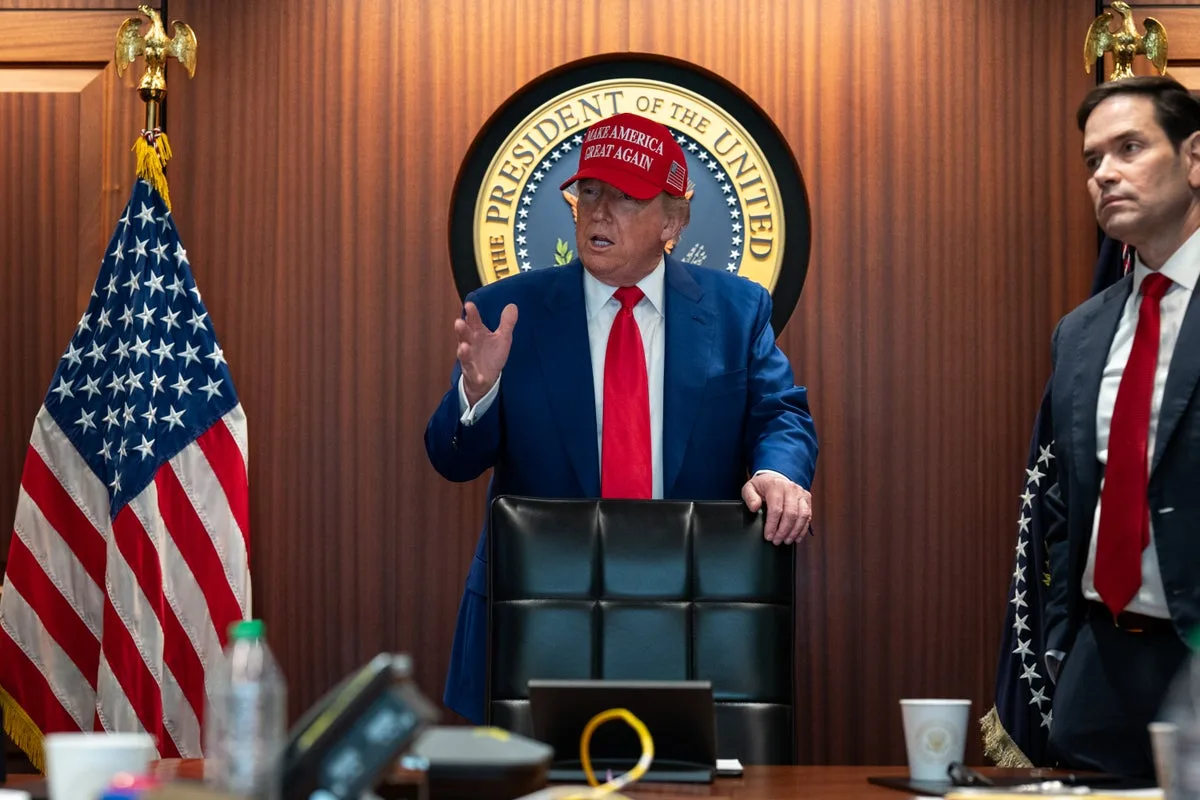
Over the subsequent twenty-four hours, Trump's most senior advisors and administration officials, including Vice President JD Vance and White House chief-of-staff Susie Wiles, convened in the Situation Room to receive minute-by-minute progress reports on the rescue mission. Notably, President Trump was not included in these critical briefings.
According to the WSJ report, citing a senior administration official, aides "kept the president out of the room as they got minute-by-minute updates because they believed his impatience wouldn't be helpful." Trump was instead updated "at meaningful moments" via telephone, a decision that highlights the extraordinary measures taken by his staff to manage the crisis response.
In response to these revelations, White House press secretary Karoline Leavitt provided a statement to The Journal, asserting that Trump had "remained a steady leader our country needs." She emphasized that "President Trump campaigned proudly on his promise to deny the Iranian regime the ability to develop a nuclear weapon, which is what this noble operation accomplishes."
Complex Rescue and Subsequent Controversial Communications
Following the recovery of the first airman on April 3, U.S. forces engaged in a desperate race against time to locate the second crew member before Iranian forces could capture him. The successful extraction on the evening of April 4 was reportedly made possible by crucial intelligence from the CIA, which alerted the Pentagon and White House to the airman's precise location in a mountain crevice.
A senior Trump administration official described the operation as the ultimate "needle in a haystack" scenario, praising the CIA's capabilities for locating "a brave American soul" in extremely hostile terrain. The CIA reportedly conducted a deception campaign, spreading false information that the airman had already been recovered to mislead Iranian pursuers.
After the mission's success, Trump took to Truth Social around midnight to boast about the operation, describing the rescued warrior as having been "behind enemy lines in the treacherous mountains of Iran, being hunted down by our enemies." He reportedly went to bed at 2 a.m. following this post.
The controversy deepened the next morning when Trump posted an expletive-laden message ordering Iran to "open the F***in' Strait, you crazy b*******, or you'll be living in Hell," concluding with the unusual phrase "Praise be to Allah." Three days later, on April 7, he escalated further, threatening that a "whole civilization will die tonight" unless Iran agreed to open the strategic waterway.
When questioned by an advisor about these unconventional communications, Trump reportedly explained that he personally conceived the idea to praise Allah in what he described as a deliberate attempt to appear "off-kilter and offensive"—a type of language he believed would resonate with and intimidate Iranian leadership. These comments prompted global alarm and concerned lawmakers to contact the White House to inquire about the president's state of mind, according to The Wall Street Journal's account.