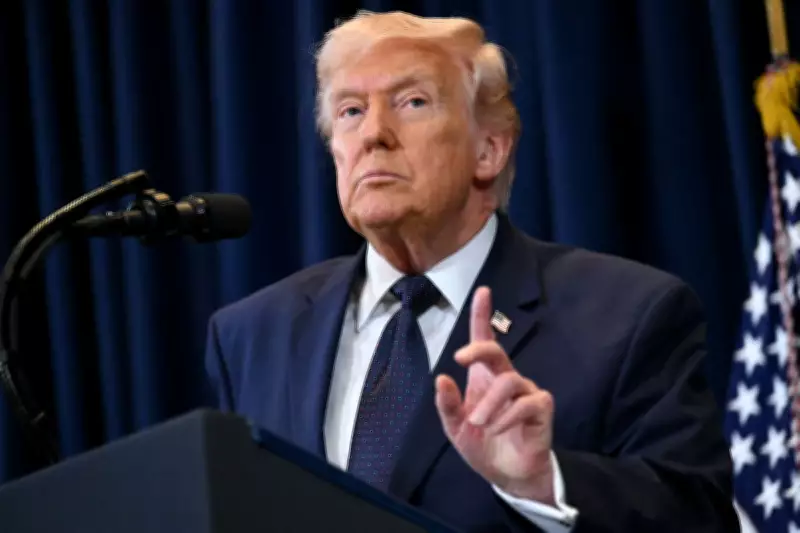
President Donald Trump has declared that the ongoing military campaign against Iran is rapidly approaching its conclusion, stating there is "practically nothing left to target" in the country. In a brief interview with Axios on Wednesday, the commander-in-chief asserted that the conflict, which involves joint US-Israeli operations against Tehran, will be over "soon" and emphasized his unilateral authority to terminate it at any moment.
Trump's Confident Assessment of Military Progress
The president provided a bullish update on the war's status, claiming operations are "going great" and exceeding initial expectations. "We are way ahead of the timetable," Trump told Axios. "We have done more damage than we thought possible, even in the original six-week period."
Justification for Continued Hostilities
Trump justified the sustained attacks by framing Iran as a regional menace that posed threats beyond Israel to other Gulf states. "They were after the rest of the Middle East," he stated. "They are paying for 47 years of death and destruction they caused. This is payback. They will not get off that easy."

Unilateral Authority to End the Conflict
A key point of Trump's remarks was his insistence on complete personal control over the war's duration. "Any time I want it to end, it will end," the president declared, reinforcing his position that the decision rests solely with him rather than through multilateral negotiations or external pressures.
Economic Impact of Ongoing Strait of Hormuz Clashes
The president's comments came as both sides continued to exchange hostilities in the strategically vital Strait of Hormuz, a critical maritime passage through which approximately one-fifth of the world's oil supply transits. These ongoing clashes have driven global oil prices significantly higher, creating economic ripple effects across international markets.
Trump's statements represent the latest development in a conflict that has seen escalating tensions between Western allies and Iran, with the president now positioning himself as both architect and potential terminator of military operations against Tehran.