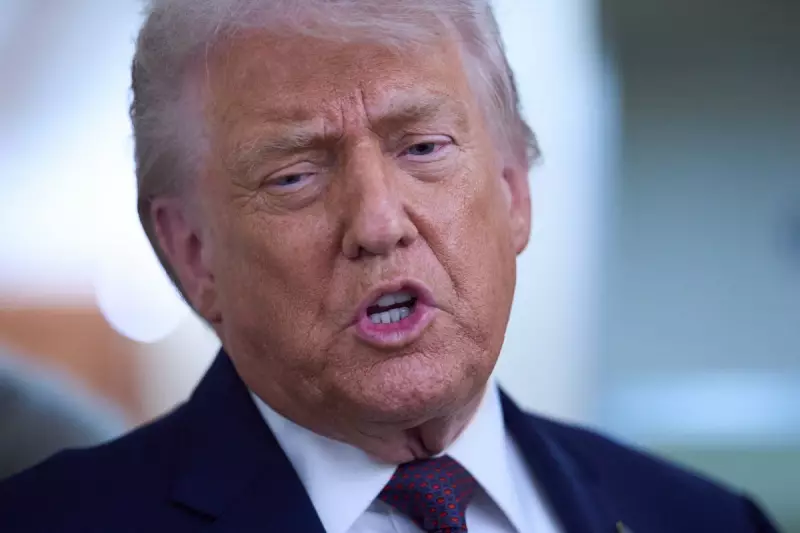
In a significant development amid escalating regional tensions, former US President Donald Trump has publicly claimed that Iran is actively seeking to negotiate a deal with the United States. This statement comes concurrently with the deployment of what Trump described as a 'massive' US naval force to the Middle East, raising concerns about potential military action.
Naval Deployment Coincides with Diplomatic Claims
The USS Abraham Lincoln aircraft carrier, accompanied by supporting warships, arrived in the Middle East region on Monday, marking a substantial increase in US military presence. This deployment has intensified fears that Washington might be considering a military strike against Iran, an option that Trump has consistently refused to rule out during his presidency.
Trump's Assertions on Iranian Intentions
Trump asserted that Iran has contacted the US 'on numerous occasions' to express a desire for dialogue and to reach a negotiated agreement. He touted this as evidence of Iran's readiness to engage, despite the backdrop of military buildup. A US official corroborated this stance, stating that the White House remains 'open for business' with Iran, provided that Tehran meets specific terms set by the US for engagement.

Context of Growing Tensions
The arrival of the US armada adds to the already volatile situation in the Middle East, where diplomatic relations have been strained. Analysts note that such military movements often signal a dual strategy of pressure and negotiation, aiming to leverage strength in talks. The timing of Trump's comments suggests an attempt to frame the deployment as a catalyst for diplomacy rather than aggression.
Observers are closely monitoring how Iran responds to these developments, as the interplay between military posturing and diplomatic overtures could define the next phase of US-Iran relations. The situation underscores the complex dynamics of international diplomacy in a region fraught with historical conflicts and strategic interests.