Hopes for a potential de-escalation in the ongoing Iran conflict have been cautiously raised following statements from U.S. President Donald Trump, who asserted that his administration is engaged in productive discussions with Tehran. However, these diplomatic overtures stand in stark contrast to the reality on the ground, where intense fighting shows no immediate signs of abatement, and Iranian officials have firmly denied any such talks are taking place.
Trump Extends Deadline Amid Claims of Dialogue
On Monday, President Trump announced an extension to his previously set deadline for Iran to reopen the critical Strait of Hormuz. The U.S. leader stated that American military strikes on Iranian power plants would be postponed for an additional five days. This grace period, according to Trump, is intended to allow U.S. envoys to continue discussions with what he described as a "respected" Iranian leader, suggesting a potential pathway toward winding down the hostilities.
Iranian Rejection and Market Reactions
In response, Iranian authorities dismissed Trump's claims, asserting that the American president had effectively backed down "following Iran's firm warning." This public rebuttal underscores the deep-seated tensions and conflicting narratives between the two nations.

The announcement triggered a wave of relief across global financial markets on Monday. Oil prices, which had suffered severe losses in the preceding days, experienced a notable easing. Since the conflict's inception, markets have endured vicious swings, both upward and downward, largely driven by profound uncertainty regarding the war's potential duration and economic impact.
Mounting Human Cost of the Conflict
The human toll of the war continues to climb alarmingly. Current casualty figures indicate more than 1,500 fatalities in Iran, over 1,000 in Lebanon, 15 in Israel, and 13 U.S. military personnel. Additionally, a significant number of civilians on land and at sea in the Gulf region have lost their lives. The conflict has also precipitated a severe humanitarian crisis, displacing millions of people across Lebanon and Iran.
Latest Escalation: Israeli Strikes Near Beirut
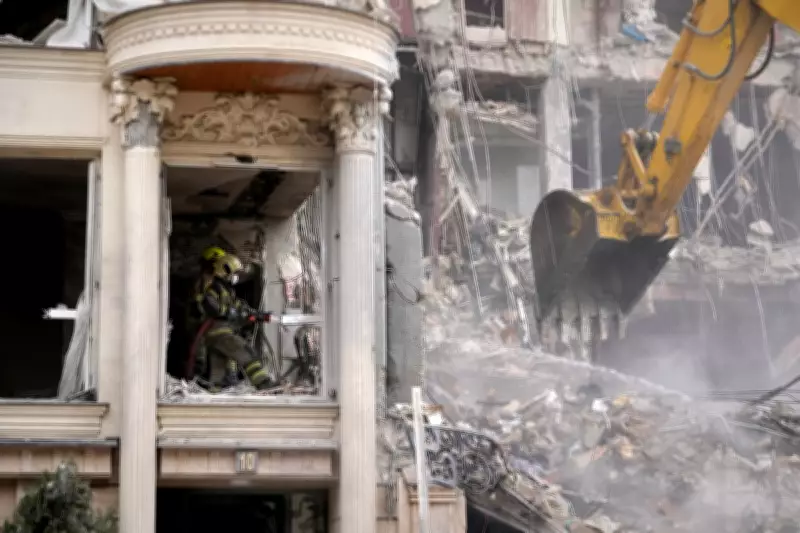
Early Tuesday, an Israeli airstrike targeted a residential apartment building in Bchamoun, approximately 10 kilometers (6 miles) southeast of Beirut. According to initial reports from the Lebanese Health Ministry, the attack killed at least two individuals and wounded five others.
The strike occurred without prior warning and hit an area located outside Beirut's southern suburbs. Notably, the Israeli military had previously issued evacuation notices for these southern suburbs, but the struck area was not included in those warnings.
Footage circulating on social media platforms showed at least one apartment within the building completely engulfed in flames, highlighting the attack's destructive force.
Additional Strikes in Southern Lebanon
Also in the early hours of Tuesday, Israeli forces conducted further strikes on several targets in southern Lebanon. One significant attack hit a gas station operated by the Amana company in Rashidieh, near the port city of Tyre. The assault sent a large plume of fire into the air, though there were no immediate reports of casualties from this specific incident.
Israel has repeatedly targeted Amana fuel stations since the conflict with Hezbollah reignited on March 2. Israeli authorities accuse these stations of being integral components of Hezbollah's "economic infrastructure," allegedly providing financial support that can be channeled into the group's military activities.
The juxtaposition of diplomatic claims from Washington and the relentless military actions on multiple fronts paints a complex and volatile picture. While President Trump's statements offer a glimmer of hope for a negotiated settlement, the continued violence and firm denials from Tehran suggest that a swift resolution to the Iran war remains elusive, with regional stability hanging in the balance.