Trump Enraged as Israeli Blitz on Iran's Oil Infrastructure Sends Shockwaves Through White House
Former President Donald Trump has been left furious after Israel launched a devastating strike targeting Iran's oil depots over the weekend, a move that has dramatically escalated tensions and sent global crude prices skyrocketing. The bold military action, which obliterated thirty Iranian fuel facilities, has sparked the first open disagreement between the United States and Israel since the onset of the conflict, leading to the abrupt cancellation of a planned high-level summit.
Apocalyptic Scenes and Soaring Prices Trigger White House Alarm
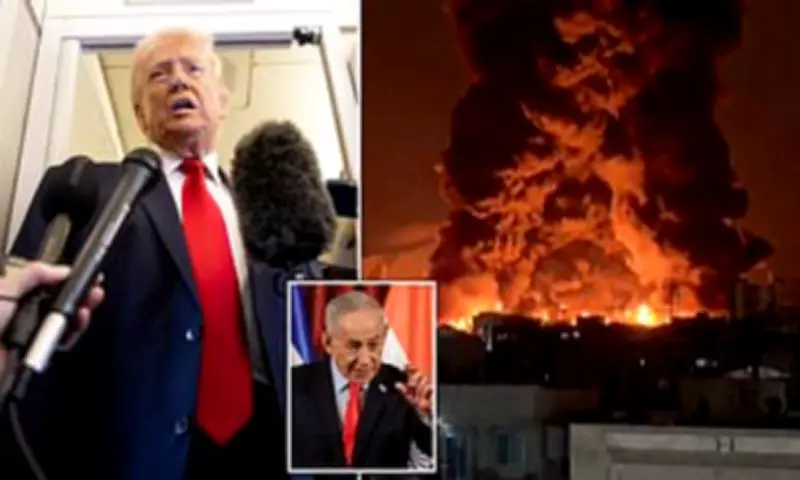
Apocalyptic imagery from the strikes showed ferocious fires leaping into the sky, accompanied by immense columns of smoke and a disturbing black oily rain falling over Tehran. White House officials were reportedly stunned by the sheer scale of Israel's bombardment. Their concern is acutely political: graphic visuals of burning oil reserves are feared to anger American citizens already grappling with rising gas prices, which have surged to an average of $3.4 per gallon from $2.9 before the war began.
'The president doesn't like the attack. He wants to save the oil. He doesn't want to burn it. And it reminds people of higher gas prices,' a Trump adviser revealed in comments to Axios, capturing the administration's frustration. The sentiment from the US was reportedly conveyed in stark terms to Israeli counterparts, with one official summarizing the message as: 'What the f***'.

Summit Scrapped and Poll Numbers Slump Amid Escalating Crisis
In a clear sign of the diplomatic fallout, the scheduled meeting between US and Israeli officials was scrapped on Monday. Trump's envoys, Jared Kushner and Steve Witkoff, canceled their trip to Israel for talks with Prime Minister Benjamin Netanyahu. Neither government provided an official reason for the cancellation, underscoring the rift.
The political repercussions for Trump are becoming evident. A new Daily Mail/J.L. Partners poll indicates the President's approval rating has dropped to 44 percent, a four-point decline since last week and the lowest recorded in the publication's tracking to date. This slump coincides with his advisers publicly warning Americans to brace for even higher gas prices, as public support for the war appears to be waning.
Global Energy Crisis Looms as Strategic Waterway Closed
The economic impact is severe and widening. Trump's two-week war with Iran initially drove oil prices to spike near $120 per barrel, though they later fell back to around $103 on Monday. The Wall Street Journal warns the conflict is on the verge of sparking one of the worst global energy crises since the 1970s.
A critical factor is Iran's retaliatory closure of the Strait of Hormuz, the narrow waterway connecting the Persian Gulf to the Gulf of Oman. This vital transit route handles over 20% of global oil supplies. Iran has sealed it through drone and missile attacks targeting US and Gulf allies since the war's inception, directly driving up oil prices worldwide.
In response, an emergency meeting of the G7 will be held to discuss crisis options, including the potential release of strategic oil reserves to help lower prices. The pressure campaign continues, with the US Navy reportedly attacking three Iranian vessels, believed to be oil tankers, in the Persian Gulf on Monday.
Human Cost and Strategic Justifications
Video footage emerged showing flames engulfing neighborhoods in Tehran as civilians fled for safety. The number of casualties from the Israeli operation remains unclear. The Israel Defense Forces justified the strikes by claiming the targeted fuel depots 'are used by the Iranian regime to supply fuel to different consumers including its military organs.'
Despite the escalation, Trump indicated that any decision to end the war would be made mutually with Netanyahu. 'I think it's mutual ... a little bit. We've been talking. I'll make a decision at the right time, but everything's going to be taken into account,' Trump told The Times of Israel, even as commentator Pete Hegseth guaranteed Tehran 'will surrender'.

As the conflict intensifies, more Americans are beginning to feel its cost in their daily lives. Higher fuel prices increase transportation costs, which can lead to inflated prices for everything from groceries to consumer goods, embedding the war's economic impact deeper into the domestic sphere.