Trump's Special Envoy Expresses Uncertainty Over Iran War Conclusion
President Donald Trump's special envoy to the Middle East has openly admitted he possesses no knowledge regarding how or when the ongoing war with Iran will conclude, directly contradicting the president's own assertions that the conflict is nearing completion. This revelation comes amidst escalating military actions, including the recent destruction of sixteen Iranian mine-laying ships by United States forces in the strategically vital Strait of Hormuz.
Conflicting Statements from the Administration
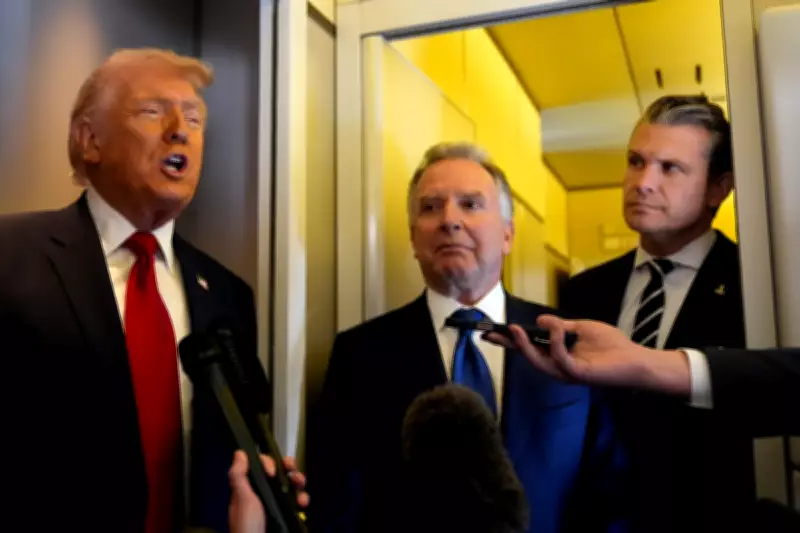
During a televised interview on CNBC's Squawk on the Street on Tuesday, special envoy Steve Witkoff was pressed by host Sara Eisen about the war's potential resolution. When questioned on how he envisions the conflict ending, Witkoff responded bluntly, "I don't know, Sara." He emphasised that President Trump is "the wrong guy to go up against" and reiterated the administration's red line that Iran cannot obtain a nuclear weapon, despite Iranian claims to the contrary.
This statement starkly contrasts with President Trump's own comments made just one day prior, where he told CBS News the war was "very complete, pretty much." The inconsistency within the administration's messaging was further highlighted when the Defense Department's social media account posted a message stating "We Have Only Just Begun to Fight," seemingly undermining the president's declaration of near-victory.

Military Actions and Diplomatic Tensions
The war, which has resulted in significant casualties including at least 1,230 Iranian lives and seven U.S. service members according to Associated Press reports, appears far from over. U.S. Central Command confirmed the destruction of the Iranian vessels in the Strait of Hormuz, a critical global oil transit route, signalling a significant escalation. In response, President Trump issued a severe warning on Truth Social, threatening "military consequences at a level never seen before" if Iran does not remove any mines placed in the strait.
Meanwhile, Secretary of Defense Pete Hegseth refused to provide any timeline for the conflict's conclusion during a press briefing, stating the U.S. would end the war "on our timeline" and "at our choosing." He clarified that ultimately, President Trump alone will determine when the objectives are met, describing the commander-in-chief as the one controlling the throttle.
Background and Justifications
The conflict was initiated through a joint attack by President Trump and Israeli Prime Minister Benjamin Netanyahu, occurring while Witkoff and Jared Kushner were engaged in negotiations with Iranian officials concerning its nuclear programme. The administration has justified the military action by insisting Iran was on the verge of developing a nuclear weapon, a claim that contradicts President Trump's previous assertion that his airstrikes had "completely obliterated" Iran's nuclear capabilities last year.
Iranian officials have responded with defiance. Secretary Ali Larijani of Iran's Supreme National Security Council issued a thinly veiled threat, warning Trump that "the sacrificial nation of Iran doesn't fear your empty threats" and cautioning him to be careful not to get eliminated himself. This exchange underscores the deep diplomatic rift and the potential for further escalation, as neither side shows signs of backing down despite the human cost and geopolitical instability.