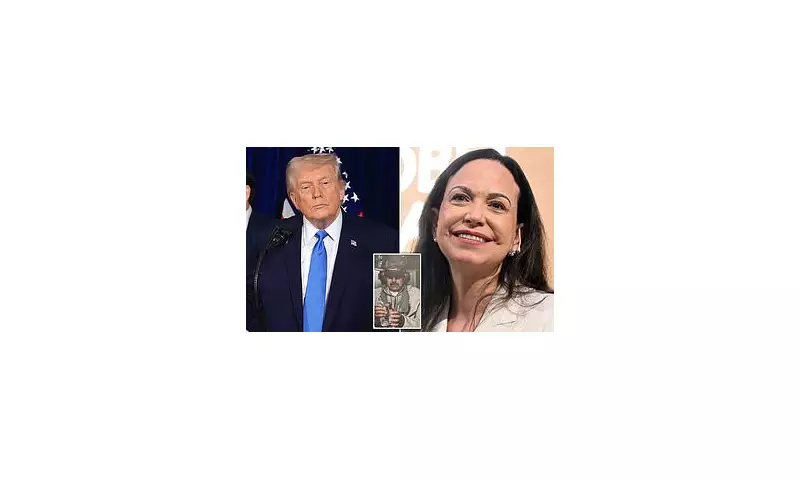
In a dramatic twist following the military capture of Venezuelan dictator Nicolás Maduro, US President Donald Trump has publicly dismissed the prospect of collaborating with the country's leading opposition figure, Maria Corina Machado. Trump claimed the Nobel Peace Prize laureate lacks the necessary domestic support to lead, sparking immediate backlash from her supporters.
A Swift Capture and a Political Snub
The extraordinary sequence of events began in the early hours of Saturday morning, when elite US Delta Force troops seized Maduro and his wife, Cilia Flores, from Caracas. The couple were subsequently transported, via a stop in Puerto Rico's Aguadilla municipality and the USS Iwo Jima, to New York to face drug trafficking charges. They landed at Stewart Air National Guard Base and are expected to be held at Brooklyn's Metropolitan Detention Center.
However, the geopolitical shockwaves intensified when President Trump, speaking from Mar-a-Lago, turned his attention to Venezuela's political future. He pointedly rejected opposition leader Maria Corina Machado, who last year beat him to the Nobel Peace Prize and dedicated her win to him. "She doesn't have the support within or the respect within the country," Trump told reporters, adding he had not been in contact with her.

Machado's Support and Trump's Unilateral Move
Trump's comments starkly contradict Machado's visible popularity among Venezuelan voters and her immediate endorsement of the US action. Shortly after Maduro's "shock abduction", she hailed it as "the hour of freedom" for her people in a post on X. She has also been a vocal supporter of US efforts to combat alleged drug trafficking from Venezuela.
Her backers were quick to defend her. Venezuelan businessman Pedro Burelli asserted on X that Machado is "the most respected politician in the country." Meanwhile, Trump's attempt to install Maduro's Vice President, Delcy Rodriguez, as the new leader failed after she refused to comply, stating Maduro remained the legitimate president.
An Uncertain Future Under US Administration
Faced with this impasse, President Trump declared that the United States would now govern Venezuela indefinitely. "We're going to run the country until such time as we can do a safe, proper and judicious transition," he stated. While offering few logistical details on administering a nation of 30 million people, he suggested Venezuela's vast oil reserves would be tapped to fund its revival.
The President also revealed he had not briefed Congress on the plans to capture Maduro, fearing leaks that could have allowed the Venezuelan leader to escape. The operation was launched amid Trump's accusations that Venezuela, under Maduro's alleged leadership of the "Cartel de los Soles," has been flooding the US with drugs and gang members. As Maduro awaits trial, the path forward for Venezuela appears firmly, and controversially, under American control.