Trump Voices Displeasure with UK Over Strait of Hormuz Strategy
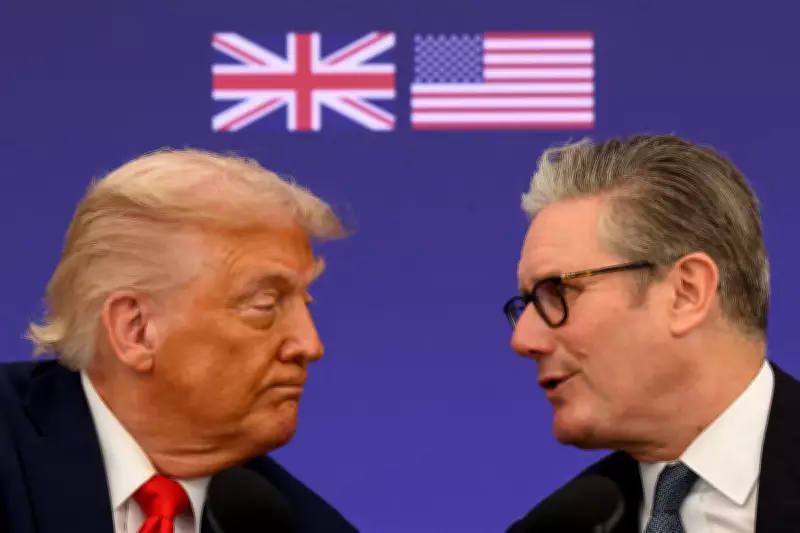
US President Donald Trump has publicly stated he is "not happy" with Prime Minister Sir Keir Starmer following the UK leader's call for a "viable" collective plan to reopen the Strait of Hormuz. This critical shipping route for oil and gas has been effectively shut by Iran, which has targeted vessels in retaliation for US-Israeli air strikes.
Divergent Approaches to Regional Security
President Trump has urged nations, including the United Kingdom, to participate in a mission to safeguard shipping through the strait. However, Prime Minister Starmer has thus far resisted these demands, advocating instead for a coordinated international effort. "We're working with all of our allies, including our European partners, to bring together a viable collective plan that can restore freedom of navigation in the region as quickly as possible and ease the economic impacts," Starmer declared.
In response, Trump criticised the UK's stance as "terrible," expressing surprise at Starmer's reluctance to deploy naval assets. "I was very surprised with the United Kingdom, because the United Kingdom, two weeks ago, I said, 'Why don't you send some ships over' and he really didn't want to do it," Trump remarked. He emphasised the longstanding alliance between the two countries, noting, "We've been with you. You're our oldest ally and we spend a lot of money on Nato and all of these things to protect you."
Leadership and Decision-Making Under Scrutiny
The US President also appeared to question Starmer's leadership style, suggesting the Prime Minister relied too heavily on advisors. Following a Sunday call between the two leaders, Trump claimed Starmer said he was "meeting with my team" before making a decision. "I said you don't need to meet with your team, you're the Prime Minister, you can make your own... why do you have to meet with your team to find out whether or not you're going to send some minesweepers to help us or to send some boats," Trump asserted.
UK Government sources clarified that Starmer had referred to consulting with international partners and military planners, rather than Downing Street advisers. Meanwhile, at a Downing Street press conference, Starmer reiterated his commitment to avoiding escalation, stating he would not allow the UK to be drawn into a "wider war" in the Middle East. He indicated that Britain might contribute mine-hunting drones rather than warships to any mission, though no final decisions have been made. "It is a discussion, we are not at a point of decisions yet, I want to really stress that," he emphasised.
Domestic Energy Concerns and Support Measures
Amid the geopolitical tensions, Prime Minister Starmer acknowledged the economic repercussions of rising oil and gas prices on UK households. He announced a £53 million support package targeted at "vulnerable" heating oil customers, with a focus on "those households that are most exposed." The funding allocation is based on census data: England will receive £27 million, Northern Ireland £17 million, Scotland £4.6 million, and Wales £3.8 million, distributed by local authorities.
Starmer also addressed concerns about heating oil suppliers cancelling orders and increasing bills amid price spikes. "I simply will not allow companies to make huge profits from the hardship of working people," he stated. "That kind of conduct is completely unacceptable, so if the companies have broken the law, there will be legal action." Additionally, the Government issued a "legal direction" to energy companies to pass on savings from previously announced policies.
Political Reactions and Future Implications
Tory leader Kemi Badenoch criticised Starmer's handling of the situation, suggesting his relationship with the US lacks depth. "It is not clear the Prime Minister has been involved in the planning process. All of our allies seem to be worried about how slow he is," Badenoch told the Press Association. She urged Starmer to develop a plan aligned with the national interest rather than Labour Party preferences.
Looking ahead, Starmer did not rule out further interventions if the energy crisis persists, particularly after the current price cap expires in July. When asked about potential measures similar to Liz Truss's 2022 energy price guarantee, he responded, "It's not sensible to say within a number of months' time, not knowing what the situation will be, that the following will be ruled in or be out." He affirmed, "My instinct is always to help working people in a situation like this."
As discussions continue, Starmer stressed the importance of broad international agreement. "It'll have to be something which is agreed by as many partners as possible, is my strong view. We're not at that stage yet, but we are working hard," he concluded, highlighting the ongoing diplomatic efforts to resolve the Strait of Hormuz crisis while addressing domestic energy challenges.