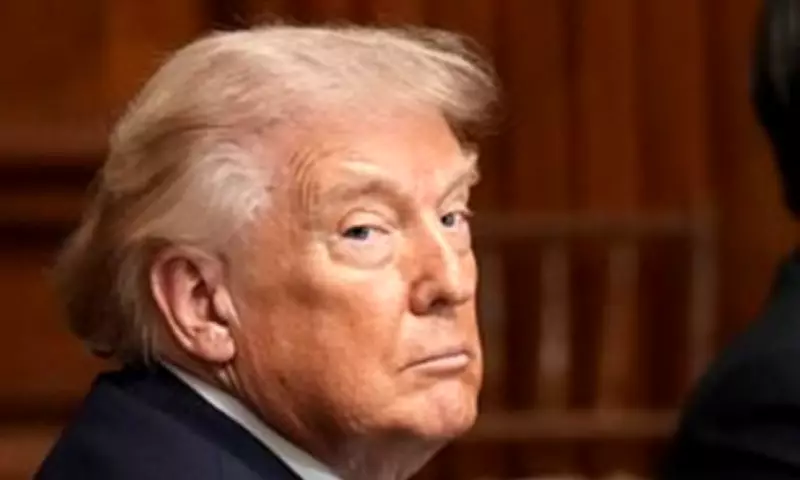
Former US President Donald Trump has launched a fierce verbal attack against his NATO allies, labelling them as 'non-responsive' in a provocative social media post. He asserted that these nations would 'move into gear fast' if the United States were to 'finish off' Iran and subsequently hand control of the strategically vital Strait of Hormuz over to them.
Trump's Demands and EU Rejection
The outburst follows a recent snub from the European Union after Trump demanded a 'joint effort' to escort commercial vessels through the narrow maritime channel. The EU, in a firm response, advised both Trump and Iran to de-escalate tensions and halt any potential conflict 'so that everybody saves face'. This diplomatic stance underscores the growing rift between Trump's aggressive foreign policy proposals and European caution.
Macron's Firm Stance on Naval Support
Emphasising this divide, French President Emmanuel Macron explicitly stated that France would not deploy its navy to assist in escorting ships through the Strait of Hormuz. This declaration highlights the reluctance among European powers to engage militarily in the region under Trump's leadership, reflecting broader concerns over stability and sovereignty.

Trump's Social Media Provocation
On his Truth Social platform, Trump penned a highly charged message questioning the hypothetical scenario of eliminating the Iranian state. He wrote: 'I wonder what would happen if we “finished off” what’s left of the Iranian Terror State, and let the Countries that use it, we don’t, be responsible for the so called “Straight?” That would get some of our non-responsive “Allies” in gear, and fast!!!' This rhetoric amplifies his longstanding criticism of NATO members for not contributing sufficiently to collective defence efforts.
Broader Implications for International Relations
The incident sheds light on the ongoing tensions within the NATO alliance, particularly regarding Middle Eastern policy. Trump's comments risk further straining transatlantic relations, as European leaders prioritise diplomatic solutions over military escalation. The Strait of Hormuz, a critical chokepoint for global oil shipments, remains a flashpoint in geopolitical disputes, with Iran's actions often triggering international concern.
As this story develops, observers are closely monitoring how NATO allies will respond to Trump's latest provocations and whether this will impact future cooperation on security matters in the region. The situation underscores the fragile balance between assertive US leadership and European strategic autonomy in handling complex international crises.