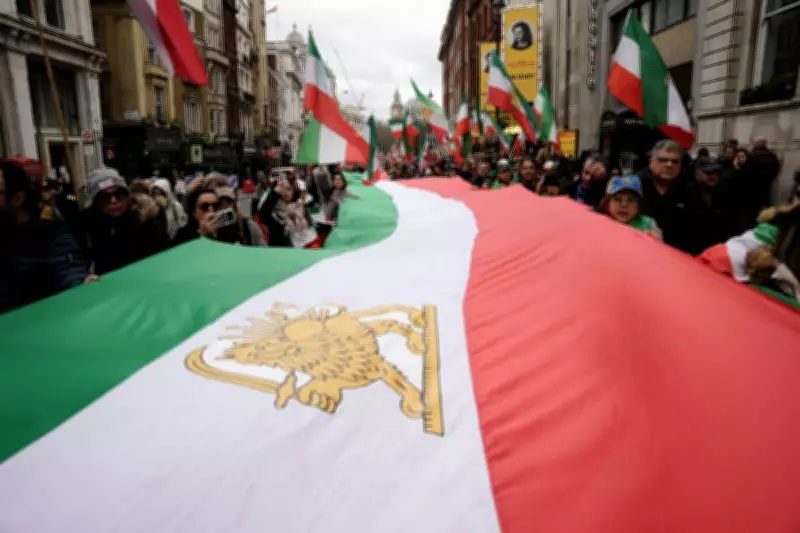
Trump Announces Death of Iranian Supreme Leader Following US-Israeli Military Strikes
Former US President Donald Trump has publicly claimed that Iran's Supreme Leader, Ayatollah Ali Khamenei, has been killed as a result of coordinated military strikes conducted by the United States and Israel. In a post on his Truth Social platform, Trump declared that the Ayatollah's death, after 37 years in power, represents "the single greatest chance for the Iranian people to take back their country." This assertion comes alongside reports of the deaths of several other senior Iranian regime figures, casting significant uncertainty over Iran's political future.
Escalating Conflict and International Response
Earlier on Saturday, Trump had called upon the Iranian populace to rise up, confirming that US and Israeli forces had launched attacks on multiple targets across Iran. These strikes prompted immediate retaliation from Iran, with counter-strikes reported in several Gulf nations, including the United Arab Emirates, Qatar, Bahrain, and Saudi Arabia. In response to the escalating situation, the United Kingdom chaired an emergency session of the UN Security Council on Saturday evening.
During the meeting, UN Secretary General Antonio Guterres issued a stark warning, stating, "Military action carries the risk of igniting a chain of events that no-one can control in the most volatile region of the world." He emphasized that "there is no viable alternative to the peaceful settlement of international disputes" and that lasting peace can only be achieved through dialogue and negotiations.

Diplomatic and Military Developments
The United States and Israel have characterized their attacks as "pre-emptive" measures aimed at countering a Tehran government allegedly intent on developing nuclear weapons. This military action follows the conclusion of talks between the US and Iran on Thursday, which ended without an agreement but were anticipated to resume at a later date.
In the UK, Prime Minister Sir Keir Starmer convened the Government's emergency Cobra committee on Saturday morning to address the crisis. He subsequently engaged in consultations with European and Gulf allies. Later that day, Starmer spoke directly with Donald Trump to discuss the unfolding events and outline the UK's involvement in defensive operations within the region.
In a joint statement with the leaders of France and Germany, Prime Minister Starmer condemned Iran's retaliatory strikes, urging Tehran to "refrain from indiscriminate military strikes" and to "seek a negotiated solution." Speaking from Downing Street, Starmer clarified that the UK was not involved in the initial strikes but had since deployed aircraft "as part of co-ordinated regional defensive operations to protect our people, our interests and our allies."
Security Measures for British Nationals
The UK Government has implemented enhanced protective measures for British bases in the Middle East and is actively reaching out to UK nationals in the region to provide support. The Foreign, Commonwealth and Development Office has advised British citizens in certain parts of the Middle East to "shelter in place." This advisory extends to Kuwait, Qatar, Bahrain, Saudi Arabia, and the UAE, where a fire has broken out at the luxury Fairmont Hotel in Dubai's Palm area—an incident condemned by Foreign Secretary Yvette Cooper in a call with her Emirati counterpart.
It is estimated that hundreds of thousands of British nationals are currently present in the Gulf region. The Foreign Office has encouraged British citizens in Bahrain, Israel, Palestine, Qatar, and the UAE to register their presence online with the UK Government to receive timely updates on the security situation.