
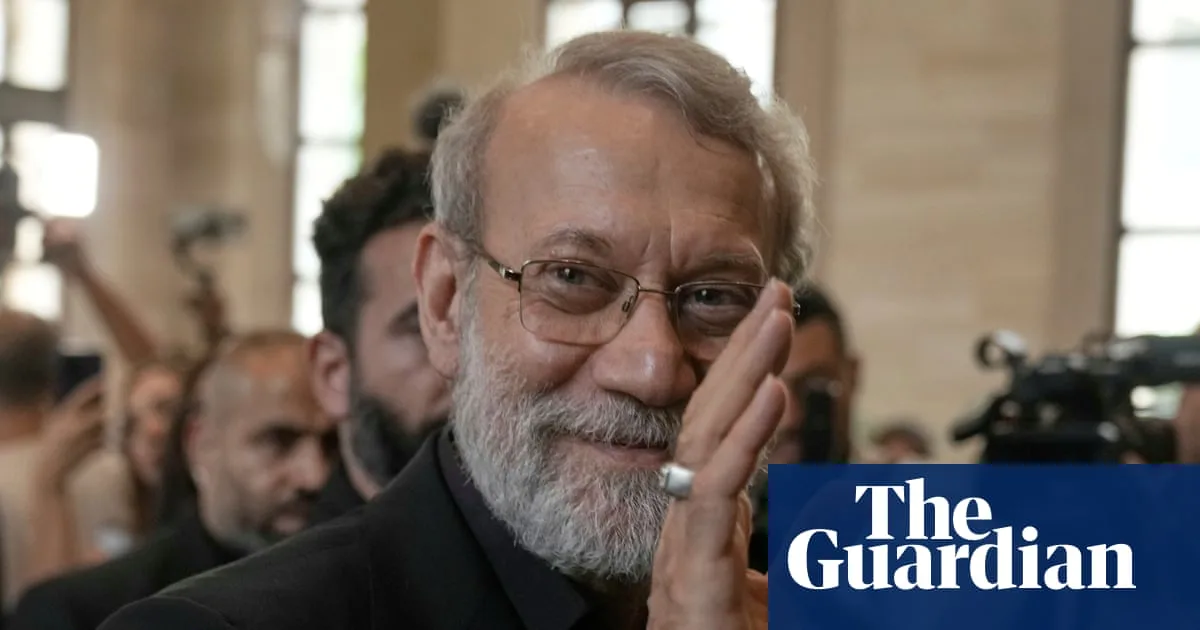
The assassination of Ali Larijani, secretary of Iran's Supreme National Security Council, by Israel represents a severe setback for Tehran, potentially exceeding the loss of Supreme Leader Ali Khamenei, analysts suggest. Larijani's unique ability to navigate multiple levels of Iranian politics and his extensive international influence, particularly with China and Russia, made him a prime target in efforts to decapitate the Iranian leadership.
His death is considered the most significant blow to the regime since the US killing of Qassem Suleimani in 2020. Larijani's removal also signals that Israel and possibly the US never viewed him as a potential transitional leader. Ellie Geranmayeh of the European Council on Foreign Relations noted that Israeli Prime Minister Benjamin Netanyahu is focused on blocking ceasefire pathways and talks with Iran, a role Larijani could have fulfilled.
Larijani, 67, was an advocate of a nuclear deal with the US and a figure of brutal internal repression. His death eliminates any chance he could have played a transitional role akin to Venezuela's Delcy Rodríguez, whom the US has endorsed. It also raises doubts about whether the US has viable internal candidates, as President Donald Trump has admitted to not knowing many alternatives due to the high number of killings.
Larijani's influence spanned four generations of Iranian politics, and he maintained trust with the Islamic Revolutionary Guard Corps (IRGC) while differing with hardliners. He played a key role in efforts to prevent Mojtaba Khamenei from succeeding his father as supreme leader, working with former president Hassan Rouhani to delay the election. Despite losing that battle, Larijani publicly described the appointment as a 'manifestation of consensus,' reflecting his pragmatic approach.
Without religious training for the supreme leadership, Larijani wielded power through various high offices, including head of state broadcasting and speaker of parliament for 12 years. His brothers also held key positions: Sadeq as head of the judiciary and Mohammad Javad as a diplomat and adviser to the supreme leader.




