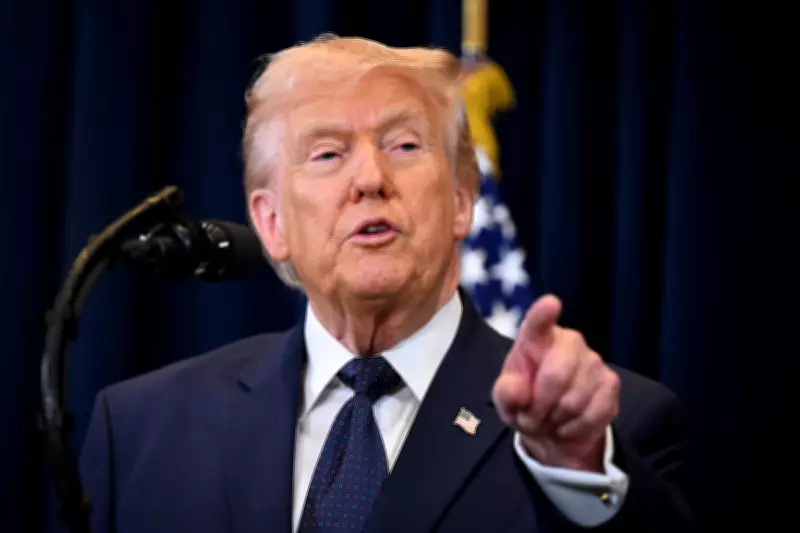
Former President Donald Trump has issued a stark warning, calling on international allies to assist in securing the Strait of Hormuz, which he described as needing to be "OPEN, SAFE, and FREE." The strategic waterway, responsible for transporting approximately one-fifth of the world's oil and liquefied natural gas, is reportedly under the "complete control" of Iran's Islamic Revolutionary Guard Corps, leading to a blockade that threatens global energy supplies.
Trump's Aggressive Stance on Iran
In a post on Truth Social, Trump declared that the United States would persist in aggressive military actions against Iran to dismantle the blockade. He stated that the U.S. would continue to "bomb the hell out of the shoreline" of Iran and be "continually shooting Iranian Boats and Ships out of the water." This rhetoric underscores a hardline approach aimed at forcing open the critical shipping lane.
Call for International Naval Support
Trump specifically urged multiple nations, including the United Kingdom, China, Japan, France, and South Korea, to deploy warships to the Strait of Hormuz. He emphasized the need for a coordinated international effort to end the blockade, highlighting the global economic stakes involved. The move signals a push for a multinational naval force to patrol the area and ensure safe passage for commercial vessels.

Confusion Among Allies
The announcement has sparked confusion, even among Trump's supporters. Notably, Marjorie Taylor Greene expressed bewilderment, stating, "I have no idea what that means," in response to Trump's timeline for potential conflict with Iran. This reaction points to uncertainties surrounding the feasibility and implications of such a military escalation.
The Strait of Hormuz serves as a chokepoint for maritime trade, with its closure potentially triggering significant disruptions in oil markets and escalating geopolitical tensions. Trump's call to action reflects ongoing concerns over Iran's influence in the region and the broader implications for international security and energy stability.