Trump Condemns NATO Allies Amid Escalating Middle East Tensions
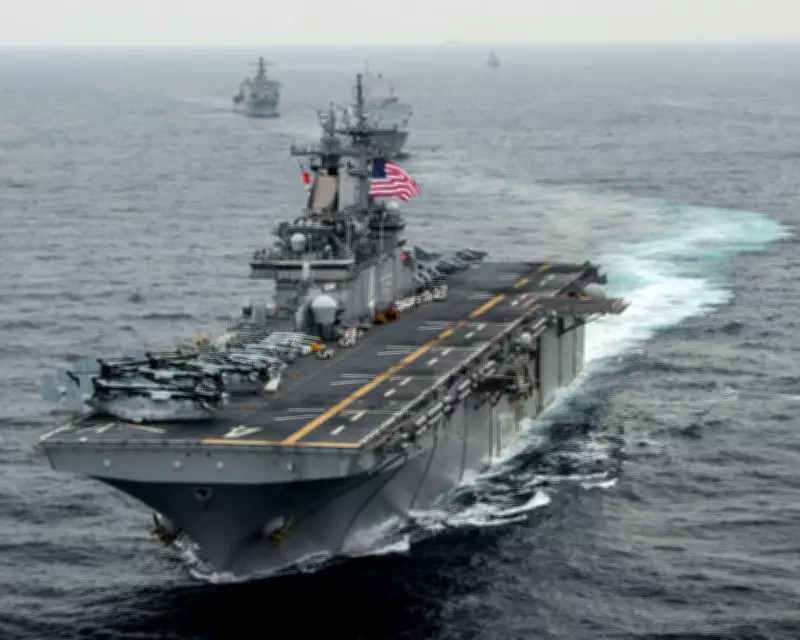
In a sharp rebuke, former President Donald Trump has labeled NATO alliance members as "cowards" for their reluctance to assist in securing the Strait of Hormuz. This criticism comes as the United States is reportedly preparing to deploy three additional warships and thousands more troops to the Middle East, signaling a significant military escalation in the region.
International Response to Hormuz Strait Crisis
Following Trump's remarks, more than a dozen nations, including the United Kingdom, France, Germany, Italy, Japan, Canada, South Korea, Denmark, Norway, Sweden, and Bahrain, issued a joint statement pledging to support "appropriate efforts to ensure safe passage" through the Strait of Hormuz. However, the statement lacked specific details on how this would be achieved, leaving many questions unanswered.
Iran has effectively closed the strait through periodic attacks on oil tankers and other shipping vessels, disrupting global trade routes. This blockade has heightened tensions and prompted international concern over maritime security.

US Military Strategy and Diplomatic Stance
Despite earlier suggestions that he was not inclined to deploy ground forces, Trump is now considering plans that could involve occupying or blockading Kharg Island. Simultaneously, he has expressed a desire to "wind down" the US war on Iran, which has destabilized global trade and international relations for years.
When asked about a potential ceasefire, Trump dismissed the idea, stating, "Look, we can have dialogue but I don't want to do a ceasefire. You don't do a ceasefire when you're literally obliterating the other side." This hardline stance underscores the ongoing volatility in US-Iran relations.
Economic and Domestic Impacts
The conflict has had far-reaching consequences beyond the battlefield. US stock markets have dipped for the fourth consecutive week, driven by investor anxiety over the war's impact on global oil prices. American farmers are also suffering, as the closure of the Strait of Hormuz has cut off a critical fertilizer production and transportation route, leading to soaring costs.
Domestically, travelers across the US are facing significant delays at airport security checkpoints due to a Homeland Security Department shutdown, which has affected Transportation Security Administration staffing. With TSA workers going weeks without pay, staffing shortages have intensified, causing longer screening times and passenger frustration.
Legal and Social Developments
In other news, the Trump administration has renewed its legal assault on Harvard University, filing a lawsuit alleging civil rights violations against Jewish and Israeli individuals in the aftermath of the Gaza war. Additionally, a US military veteran arrested on federal conspiracy charges for participating in a protest against Immigration and Customs Enforcement (ICE) has refused to plead guilty, vowing to face justice.
The administration has also issued a 30-day sanctions waiver for the purchase of Iranian oil at sea, aimed at easing energy supply pressures since the start of the US-Israeli war on Iran. Meanwhile, a federal judge has blocked key portions of the Pentagon's press access policy, ruling it unconstitutional in a case brought by the New York Times.
Ongoing Investigations and Human Rights Concerns
The US Department of Health and Human Services is investigating 13 states that require state-regulated health insurance plans to cover abortion services. In a separate incident, a Canadian woman and her seven-year-old daughter with autism, held by ICE for nearly a week, have been transferred to a notorious detention center and asked to "self-deport," according to her husband, who described the experience as traumatic.
Further adding to the day's events, a far-right conspiracy theorist turned high-ranking official at the Federal Emergency Management Agency (FEMA) has made bizarre claims about teleporting to a Waffle House, highlighting ongoing controversies within government agencies.