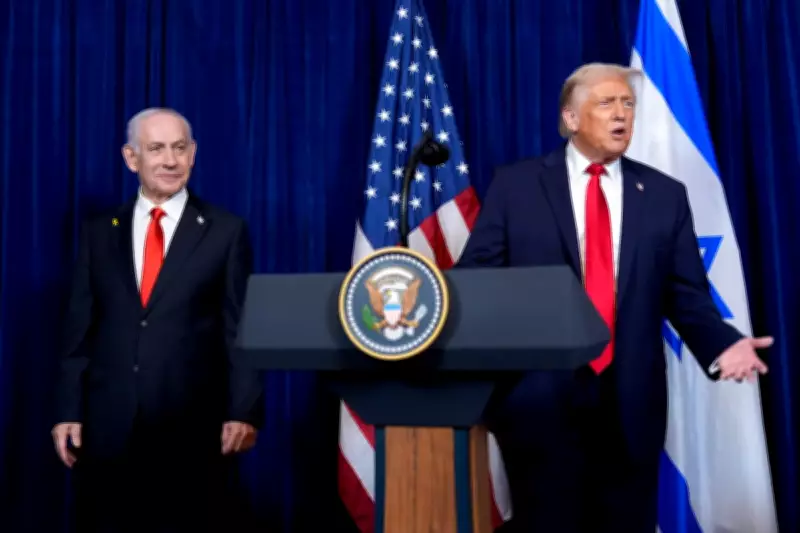
Israeli Prime Minister Benjamin Netanyahu visited the White House on Wednesday for his seventh meeting with President Donald Trump since the latter returned to power last January. The closed-door session focused on Trump's push for a new agreement with Iran to curb its nuclear ambitions, amid escalating tensions and ongoing diplomatic efforts.
A Strategic Discussion on Iran's Nuclear Program
Netanyahu arrived at 1600 Pennsylvania Avenue just before 11:00 am, determined to influence Trump's approach to prevent what he fears could lead to a devastating conflict in the Middle East. The meeting lasted until nearly 2:00 pm, with neither leader making public statements or taking questions from reporters afterward, breaking from the usual protocol for foreign leader visits.
However, Trump quickly took to Truth Social to describe the encounter as a "very good meeting." He clarified that no definitive decisions were made regarding the future of an Iran deal, but negotiations will persist. "I insisted that negotiations with Iran continue to see whether or not a Deal can be consummated," Trump stated. "If it can, I let the Prime Minister know that will be a preference. If it cannot, we will just have to see what the outcome will be."

Historical Context and Netanyahu's Stance
Netanyahu's visit comes as American and Iranian representatives prepare to resume talks in Oman, following a rare face-to-face discussion last week. These negotiations aim to address Tehran's weapons program, which Trump claimed to have "obliterated" in June airstrikes using B-2 bombers. The Israeli leader is deeply skeptical of any accord that does not include stringent requirements to curb Iran's ballistic missile program and support for proxy militias in the region.
This position dates back over a decade, notably when Netanyahu opposed the 2015 Joint Comprehensive Plan of Action (JCPOA) under the Obama administration. His bombastic address to Congress and alignment with Republicans against the deal endeared him to Trump, who later withdrew the U.S. from the agreement during his first term. Now, Netanyahu seeks to ensure any replacement agreement addresses his broader security concerns.
Trump's Evolving Position and Military Pressure
In recent weeks, Trump has emphasized that his primary goal is to prevent Iran from developing nuclear weapons, a claim Iranian leaders have repeatedly denied. During an interview with Fox Business Network host Larry Kudlow, Trump echoed some of Netanyahu's views, stating that Iran's rulers "want to make a deal," but it must be comprehensive: "No nuclear weapons, no missiles, no this, no that, all the different things that you want."
To bolster this stance, Trump has deployed a U.S. Navy carrier strike group to the region and is considering sending a second, signaling an unusual military buildup. In an interview with Axios ahead of the meeting, Trump warned that either the U.S. and Iran "will make a deal" or he "will have to do something very tough like last time," referencing the previous airstrikes.
Regional Dynamics and Internal Iranian Struggles
The military pressure coincides with a fragile period for the Iranian government, which is grappling with economic sanctions and civil unrest. Last month, a violent crackdown on anti-government protesters resulted in up to 6,800 deaths, according to human rights groups. Trump had threatened military action if Tehran executed protesters, but later retracted these threats after claiming the hangings were called off.
Trump also noted that he and Netanyahu discussed "tremendous progress being made in Gaza," highlighting broader regional issues beyond the nuclear talks. The meeting underscores the complex interplay of diplomacy, military strategy, and domestic politics shaping U.S.-Israel relations and Middle East stability.
As negotiations continue, the outcome remains uncertain, with both leaders balancing the desire for a diplomatic solution against the risks of escalation. The White House session marks a critical juncture in efforts to reshape Iran's nuclear policy and prevent further conflict in the volatile region.