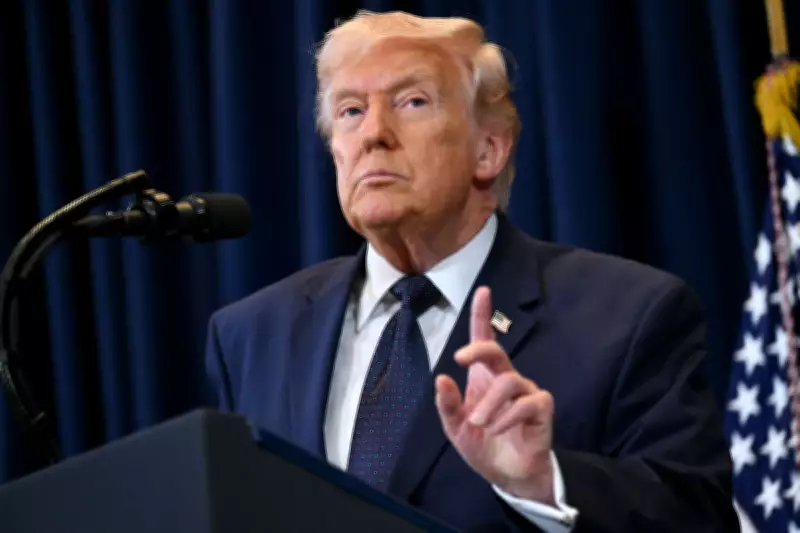
Experts are warning that a significant expansion of United States foreign aid policy under Donald Trump's administration poses a serious threat to United Nations programmes designed to protect women and support LGBT+ individuals worldwide. The new rule, which took effect in February, dramatically broadens the long-standing Mexico City policy that restricts organisations receiving US funding from providing or promoting abortion services overseas.
Broad Ideological Conditions Attached to Billions in Aid
The policy, officially branded as the "promoting human flourishing in foreign assistance policy," goes far beyond previous restrictions by attaching comprehensive ideological conditions to American foreign assistance. Organisations that receive US funding must now ensure that none of their activities, even those financed by other governments, conflict with Washington's positions on abortion, gender identity, or diversity programmes.
This sweeping requirement could apply to tens of billions of dollars in US foreign aid distributed globally. Under the strict terms of the policy, non-compliance could result in funding being withdrawn and previously disbursed money being clawed back from recipient organisations.
Potential Consequences for UN Agencies and Programmes
The United Nations, which relies heavily on voluntary contributions from member states including the historically largest donor United States, faces particular vulnerability under this new policy framework. Because the policy applies to voluntary contributions to multilateral organisations, UN agencies may be forced to ensure their programmes comply with US conditions even when funded by other countries.
Cristal Downing, a director at the International Crisis Group, explained the implications: "The new human flourishing policy projects the Trump administration's political position against gender equality through its global financial assistance. This could have broad implications at the UN and elsewhere, compounding the global regression on gender equality that we have seen accelerate in the last year."
Specific UN Programmes at Risk
Critics warn that a wide range of UN work could be affected, including:
- Programmes helping survivors of sexual violence in conflict zones
- Initiatives encouraging women's participation in peace negotiations
- Support for LGBT+ refugees through specialised UNHCR programmes
- Safe housing and legal protection for LGBT+ people displaced by conflict
These initiatives, some mandated by the UN Security Council under its Women, Peace and Security agenda, could be interpreted as promoting protections based on gender identity, potentially violating the new US policy requirements.
Disruption to Civil Society Partnerships
Ms Downing further warned that the expanded policy could disrupt crucial partnerships between UN agencies and civil society groups delivering essential services to women and girls. "History shows that the previous version of this policy broke down networks of organisations working on women's rights," she noted. "For the UN, this could mean that partnerships between UN agencies and civil society to deliver essential services to women and girls are eroded."
International Opposition and Concerns
Ten countries including the United Kingdom, France, and Germany have formally expressed concerns about the policy's potential impact. In a joint letter circulated at the United Nations, these nations warned that the policy could "constrain the delivery of essential health and social services" and undermine gender equality efforts worldwide.
The policy expansion represents a significant shift in how the United States approaches foreign assistance, moving beyond specific restrictions on abortion-related activities to encompass broader ideological positions on gender and identity issues. As the policy continues to be implemented, international organisations and human rights advocates are preparing for potentially far-reaching consequences for global gender equality initiatives and protections for vulnerable populations.