Caribbean Fracture: How Trinidad's US Alliance Paved Way for Maduro's Ousting
Trinidad's US Alliance and Venezuela Regime Change

The geopolitical landscape of the Americas was violently reshaped in early 2026 when the administration of US President Donald Trump executed a raid that ousted Venezuelan President Nicolás Maduro, subsequently imprisoning him on American soil. While Western capitals grapple with the legal and diplomatic implications, for nations across the Caribbean, the event has triggered profound political fear, uncertainty, and a stark regional fracture.

A Strategic Partnership: Military Buildup and Political Alignment

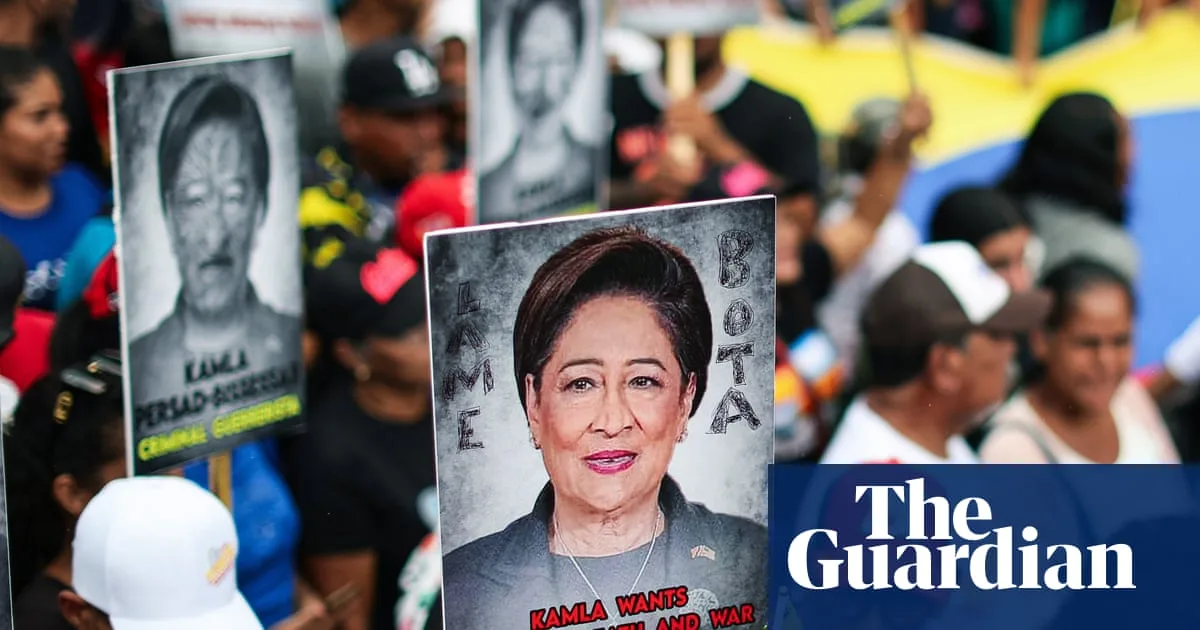
Central to the events leading to the Venezuela operation was the open alignment of Trinidad and Tobago's Prime Minister, Kamla Persad-Bissessar, with the Trump administration. According to Dr Jacqueline Laguardia Martinez of The University of the West Indies, the twin-island nation—a founding Caricom member—has "openly endorsed US actions under the pretext of combating transnational crime."

This endorsement took concrete military form. On 28 November, a sophisticated US Marine Corps radar system, the Ground/Air Task-Oriented Radar (G/ATOR), appeared in a coastal area of Tobago, merely 7 miles from the Venezuelan coast. This was accompanied by the arrival of US troops and military aircraft. Since September, the US has conducted at least 21 airstrikes targeting alleged drug smugglers in regional waters, resulting in over 80 fatalities, including several Trinidadian citizens.

Persad-Bissessar's support for a US military presence and strikes on Venezuelan vessels was longstanding. In mid-November, Caracas accused her of aiding the US seizure of an oil tanker. By December, Trinidad permitted the US to transit military aircraft through its airports for claimed "logistics" purposes. Analysts now view this escalating cooperation as having laid the essential groundwork for the eventual operation against Maduro.

Diverging from Caricom and Betting on Trump

Trinidad and Tobago's stance marks a dramatic departure from regional norms. Laguardia Martinez notes that Caricom has historically projected a cohesive foreign policy voice, anchored in principles of multilateralism and upholding the region as a "Zone of Peace." Trinidad is now an outlier.

Peter Wickham, Director of Caribbean Development Research Services, revealed that other islands like Grenada and Antigua refused US requests to install the same radar system. "One could say that their facilities have not been used to stage an attack," Wickham stated, "but nonetheless there is cooperation at least in the provision of intelligence."

He suggests Persad-Bissessar's motivations are resource-driven. "She and Trump have something in common... Trump wants oil, she wants gas." Instead of negotiating with Maduro's government to develop the vast Dragon gas field near Tobago, she opted to negotiate with Trump, hoping he would grant access post-regime change. Wickham questions the wisdom of this high-stakes gamble on an unpredictable US president, noting the Prime Minister's contradictory and "off the cuff" rhetoric, including calling Caricom—a major trading partner—"unreliable."

"Frankly, I don't think anybody in Trinidad and Tobago is convinced that this thing is going to work out long-term," Wickham concluded, warning that the country's actions could potentially face scrutiny at the International Criminal Court.

Regional Repercussions and a Climate of Fear

The US intervention has exposed deep vulnerabilities and historical ties. Venezuela, under Hugo Chávez and later Maduro, fostered significant regional cooperation through initiatives like the Petrocaribe oil programme and the ALBA alliance, providing aid, building infrastructure like an airport in Saint Vincent, and assisting during disasters such as Hurricane Maria.

Wickham warns the Trump administration could weaponise these legitimate relationships, falsely casting them as "narco-related." The US indictment of Maduro ominously references other leaders who supported him, a message Wickham interprets as "we'll be coming for you next." This has instilled a palpable fear, stifling condemnation from smaller Caribbean states.

While there is public understanding of the diplomatic bind leaders are in, Caricom's collective silence—its choice of the "path of least resistance"—speaks volumes. "If London or Paris cannot speak frankly, how is Bridgetown or Kingston supposed to be able to speak out?" Wickham asked.

The ultimate consequence is a transformed political environment. "This changes everything," Wickham asserted. With elections upcoming in several islands, leaders may now hesitate, wondering if opposition to US actions could land them on a "hitlist." The episode has ushered in an era of acute uncertainty, where the question haunting the Caribbean is simple yet terrifying: What's next?



