The traditional mechanisms of US foreign policy have been upended during Donald Trump's tenure, with a mercurial president influenced by an unusually broad and disparate circle of advisers. This network, extending beyond official channels to include family members, business associates, and media personalities, is shaping a foreign policy agenda critics label as transactional and unpredictable.
A Presidential Court of Competing Voices
Unlike his predecessors, President Trump maintains remarkable accessibility to a wide array of voices. Ian Bremmer, president of the Eurasia Group, notes the president is constantly on his phone and holds court at venues like Mar-a-Lago, where guests freely pitch ideas. This has created a fluid advisory environment where influence is not confined to the West Wing.
The result is a policy landscape that appears, to many observers, "all over the map". Within a single month, the administration has overseen military strikes in Syria and Nigeria, orchestrated the removal of Venezuela's president, renewed calls to acquire Greenland, and threatened action against Colombia. This blitzkrieg approach has left foreign diplomats scrambling to discern a coherent strategy.

Key Players in the Outer Circle
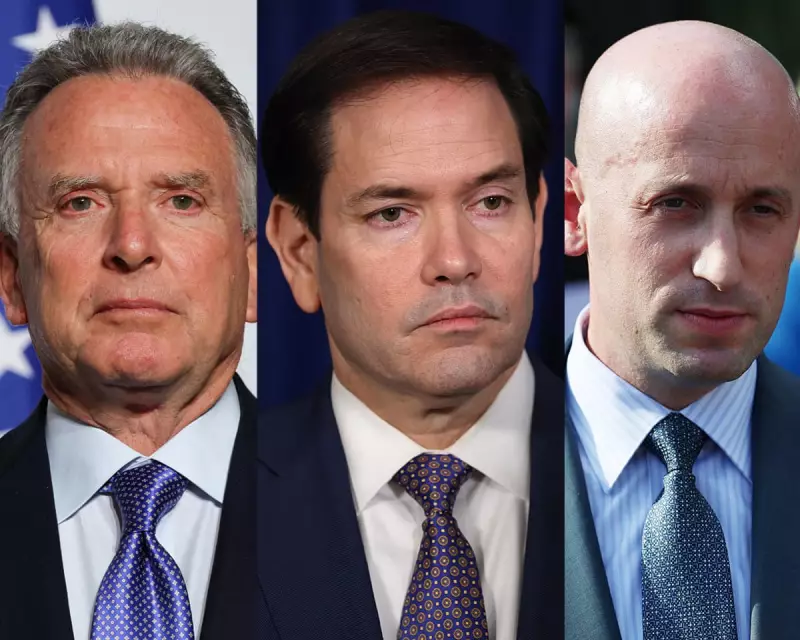
Foremost among the official influencers is Secretary of State and National Security Adviser Marco Rubio. The former senator, who clashed bitterly with Trump during the 2016 election, has found his expertise in Latin America aligning with the president's ambitions. Rubio played a central role in the operation to oust Venezuelan leader Nicolás Maduro, briefing Congress and engaging directly with Caracas.
However, Rubio's focus appears hemispheric. A former Biden administration official suggests the Secretary is "content being the viceroy of Venezuela," while leaving other thorny issues like Gaza, Russia, and Ukraine to others.
Those "others" often include unofficial envoys. Steve Witkoff, a property developer and longtime friend of Trump, has been a key figure on Middle East and Ukraine policy, though critics question his preparedness. Alongside him frequently is Jared Kushner, the president's son-in-law, fuelling perceptions that foreign policy is a family enterprise.
This perception is strengthened by the reported influence of Trump's sons, Don Jr and Eric. Brett Bruen, a former Obama White House official, suggests they are "among the most internationally consequential counsellors to the president," with an eye on future business development in regions like the Gulf.
The Ideological Hardliners Gaining Ground
For a world anxious about Trump's next move, few figures elicit as much concern as Stephen Miller, the deputy chief of staff. Long the architect of domestic immigration policy, Miller is now signalling a foreign doctrine defined by brute strength. In a recent CNN interview, he stated the world is "governed by strength... by force... by power. These are the iron laws."
This rhetoric aligns with Trump's revived interest in the 19th-century Monroe Doctrine—which he has jokingly rebranded the "Don-roe doctrine"—and his open speculation about annexing Greenland. The shift has sparked fears of a move from neoconservatism to a form of neocolonialism, endangering alliances like NATO.
The circle is rounded out by figures like Vice-President JD Vance, Senator Lindsey Graham, and media provocateur Tucker Carlson, creating a cacophony of traditional hawks and "America First" isolationists vying for the president's ear.
"No Philosophy, No Grand Strategy"
Ultimately, many close to the process argue the driving force is not ideology but transaction. John Bolton, Trump's former national security adviser, asserts the president has "no philosophy, no national security grand strategy." He describes Trump's approach as entirely transactional and self-interested.

The former Biden official concurs, noting a lack of ideological coherence. "You have people pursuing their own agendas... it's basically the camp that is able to make the most persuasive case to the president who has the upper hand," they said, leading to policy that can take "wild swings."
As Trump's unconventional approach continues to redefine American power on the global stage, the world watches warily, aware that the next major decision may be shaped not in a Situation Room briefing, but during a conversation at a resort clubhouse.