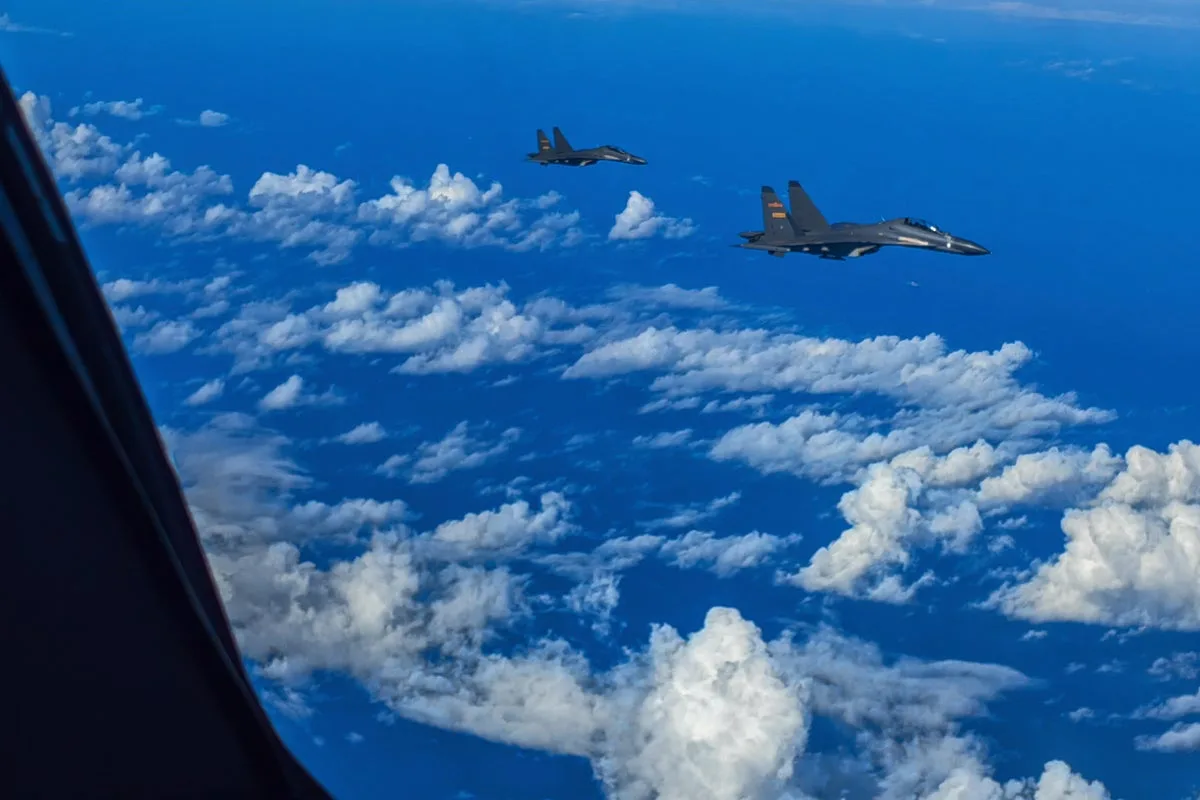
After experiencing a period of relative calm, Taiwan has reported a substantial resurgence of Chinese military aircraft activity in the vicinity of the island. The Taiwanese defense ministry announced on Sunday that it had detected 26 Chinese military planes operating nearby on Saturday, with 16 of those aircraft penetrating the northern, central, and southwestern sectors of Taiwan's Air Defense Identification Zone. Additionally, seven naval vessels were observed in the surrounding waters.
Sharp Contrast to Recent Quiet Period
This notable escalation follows a puzzling two-week decline in such flights that had left regional analysts and observers speculating about Beijing's strategic intentions. From February 27 to March 5, Taiwan reported no Chinese military aircraft crossing the median line or entering the identification zone. The pattern continued with only two detections on March 6, followed by four consecutive days of complete absence before small numbers resumed from Wednesday through Friday.
Analysts Ponder Multiple Explanations
While the timing coincided with the annual gathering of China's legislature—a period when military flights have historically decreased during major events—this year's reduction was more pronounced than in previous instances. Defense analysts have suggested that the legislative meeting alone cannot fully explain the recent downturn.
Several alternative theories have emerged among observers. One prominent hypothesis suggests Beijing may have been attempting to ease tensions with Washington ahead of a potential visit by U.S. President Donald Trump, scheduled from March 31 to April 2 according to White House statements, though Beijing has not officially confirmed the itinerary.
Other analysts propose the decline might reflect a strategic shift in China's military training and modernization programs, with the People's Liberation Army potentially exploring new models for joint force training and operational exercises.
Historical Context and Ongoing Tensions
China has consistently maintained its claim over Taiwan, vowing to reunify with the island by force if necessary. For years, Beijing has conducted near-daily deployments of warplanes and naval vessels toward Taiwan as part of its pressure campaign.
Despite the recent fluctuation in aircraft activity, Taiwan's military has maintained its defensive posture unchanged. Defense Minister Wellington Koo previously noted that while military flights had diminished, Chinese naval vessels remained active in nearby waters throughout the period.
The political separation between China and Taiwan dates back to 1949, when Communist forces emerged victorious in the Chinese civil war, establishing the People's Republic in Beijing. Defeated Nationalist forces retreated to Taiwan, which has since evolved from martial law governance to a multiparty democratic system, though Beijing continues to regard it as a renegade province.




