

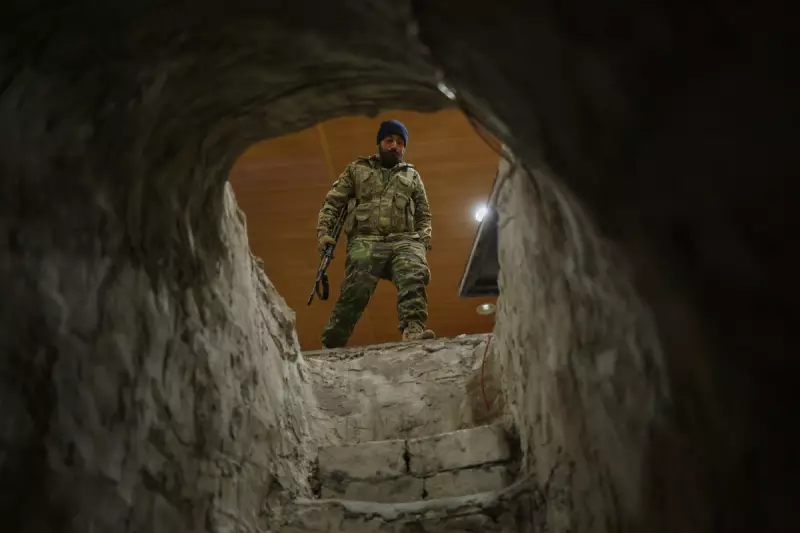
A fragile four-day truce between the Syrian government and Kurdish-led fighters has officially ended, with no immediate prospect of renewal as tensions escalate in the country's volatile northeast region. The ceasefire, which concluded on Saturday evening, leaves a precarious security vacuum amid reports of significant military reinforcements being dispatched by government forces.
Ceasefire Expires Amid Military Buildup
The temporary cessation of hostilities, which began on Tuesday, was designed to create a window for diplomatic negotiations. However, it has now lapsed without any clear indication from Damascus about extending the agreement. Syria's state news agency, SANA, quoted an unnamed government official confirming the truce's end, stating that authorities are "studying their options" regarding next steps.
This development comes as government troops have been observed sending substantial reinforcements to northeastern Syria over recent days. The Kurdish-led Syrian Democratic Forces (SDF), which receives backing from the United States, has expressed serious concerns about these movements, interpreting them as preparation for renewed offensive operations.

SDF Calls for International Intervention
In a statement released on Saturday, the SDF warned that the military buildup and logistical movements by government forces "clearly indicate an intent to escalate and push the region toward a new confrontation." Despite these concerns, the Kurdish-led force affirmed its commitment to continue abiding by the ceasefire terms, even as it called upon the international community to intervene and prevent further escalation.
The SDF has suffered significant territorial losses over the past three weeks of intense clashes, relinquishing control over large areas it previously administered. This recent fighting represents a serious setback for the Kurdish-led administration that has governed parts of northeastern Syria for years.
Background of Failed Negotiations
The current tensions stem from a broader agreement signed last March between Syria's interim government and the SDF, which outlined a process for the Kurdish-led force to hand over territory and eventually merge its fighters with government security forces. However, a new round of talks in early January failed to make meaningful progress on this merger, leading directly to the renewed hostilities that prompted last week's temporary ceasefire.
A revised version of the accord was signed last weekend, with the four-day truce forming a key component of this new agreement. Part of the revised deal stipulates that SDF members would need to merge into the Syrian army and police forces as individuals rather than as organised units, a point of contention that has complicated implementation.
Prisoner Releases and Security Concerns
In a related development on Saturday, Syrian state television reported that authorities had released 126 boys under the age of 18 from the al-Aqtan prison near the northern city of Raqqa. Government forces had taken control of this facility just one day earlier, on Friday. The teenagers were transported to Raqqa city where they were reunited with their families according to official reports.
The prison complex also houses approximately 9,000 members of the Islamic State group, most of whom remain detained in facilities still operated by the SDF. Government forces have so far assumed control of two prisons in the region, while the Kurdish-led administration continues to manage the remainder of detention centres holding IS detainees.
Earlier this week, the United States military announced plans to transfer some 7,000 Islamic State prisoners to detention facilities in neighbouring Iraq. By Wednesday, approximately 150 detainees had already been moved across the border as part of this security realignment, reflecting international concerns about maintaining secure detention amid the shifting control of territory in northeastern Syria.






