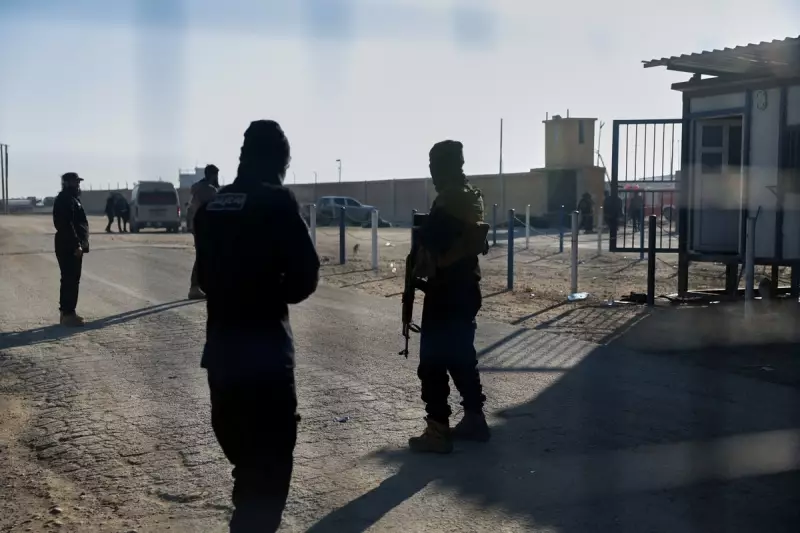
Syrian Government Seizes Control of Infamous al-Hol Camp
In a significant development in northeast Syria, government forces have assumed full control of the sprawling al-Hol camp, which houses thousands of individuals with links to the Islamic State group. This move follows a period of intense clashes and a fragile truce between Syrian authorities and Kurdish-led fighters.
Military Advance and Camp Transfer
On Wednesday, a convoy of armoured vehicles carrying government troops entered the al-Hol facility. This action came after two weeks of fighting between government forces and the Kurdish-led Syrian Democratic Forces (SDF), who had managed the camp for years. The SDF's withdrawal from the camp occurred just one day prior to the government takeover.
The transition appears to signal a broader realignment, with the U.S.-backed SDF moving closer to integration into the Syrian military, as demanded by the Damascus government. This shift represents a notable change in the security landscape of the region.

Camp Population and Security Concerns
At its peak in 2019, the al-Hol camp held approximately 73,000 residents. Current estimates indicate the population has declined to around 24,000 individuals, predominantly women and children associated with Islamic State. The breakdown includes:
- About 14,500 Syrians
- Nearly 3,000 Iraqis
- Roughly 6,500 others from various nations, held in a highly-secured section
Reports have emerged suggesting some families may have fled during the recent unrest, though these claims lack official confirmation. An Associated Press journalist observed heightened security, with scores of soldiers guarding the main entrance, but was denied access to the camp interior.
Truce Agreement and Prison Complexities
The takeover follows the announcement of a new four-day truce late Tuesday, after a previous ceasefire collapsed. Northeast Syria remained relatively calm on Wednesday, though tensions persist regarding prison management.
A recent incident saw Islamic State members escape from a prison in Shaddadeh, with both the SDF and government trading blame. Syrian state media reported that many escapees were subsequently recaptured by government troops who assumed control of the facility.
Under a deal announced Sunday, government forces were supposed to take over control of prisons from the SDF, but this transfer has encountered difficulties. The SDF still controls the majority of over a dozen detention facilities holding about 9,000 IS members. The largest, Gweiran Prison (now called Panorama) in Hassakeh, houses approximately 4,500 detainees and remains under SDF authority.
Official Statements and International Perspective
Syrian Defence Ministry spokesman Brig. Gen. Hassan Abdul-Ghani stated in televised comments that the government "was and still is in direct confrontation" with Islamic State. He confirmed authorities are prepared to assume control of prisons holding IS members, with plans to place them under Interior Ministry authority once transferred.
U.S. envoy to Syria Tom Barrack noted in a statement that the SDF's role as the primary anti-IS force "has largely expired", suggesting Damascus is now both willing and positioned to take over security responsibilities. He indicated the U.S. is actively facilitating this transition rather than prolonging a separate SDF role.
While Islamic State suffered formal defeats in Iraq in 2017 and Syria in 2019, the group's sleeper cells continue to conduct deadly attacks in both countries. The SDF played a crucial role in the original defeat of the extremist organisation, but the current developments suggest a significant shift in counter-terrorism responsibilities in the region.