In a significant diplomatic development, the Syrian government and Kurdish-led forces have agreed to extend a fragile ceasefire, providing a temporary reprieve from the threat of all-out war in the country's northeast. The agreement, confirmed by Syrian diplomatic sources on Saturday, will see the truce prolonged for up to one month to allow for the transfer of suspected Islamic State members from Syria to neighbouring Iraq.
Ceasefire Extension and Prisoner Transfer
The extension follows an initial temporary ceasefire announced earlier in the week, which halted a sweeping government offensive that had brought Syrian army forces to the doorstep of Kurdish-held territories. According to sources speaking to Agence France-Presse, the primary purpose of the extended ceasefire is to facilitate the safe transfer of individuals suspected of belonging to Islamic State, commonly referred to as Daesh, from Syrian detention facilities to Iraq.
Turkish Foreign Minister Hakan Fidan emphasised the importance of maintaining a non-conflict environment during this critical period, stating on Friday that while the transfer of Daesh prisoners from Syria should ideally take place, the existing ceasefire needs to be preserved. This process involves the US-facilitated movement of more than 7,000 suspected IS members and fighters from Syria to Iraq, a complex logistical operation requiring stability.

Military Movements and Diplomatic Efforts
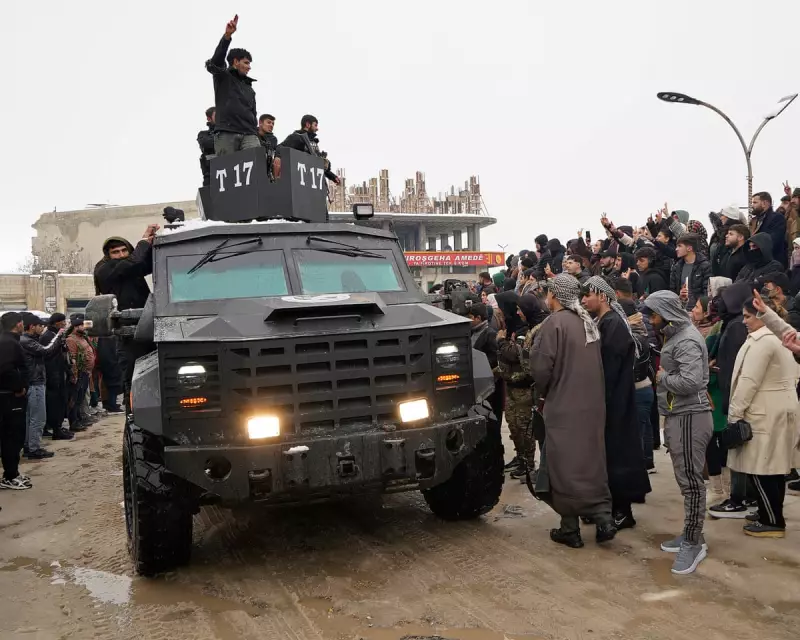
Despite the ceasefire extension, both sides have been actively preparing for potential hostilities. Members of the Syrian Democratic Forces (SDF) have been observed arriving in the Kurdish-held city of Kobane after withdrawing from the Al-Aqtan prison in Raqqa province, illustrating the ongoing military repositioning. Meanwhile, Syrian government soldiers and tanks have been streaming towards front lines, with one soldier expressing confidence that "soon we will be in Hasakeh and then Qamishli, god-willing" as logistics convoys moved towards the Hasakeh front.
Parallel to these military preparations, intensive diplomatic efforts have been underway to prevent a resumption of conflict. SDF leader Mazloum Abdi travelled to Iraqi Kurdistan for the second time, where he met with US envoy for Syria Tom Barrack, who has been mediating talks between the Kurdish forces and Damascus. Abdi also engaged in telephone discussions with Syrian Foreign Minister Asaad al-Shaibani, resulting in an agreement allowing the safe transfer of SDF fighters from a besieged prison in government-controlled territory.
The Fourteen-Point Plan and Kurdish Concessions
The ceasefire was originally intended to provide time for the SDF to implement a comprehensive fourteen-point plan with the Syrian government. This agreement would require the Kurdish militia to disband and integrate its soldiers into the Syrian army, effectively bringing an end to the autonomous Syrian Kurdish project that has existed for years.
Kurdish leaders have been struggling to come to terms with their dramatic territorial losses over recent weeks, which have significantly diminished their bargaining power. The SDF, which until recently controlled nearly one-third of Syria including vital oil fields, agricultural heartlands, and key infrastructure, has seen its territory shrink to just a few cities within a matter of weeks. The proposed deal would transform what was once a formidable force boasting 100,000 fighters into essentially a municipal authority overseeing local police in a few Kurdish-majority cities in northeast Syria.
Internal Divisions and the Threat of Renewed Conflict
While Abdi, long regarded as a pragmatic figure within the SDF, has signalled willingness to implement the agreement with Damascus, he faces significant challenges in gaining consensus among Kurdish forces. If he cannot unify the SDF and proceed with the government agreement, the alternative would be a return to warfare.

Damascus has made its position unequivocally clear: it will no longer tolerate non-state armed groups and is determined to unify the country under its flag, whether through negotiation or military force. The United States, which has backed Kurdish forces for the past decade, appears to be shifting its stance, with envoy Tom Barrack suggesting that the Syrian government has now assumed the SDF's previous role as the primary anti-Islamic State force in the region.
The US military has already begun transferring IS prisoners from Kurdish territories to prevent escapes in anticipation of potential renewed conflict with Damascus. Once these prisoners are secured, there will be little strategic rationale remaining for a continued US military presence in northeast Syria.
Humanitarian Concerns and Future Prospects
Even with its military advantage and regional backing, Damascus reportedly hopes to avoid outright war. The government offensive thus far has resulted in relatively few casualties, partly because the SDF has chosen to withdraw from Arab-majority areas like Raqqa and Deir el-Zour rather than directly confront Syrian forces. However, fighting in Kurdish-majority areas would likely prove far more bloody and destructive.
Fear and unrest have been growing among Kurdish civilians regarding the prospect of Syrian government control, particularly following government-backed massacres in Druze-majority Suweida province and Alawite-majority coastal areas last year. Many residents in Kurdish regions have armed themselves against the threat of conflict, while Kurdish forces have prepared extensive defensive positions, including vast subterranean tunnel networks designed for guerrilla warfare against better-equipped opponents.
Damascus is acutely aware that even military victory could come at a high cost, potentially driving Kurdish populations away, pushing the SDF underground, and creating a prolonged insurgency similar to that of the PKK in Turkey. As the ceasefire extension provides a temporary window for diplomacy and prisoner transfers, the fundamental tensions between Syrian unity and Kurdish autonomy remain unresolved, leaving northeast Syria balanced precariously between negotiated settlement and renewed conflict.