The Kurdish-led Syrian Democratic Forces have announced a significant new agreement with Syria's central government intended to stabilise a fragile ceasefire that ended weeks of intense fighting and to lay out concrete steps toward integration between the two sides.
Key Provisions of the Agreement
Under the terms of the newly announced pact, security forces affiliated with the Syrian Ministry of Interior will be permitted to enter the key cities of al-Hassakeh and Qamishli in the Kurdish heartland. These areas had previously been off-limits to government forces, marking a substantial shift in territorial control.
Military Integration Framework
The agreement establishes a framework for military integration, including the formation of a new military brigade comprising three brigades from the SDF. Additionally, a brigade of SDF fighters will be integrated within a government brigade operating in Aleppo province, signalling a move toward unified command structures.

Civil and Administrative Integration
Local institutions within the Kurdish-led administration of northeast Syria, which has functioned as a de facto autonomous zone for years, along with their employees, will be integrated into Syrian state institutions. The agreement also specifically addresses "civil and educational rights for the Kurdish people, and guaranteeing the return of the displaced to their areas."
Broader Strategic Aims
An official statement from the SDF framed the agreement as aiming to "unify the Syrian territories and achieve the full integration process in the region by enhancing cooperation between the concerned parties and unifying efforts to rebuild the country." While there was no immediate official statement from Damascus, Syrian state television cited an unnamed official confirming the existence of the agreement.
Context of Recent Conflict and Diplomacy
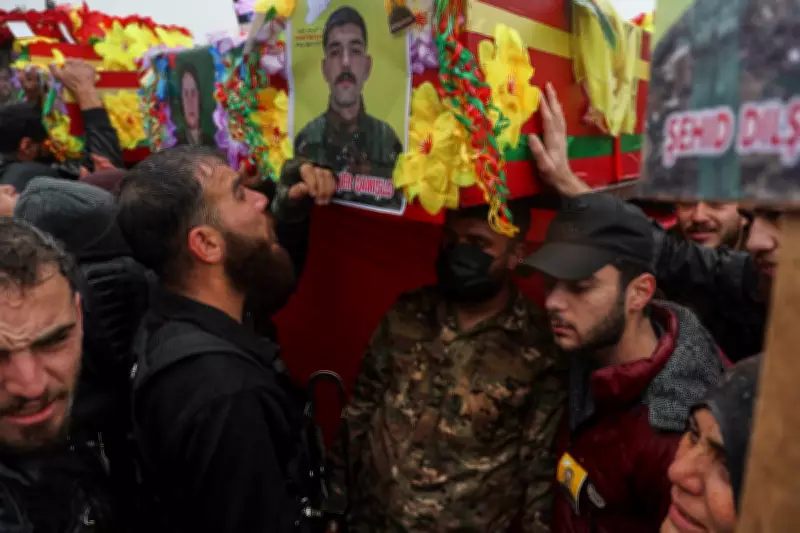
This announcement follows a period of significant upheaval. The SDF lost substantial territory in northeast Syria to a government offensive after intense clashes erupted in Aleppo on January 6th. These clashes came after months of failed negotiations to implement a previous integration deal agreed upon in March.
Syria's current leadership, which came to power after toppling former President Bashar al-Assad in December 2024, has faced considerable challenges in asserting authority over a nation fractured by nearly 14 years of civil war. The March agreement to merge the SDF with Damascus forces failed to gain meaningful traction until now.
Shifting International Dynamics
The geopolitical landscape has also evolved. The United States, historically the primary backer of the SDF in its fight against Islamic State militants, has moved closer to Damascus under the new interim President Ahmad al-Sharaa. While the U.S. did not militarily intervene in this month's fighting, it actively pushed both sides toward a negotiated settlement.
Pathway to Lasting Peace
A truce reached last week between the SDF and government forces has been largely holding. Friday's detailed announcement represents a crucial step toward solidifying that ceasefire and moving from a temporary halt in hostilities to a structured process of political and military integration. The success of this agreement will be closely watched as a potential model for resolving other conflicts within Syria's complex civil war landscape.