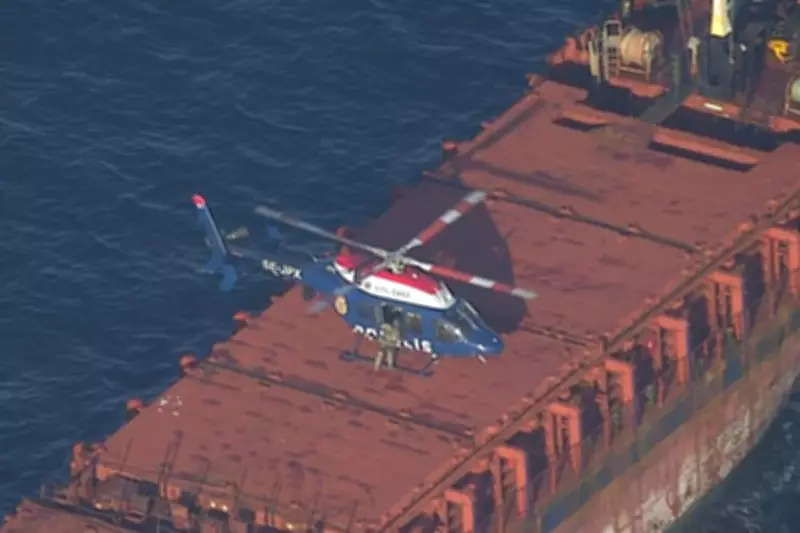
Sweden Investigates Russian Captain Following Dramatic Coastguard Operation
Swedish authorities have initiated a formal investigation into the Russian captain of a stateless vessel in the Baltic Sea, following a high-stakes coastguard operation that involved boarding and seizing control of the ship. This incident represents the second occurrence of its kind in Swedish territorial waters within just one week, raising significant concerns about maritime security and compliance.
Details of the Investigation and Suspicions
The captain, identified as a Russian national, is under suspicion for multiple serious offenses, including the use of false documents, violations of Sweden's stringent maritime act, and other grave crimes, as confirmed by the prosecution authority. Senior prosecutor Adrien Combier-Hogg elaborated on the ongoing efforts, stating: "What we are doing now is, among other things, to continue with the search on board, conduct interrogations and investigate suspected false documents." He further clarified that no detentions have been made in connection with the case thus far, indicating that the investigation is still in its preliminary stages.
The Vessel and Its Background
The vessel in question is the 228-meter-long tanker named Sea Owl I, which was reportedly flying the Comorian flag at the time of the operation. However, the Swedish coastguard suspects that the ship was operating under a false flag, a claim supported by its listing on the sanctions lists of several nations, including the European Union. This has led to heightened scrutiny and intervention by Swedish authorities.

Daniel Stenling, deputy chief of operations at the coastguard, emphasized the risks involved, saying: "The threats to maritime safety and the environment are too high. Therefore, there is reason to intervene against the vessel." The boarding operation took place off the coast of the southern Swedish town of Trelleborg, a location that has recently become a focal point for such maritime incidents.
Political and International Context
Sweden's minister for civil defence, Carl-Oskar Bohlin, added to the discourse by posting on X that the ship was suspected of belonging to the Russian shadow fleet, a network of vessels used to circumvent international sanctions. This allegation aligns with broader geopolitical tensions, particularly in the wake of Russia's condemnation of such seizures as acts of piracy. The Russian embassy in Stockholm did not immediately respond to requests for comment from Reuters via phone and email, leaving the situation diplomatically unresolved.
Recent Similar Incident
This investigation follows a similar event last Friday, when the Swedish coastguard boarded another ship, the Caffa, which was sailing under a Guinean flag near Trelleborg. The recurrence of such operations underscores Sweden's proactive stance in enforcing maritime laws and addressing potential threats in its waters. Authorities are likely to continue monitoring and responding to similar vessels to prevent further violations and ensure regional security.
The ongoing probe into the Sea Owl I and its Russian captain highlights the complex interplay between national security, international law, and geopolitical dynamics in the Baltic Sea region. As the investigation progresses, further details may emerge regarding the vessel's activities and the broader implications for maritime governance.