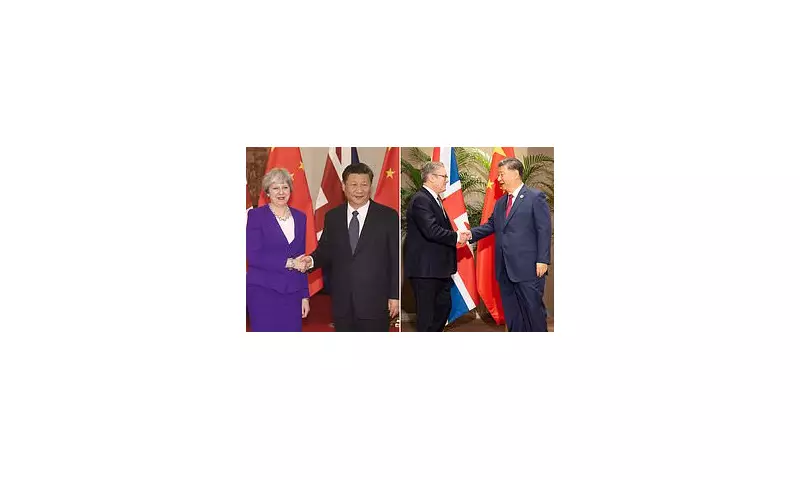
Starmer's High-Stakes Mission to Beijing Amid Security Concerns
Prime Minister Keir Starmer will this week attempt to thaw what he has termed an "ice age" in UK-China relations, embarking on the first visit by a British leader to Beijing since Theresa May's trip eight years ago. The diplomatic mission comes despite mounting warnings from security experts that China represents a greater threat to British interests than ever before.
Security Protocols and Historical Precedents
Whitehall has implemented stringent security measures for the visit, with ministers and officials reportedly issued "burner" phones and laptops in anticipation of hacking attempts by Chinese state actors. This caution reflects historical incidents that have shaped diplomatic protocol.
During Theresa May's 2018 visit, her team received advice to dress in bed due to concerns about hidden cameras in hotel rooms. This followed a 2008 incident where an aide to Gordon Brown had his Blackberry stolen in a Shanghai disco during what was suspected to be a "honeytrap" operation.

Domestic Political Vulnerabilities
The timing of Starmer's week-long absence from Westminster presents significant political risks. Historical precedent demonstrates how overseas trips can coincide with domestic crises, most notably when Margaret Thatcher attended a Paris summit in November 1990 while facing a leadership challenge.
Thatcher returned to find she had fallen four votes short of defeating challenger Michael Heseltine, with many believing she might have secured victory had she remained in the UK to campaign. Starmer faces his own political challenges following his decision to block potential leadership rival Andy Burnham from standing for Parliament.
While Burnham maintained a conciliatory tone on Monday, left-wing MPs have already called for Starmer's resignation, accusing him of orchestrating a "cowardly stitch-up." Key allies including Chancellor Rachel Reeves reportedly cancelled plans to join the China mission to manage potential unrest at home.
Deteriorating Relations Since 2018
The landscape of UK-China relations has transformed dramatically since May's 2018 visit, when she spoke of intensifying the "golden era" of relations first championed by David Cameron and George Osborne. Subsequent developments have plunged relations into what Starmer now describes as an "ice age."
Beijing's implementation of a national security law in Hong Kong effectively dismantled the "one country, two systems" agreement, leading to approximately 180,000 Hong Kong residents relocating to the UK. China has simultaneously intensified espionage activities against Britain through cyber attacks and spy operations.
President Xi Jinping has reinforced claims on Taiwan while facing international criticism for human rights abuses in Xinjiang province. British MPs critical of Beijing's policies have faced sanctions extending to harassment of their families.
Controversial Concessions and Security Compromises
Critics argue Starmer has made significant concessions to secure this week's visit. The Labour government has declined to publish a completed "China audit" review of bilateral relations, apparently to avoid antagonising Beijing.
More controversially, ministers have approved plans for a Chinese "mega-embassy" in London's financial district, despite security concerns about secret chambers within the complex. Diplomatic sources suggest Beijing made approval of the embassy a precondition for Starmer's visit.
MI5 chief Ken McCallum acknowledged last week that risks from the facility cannot be "wholly eliminated," while critics have dubbed it a potential "nest of spies." The decision follows the collapse of a prosecution against two men accused of spying for China after the Crown Prosecution Service stated it could not obtain government evidence confirming China as a national security threat.
Economic Imperatives Driving Engagement
The primary motivation for Starmer's diplomatic outreach appears economic. With Britain experiencing sluggish growth following two problematic budgets, Chancellor Rachel Reeves has championed reviving trade and investment links that have deteriorated in recent years.

In a speech last month, Starmer emphasised "the scale of the opportunity in China is immense," arguing that British businesses should secure their share while maintaining national security. He acknowledged Beijing "poses real national security threats" but described continued diplomatic freeze as a "dereliction of duty."
International Complications and Future Challenges
Starmer's engagement with Beijing risks further straining relations with Washington, particularly following Donald Trump's threat of 100% tariffs on Canada after it announced a "strategic partnership" with China. Any perceived cosiness with Beijing could complicate the already delicate UK-US relationship.
As Starmer prepares for discussions in Beijing's Great Hall of the People, he faces the delicate balancing act of pursuing economic opportunities while managing security threats, domestic political pressures, and international diplomatic complexities. The success of his mission to end the "ice age" in UK-China relations will depend on navigating these multiple challenges simultaneously.