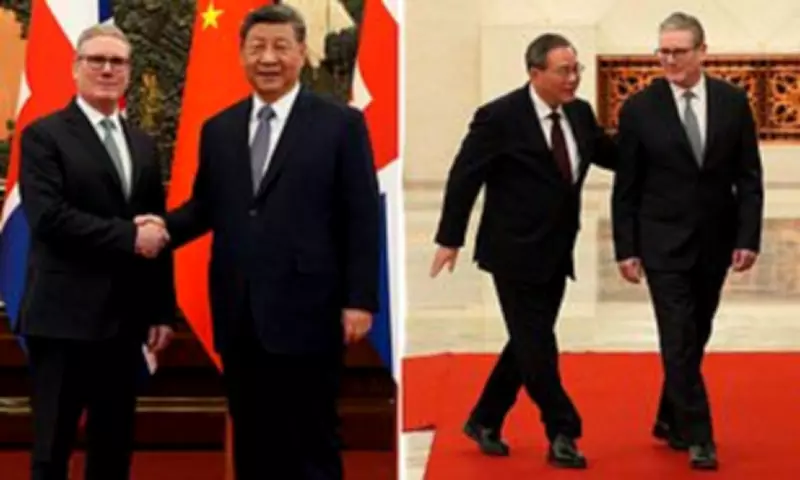
Prime Minister Keir Starmer has concluded his high-profile visit to China with what critics are describing as minimal tangible achievements, despite extensive diplomatic efforts and significant travel. The trip, which involved a 5,000-mile journey for what was billed as potentially "history-making" talks with President Xi Jinping, has yielded only modest outcomes that have sparked considerable political backlash.
Limited Concrete Results from Beijing Summit
The Prime Minister returns to Britain with two primary concrete achievements: a reduction in tariffs on whisky exports from 10 percent to 5 percent, and the elimination of visa requirements for British tourists and business travellers on short visits to China. The whisky tariff reduction is estimated to be worth approximately £250 million over five years, primarily benefiting Scottish producers. The visa changes mirror arrangements already established between China and other European nations like France and Germany.
Significant Diplomatic Shortcomings Highlighted
Despite the friendly atmosphere and nearly three hours of discussions between the two leaders – including an 80-minute bilateral meeting followed by a private conversation with only Sir Keir's national security adviser Jonathan Powell present – several key diplomatic objectives remained unfulfilled. Most notably, Sir Keir failed to secure commitments regarding the release of British democracy activist Jimmy Lai, who remains imprisoned in Hong Kong, or the lifting of sanctions on British parliamentarians who have criticised China's human rights record.

Furthermore, discussions about Ukraine yielded no indication that President Xi would reconsider China's support for Russia in the ongoing conflict. Downing Street declined to confirm whether Sir Keir had raised concerns about Chinese intelligence services attempting to infiltrate Parliament or hacking the phones of aides to former Conservative prime ministers.
Political Criticism Intensifies Over Approach
The visit has drawn sharp criticism from political opponents who have questioned the Prime Minister's judgment and approach. Conservative leader Kemi Badenoch told the Daily Mail: "President Xi's endorsement of Labour speaks volumes about Keir Starmer's judgment, and his inability to act in our national interest." She added that the Prime Minister's economic policies make Britain "utterly dependent on China" through reliance on Chinese wind turbines, solar panels, and car batteries.
Former foreign secretary Sir James Cleverly was particularly scathing, stating: "Is that it? Having contorted himself to please Beijing, Starmer's 'big win' is getting the same visa deal that France and Germany already have. He sells himself, and the UK, so cheaply. It's pathetic."
Controversial Invitation and Historical Context
Adding to the controversy, Number 10 has opened the door to President Xi visiting Britain again, despite the Chinese leader not having visited the UK since David Cameron's "golden era" of relations a decade ago. This potential invitation has sparked fresh outrage among critics who point to ongoing concerns about Chinese espionage activities and human rights issues.
During their meeting, President Xi made reference to the "twists and turns" in China-UK relations in recent years, while specifically praising previous Labour governments for their contributions to bilateral relations. He stated: "China stands ready to develop with the UK a long-term and consistent strategic partnership. It will benefit our two peoples."
Defence of Diplomatic Approach
Sir Keir defended his approach, telling President Xi that he wanted a "more sophisticated" relationship with China, which he described as a "vital player on the world stage." When questioned about whether he had raised human rights concerns including the treatment of Uyghurs and Jimmy Lai's imprisonment, the Prime Minister stated that the leaders had held a "respectful" discussion on these matters.

Downing Street sources indicated there had been "progress" on the issue of sanctioned British parliamentarians, with the Chinese readout of the meeting referring to "stronger exchanges between the legislative bodies," though no formal agreement was reached. The Prime Minister's spokesman emphasised that "a reset relationship with China, that it's no longer in an Ice Age, is beneficial to British people and British business."
Security Concerns and Broader Implications
Critics have also highlighted security concerns, particularly referencing Sir Keir's previous approval of what has been dubbed a "super-embassy" for China in London, despite warnings from security services that it could become a "spy hub." Luke de Pulford of the Inter-Parliamentary Alliance on China summarised the sceptical view of the visit's outcomes: "It's not that he didn't get enough. He doesn't appear to have got anything."
The visit represents the first prime ministerial trip to China in eight years and was accompanied by Business Secretary Peter Kyle, Treasury minister Lucy Rigby, and a delegation of 54 business and cultural leaders. Despite the fanfare and extensive preparations, the limited results have raised questions about the UK's diplomatic strategy toward China and the balance between economic engagement and principled foreign policy.