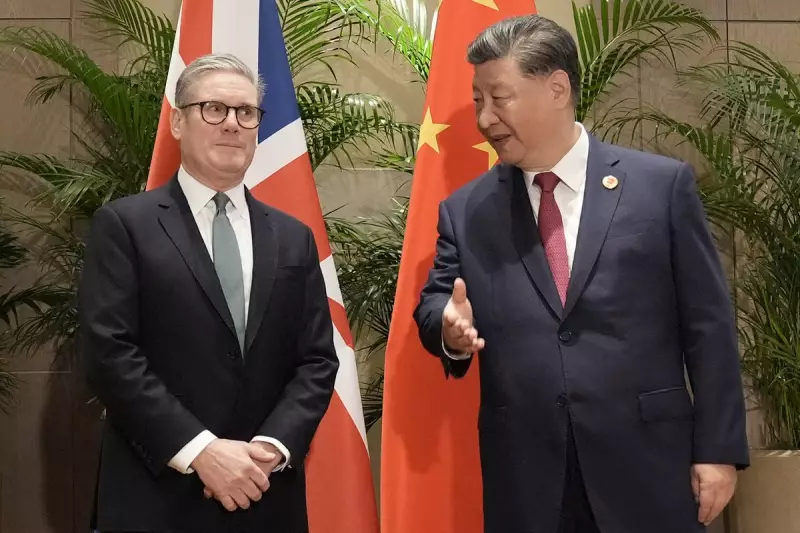
Starmer's High-Stakes Beijing Mission Amid Domestic and International Headwinds
Sir Keir Starmer's departure for Beijing marks a significant diplomatic moment, as he becomes the first British prime minister to visit China in eight years. However, this carefully planned journey arrives at what many political observers consider an exceptionally challenging juncture, both domestically and on the global stage.
A Trip Overshadowed by Internal Labour Party Unrest
While the prime minister prepares for high-level talks with Chinese President Xi Jinping, considerable political turbulence continues to swirl within his own party back in Westminster. The timing of this five-day absence from the UK political scene is particularly delicate, given the intensifying speculation surrounding potential leadership challenges.
Senior figures including Greater Manchester Mayor Andy Burnham, Health Secretary Wes Streeting, and former deputy prime minister Angela Rayner are all reportedly involved in various degrees of political manoeuvring. The situation bears some historical parallels to Margaret Thatcher's fateful 1990 trip to Versailles during her own leadership crisis, though Starmer's position remains less immediately precarious.

The prime minister's recent efforts to reassure Labour MPs through personal meetings in parliamentary tea rooms will be interrupted precisely when his physical presence might be most valuable. With growing discontent over the decision to block Andy Burnham from contesting the Gorton and Denton by-election, Starmer's absence provides opponents with additional ammunition for their "never here Keir" criticisms regarding his international travel commitments.
Navigating Complex Geopolitical Waters
Beyond domestic political considerations, Starmer's China visit occurs during a period of significant strain in the United Kingdom's relationship with the United States. Relations with President Donald Trump have deteriorated noticeably, with public mockery of British foreign policy decisions and threats of trade tariffs creating substantial diplomatic friction.
Particularly damaging has been perceived American disrespect toward British veterans who served alongside US forces in Afghanistan. Furthermore, Starmer's reluctance to accept an invitation to join Trump's Gaza peace initiative signals a notable cooling in the special relationship that has traditionally underpinned UK foreign policy.
This deteriorating transatlantic dynamic fundamentally undermines Starmer's previously articulated vision of positioning Britain as "the bridge" between America and Europe, adding another layer of complexity to his diplomatic calculations in Beijing.
Controversial Context Surrounding UK-China Relations
The prime minister's visit follows several contentious developments in bilateral relations that will inevitably colour the diplomatic discussions. The recent government approval for a new Chinese "super embassy" in central London, despite security concerns raised by MI5, has generated significant controversy.
Equally problematic is the ongoing fallout from the Chagos Islands agreement with Mauritius, which some security analysts believe could inadvertently expand Chinese influence in the Indian Ocean region. This concern has particularly vexed the Trump administration, further complicating the already strained UK-US relationship.
Additional points of tension include China's treatment of political dissidents in Hong Kong, the imprisonment of British citizen Jimmy Wu, human rights concerns regarding the Uyghur population, and allegations of Chinese intellectual property theft and political interference within the United Kingdom. The abandoned trial of two suspected Chinese spies in Parliament continues to generate criticism directed at Starmer's government.
Economic Imperatives Driving Diplomatic Engagement
Despite these substantial challenges, compelling economic realities underpin the prime minister's decision to pursue enhanced engagement with Beijing. Following Chancellor Rachel Reeves's similar mission last year, Starmer faces pressing needs to attract Chinese investment to stimulate Britain's sluggish economic growth.

With wealthy individuals and capital increasingly departing the UK amid international uncertainty, and with major European counterparts like France and Germany actively courting Chinese investment, Starmer finds himself in a position where diplomatic outreach becomes economically necessary. The prime minister essentially continues the previous Conservative government's policy of pragmatic engagement with China while maintaining vigilance regarding security concerns.
As Sir Keir Starmer embarks on this diplomatically delicate mission, he must balance multiple competing priorities: addressing legitimate human rights and security concerns, pursuing vital economic investment, managing deteriorating relations with the United States, and containing domestic political challenges. The success or failure of this high-stakes diplomatic venture could significantly influence both Britain's international standing and the prime minister's own political future.