Starmer's Beijing Summit: Visa-Free Deal Inked as UK-China Relations Reset
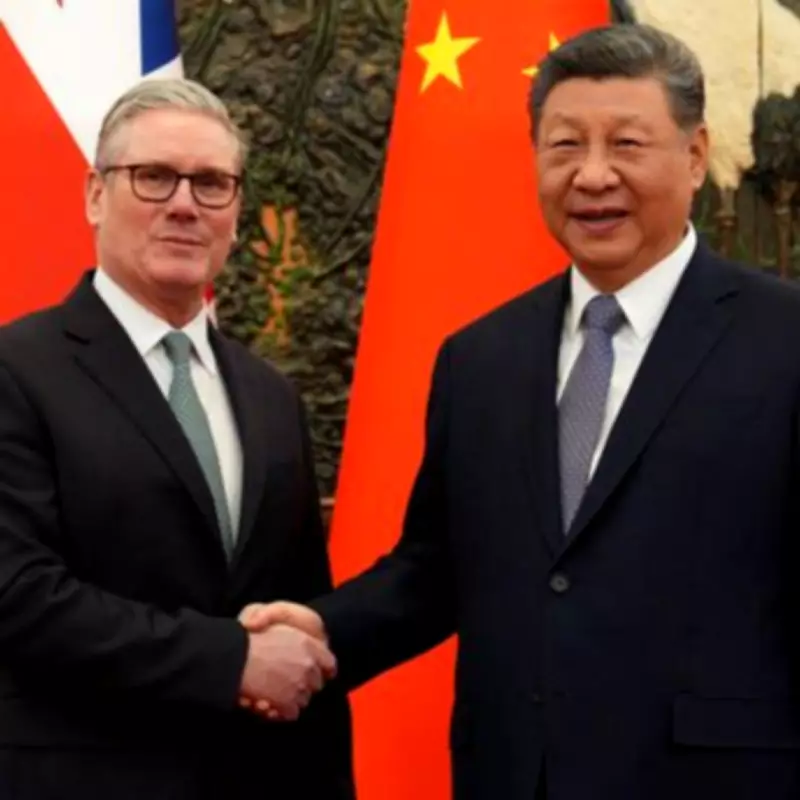
Prime Minister Keir Starmer has embarked on a significant diplomatic mission to Beijing, engaging in approximately three hours of high-level talks with Chinese President Xi Jinping. The discussions, held at the iconic Great Hall of the People, marked the first visit by a British Prime Minister to China in eight years, signalling a potential thaw in relations between the two nations.
A Ceremonial Welcome and Substantive Dialogue
President Xi Jinping extended a ceremonial welcome to the Prime Minister, complete with a lavish state banquet, underscoring the importance Beijing places on this diplomatic engagement. The talks were described by Downing Street as warm, with the leaders reportedly bonding over shared interests in football and the works of Shakespeare. However, beneath the cordial surface, Mr Starmer did not shy away from addressing contentious issues.
The Prime Minister directly challenged President Xi on several sensitive matters, including the imprisonment of British national and pro-democracy campaigner Jimmy Lai. The ongoing conflict in Ukraine was also raised, though Mr Starmer declined to specify whether he pressured Beijing to take a more assertive role in restraining Russia's actions.

Rebuilding a Fractured Relationship
This visit represents a concerted effort by the Starmer government to mend ties with the world's second-largest economy, following a period of significant deterioration in UK-China relations. Tensions had escalated in recent years over allegations of Chinese espionage, human rights concerns, and national security disputes. In his remarks, President Xi acknowledged that the bilateral relationship had experienced twists and turns that did not serve the interests of our countries.
In what appeared to be a pointed reference to previous Conservative administrations, President Xi noted that in the past, Labour governments made important contributions to the growth of China-UK relations. He emphasised the need for both nations to rise above differences and work together for the sake of world peace and stability, quoting the Chinese proverb: Range far your eye over long distances.
Economic and Travel Breakthroughs
The summit yielded several tangible outcomes, most notably an agreement to allow British citizens visa-free travel to China for stays of up to thirty days. This move is expected to significantly simplify travel arrangements and boost tourism and business exchanges between the two countries.
In a substantial boost to the Scottish whisky industry, China agreed to reduce tariffs on whisky imports from ten percent to five percent. This reduction is projected to provide approximately £250 million in benefits to the sector over the next five years, given that China represents Scotland's tenth-largest market for whisky exports.
Both nations also committed to working towards a comprehensive services agreement, which would establish clearer rules for UK companies operating in China. This is particularly significant as the United Kingdom is the world's second-largest exporter of services, encompassing sectors such as finance, healthcare, and legal services, where demand from the Chinese market continues to grow.
A More Sophisticated Approach
Prime Minister Starmer articulated his vision for a more sophisticated relationship with China, arguing that global turbulence directly impacts British citizens through rising prices and national security concerns. He stated, China is a vital player on the global stage and it is vital that we build a more sophisticated relationship.
Drawing on a Chinese idiom about blind men describing different parts of an elephant, Mr Starmer told business leaders in Beijing that broader engagement was essential to seeing the whole elephant and understanding China comprehensively. He emphasised that his government's outward-facing strategy was designed to benefit ordinary Britons, noting that events abroad affect everything that happens back in our home countries, to prices on the supermarket shelves to how secure we feel.

Domestic Criticism and Future Engagements
The Prime Minister's diplomatic overtures have attracted some criticism domestically. Conservative MP Alicia Kearns, former chair of the Commons Foreign Affairs Committee, argued that Mr Starmer should not have gone to China without a precondition that Jimmy Lai would be coming home with him and the sanctions be lifted against MPs. Former security minister Tom Tugendhat, who is among those sanctioned by Beijing, simply stated, We need to stand up for Britain today.
Looking ahead, Downing Street has left the door open for a potential UK visit by President Xi Jinping. When questioned about whether an invitation had been extended, the Prime Minister's official spokesman remarked that a reset relationship with China is beneficial to British people, British business, though no formal invitation has been issued at this stage. President Xi last visited the United Kingdom in 2015 during what was then termed a Golden Era in bilateral relations, which included a much-publicised visit to a British pub with then-Prime Minister David Cameron.
As global dynamics shift, particularly with the unpredictable foreign policy of former US President Donald Trump, both London and Beijing appear to recognise mutual benefits in cultivating a less adversarial relationship. The outcomes of this summit suggest a cautious but deliberate move towards renewed engagement between two of the world's major powers.