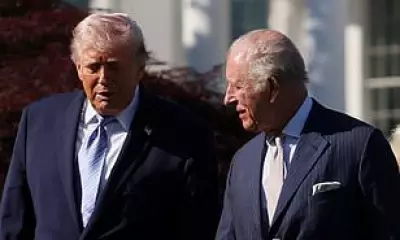
Good morning. On Wednesdays, the political spotlight at Westminster typically falls on Prime Minister's Questions, with the prime minister and leader of the opposition commanding centre stage. However, today's focus is shifting dramatically towards Davos, where Donald Trump is due to speak this afternoon. European and other democratic leaders are growing increasingly concerned that his imperialistic ambitions regarding Greenland could potentially tear apart the NATO alliance. Consequently, most MPs, and likely a majority of Guardian readers, will be far more interested in what the US president has to say than in the usual parliamentary theatrics.
Pressure on Starmer to Adopt a More Robust Stance
Some opposition leaders and Labour MPs are urging Keir Starmer to adopt a firmer, more confrontational approach towards Trump's provocations. They point to figures like Mark Carney, the Canadian prime minister, Gavin Newsom, the Canadian governor, Emmanuel Macron, the French president, Gordon Brown, the former Labour prime minister, and even Bart De Wever, the Belgian prime minister, as examples of leaders who have taken stronger stands. These voices argue that Starmer should match their robustness in addressing what they see as a significant threat to international stability.
Starmer's Deliberate Strategy of Restraint
Despite these calls, Keir Starmer has so far resisted adopting a more aggressive posture. While he has clearly stated his opposition to Trump's suggestion that the US should be allowed to buy or annex Greenland, he has carefully avoided making any provocative statements. Furthermore, he has implied that the UK would not join the European Union in imposing retaliatory tariffs on the US, even in response to the tariffs Trump has threatened against NATO countries that oppose his Greenland ambitions.

In a detailed analysis, Pippa Crerar explores the reasoning behind Starmer's cautious approach and explains why his cabinet colleagues are supporting this "keep calm and carry on" strategy. The analysis suggests that Starmer is prioritising long-term influence and diplomatic leverage over short-term popularity or rhetorical victories.
Cabinet Backing for the Prime Minister's Approach
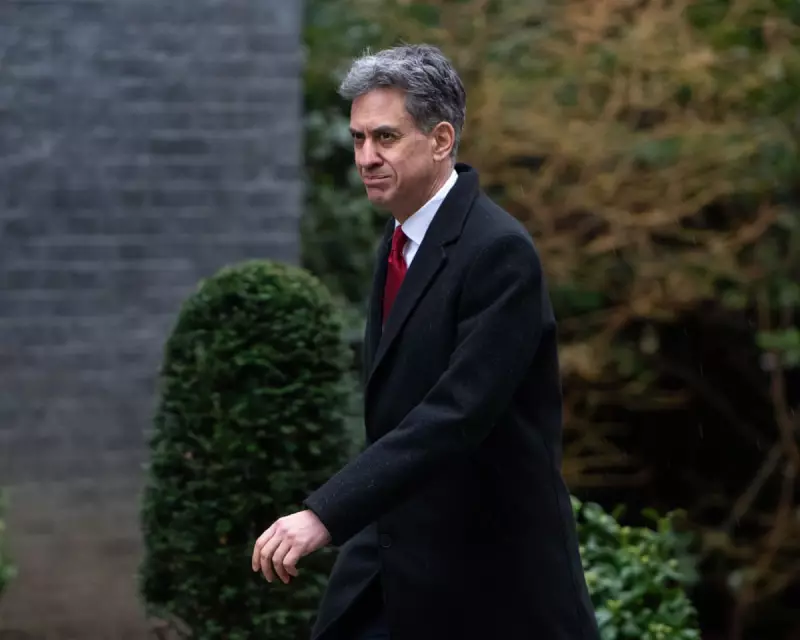
This morning, Energy Secretary Ed Miliband publicly endorsed Starmer's handling of the situation. In an interview with Sky News, Miliband stated, "The bigger picture here is that the prime minister is, I think, navigating a really difficult international situation with great skill and in our national interest. I know some people will want to say, why hasn't the prime minister been matching Donald Trump tweet-for-tweet, all of that. I honestly say to you, we would be in a much worse position as a country."
Miliband emphasised that Starmer's calm leadership had previously secured the first trade deal with the US and achieved the lowest tariffs. He added, "Now this is a very challenging situation, and we've got a principle, which is we seek common ground with Donald Trump, but where we disagree, we say so, and that's what he said on Greenland. But no, I think Keir Starmer's leadership is absolutely right on this and I think at this stage, it's about de-escalation and finding a way through this tricky situation."
Today's Political Agenda
The day's events highlight the intersection of domestic and international politics:

- Noon: Keir Starmer faces Kemi Badenoch at Prime Minister's Questions in the Commons.
- 1.30pm (UK time): Nigel Farage, the Reform UK leader, delivers a speech at an event in Davos.
- 2.30pm (UK time): Foreign Secretary Yvette Cooper speaks at a separate Davos event.
- Late afternoon: Peers in the House of Lords debate the Children's Wellbeing and Schools Bill. They are expected to vote on an amendment to ban under-16s from using social media, with the vote scheduled for around 6pm.
For those wishing to contribute, comments are open between 10am and 3pm. Including "Andrew" in a message increases the likelihood of it being seen, as posts containing that word are specifically searched for. For urgent matters, social media is recommended; you can reach Andrew on Bluesky at @andrewsparrowgdn.bsky.social. Although The Guardian no longer posts from its official X accounts, individual journalists like Andrew remain active there at @AndrewSparrow, where he will see and respond to messages if necessary. Reader corrections and questions are always valued, with efforts made to reply to as many as possible, either below the line or within the blog.