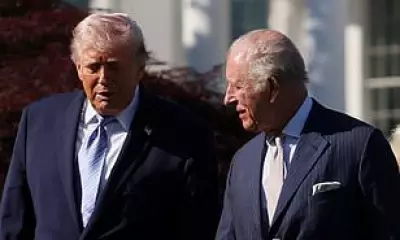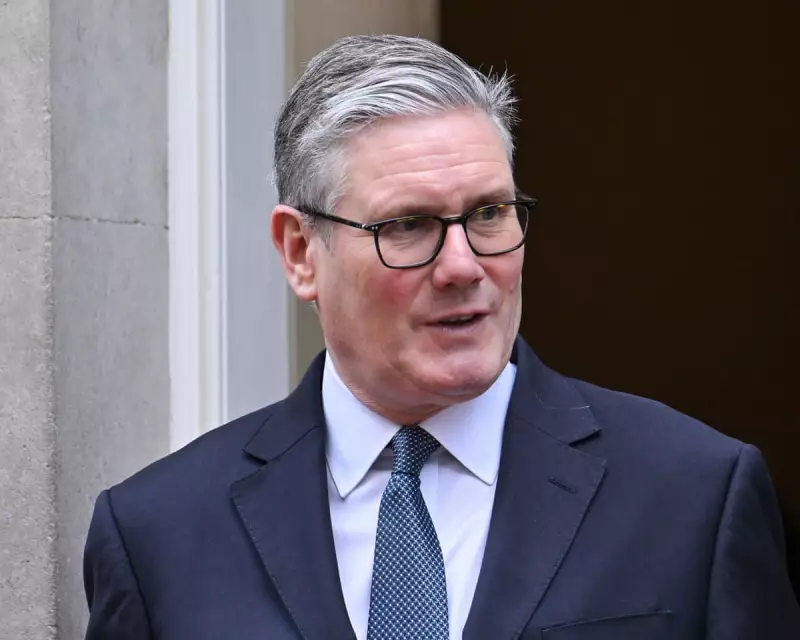
Prime Minister Keir Starmer finds himself navigating treacherous diplomatic waters as his handling of the relationship with US President Donald Trump comes under unprecedented scrutiny. The Labour leader's measured approach, characterised by private diplomacy rather than public confrontation, has sparked intense debate within Westminster and beyond.
The 'Keep Calm' Strategy Under Fire
Starmer's preference for "calm discussion" over "gesture politics" faces mounting challenges as Trump continues to make unpredictable diplomatic moves. Within just twenty-four hours of Starmer's carefully crafted Downing Street press conference, where he emphasised finding a "pragmatic, sensible and sustained" path forward, the US president launched an extraordinary attack on the UK's Chagos deal - an agreement he had previously endorsed.
Divided Opinions in Westminster
The prime minister's strategy has exposed significant divisions within British politics. Liberal Democrat leader Ed Davey has described Trump as "a bully" and "an international gangster," arguing that "the only way to deal with a bully is to stand up to them." This sentiment finds echoes among some Labour MPs who privately question whether Starmer's approach amounts to appeasement.

However, cabinet ministers have largely rallied behind their leader's strategy. Chief Secretary to the Treasury Darren Jones defended the approach, stating that "private, proper diplomacy" had proven effective on issues ranging from tariffs to Ukraine support. "British diplomacy is working," Jones insisted, while acknowledging the unconventional nature of current geopolitical discussions.
The Machiavellian Dilemma
The philosophical underpinnings of Starmer's approach can be traced to his national security adviser, Jonathan Powell, whose book 'The New Machiavelli' outlines two contrasting strategies for dealing with US presidents. Powell advocates for the private relationship-building approach over public criticism, a prescription that aligns closely with Starmer's natural political instincts.
Scotland Secretary Douglas Alexander offered a colourful defence of the strategy, contrasting it with cinematic diplomacy. "I would rather have Keir Starmer in charge right now than Richard Curtis," Alexander remarked, referencing the 'Love Actually' film's portrayal of international relations. "It's a great film, but it's not a very effective guide to how to do international diplomacy."
Growing Public Disapproval
Recent polling indicates that public dissatisfaction with Starmer's handling of the Trump relationship is increasing significantly. This presents a political challenge for a prime minister who insists that "being pragmatic does not mean being passive" and that mature alliances involve "addressing differences directly and respectfully."
Cabinet Concerns and Calculations
Even within Starmer's own cabinet, concerns persist about the sustainability of the current approach. One minister acknowledged that "we're in completely uncharted territory" and suggested that "Keir may reach a point where he has to recalibrate" if Trump's behaviour becomes more unpredictable.
Another government source highlighted the delicate balancing act: "People want the prime minister to have a good relationship with the US. But I definitely think that if Trump gets even more unpredictable we will have to reassess." The potential for Trump to pursue aggressive territorial claims, particularly regarding Greenland, represents what one cabinet minister described as a potential "gamechanger" that could force a strategic shift.
Damage Limitation Efforts
Amid the diplomatic turbulence, efforts to stabilise UK-US relations continue. US House Speaker Mike Johnson's visit to London included reassurances that he had spoken "at length" with Trump and aimed to "help calm the waters." Meanwhile, at the World Economic Forum in Davos, US Commerce Secretary Howard Lutnick offered warm words to UK Chancellor Rachel Reeves, declaring "We love you. We do" - a sentiment reciprocated by the British minister.

These gestures suggest that senior figures within the Trump administration recognise the need to maintain functional relations with the UK, even as the president himself adopts a more confrontational posture. However, the fundamental question remains whether Starmer's patient, private diplomacy can withstand the unpredictable nature of Trump's foreign policy approach.
As the diplomatic drama unfolds, Starmer faces increasing pressure to demonstrate that his strategy delivers tangible benefits for British interests while maintaining principled positions on international issues. The prime minister's political future may well depend on his ability to navigate these complex transatlantic waters without compromising either Britain's values or its vital security partnerships.