
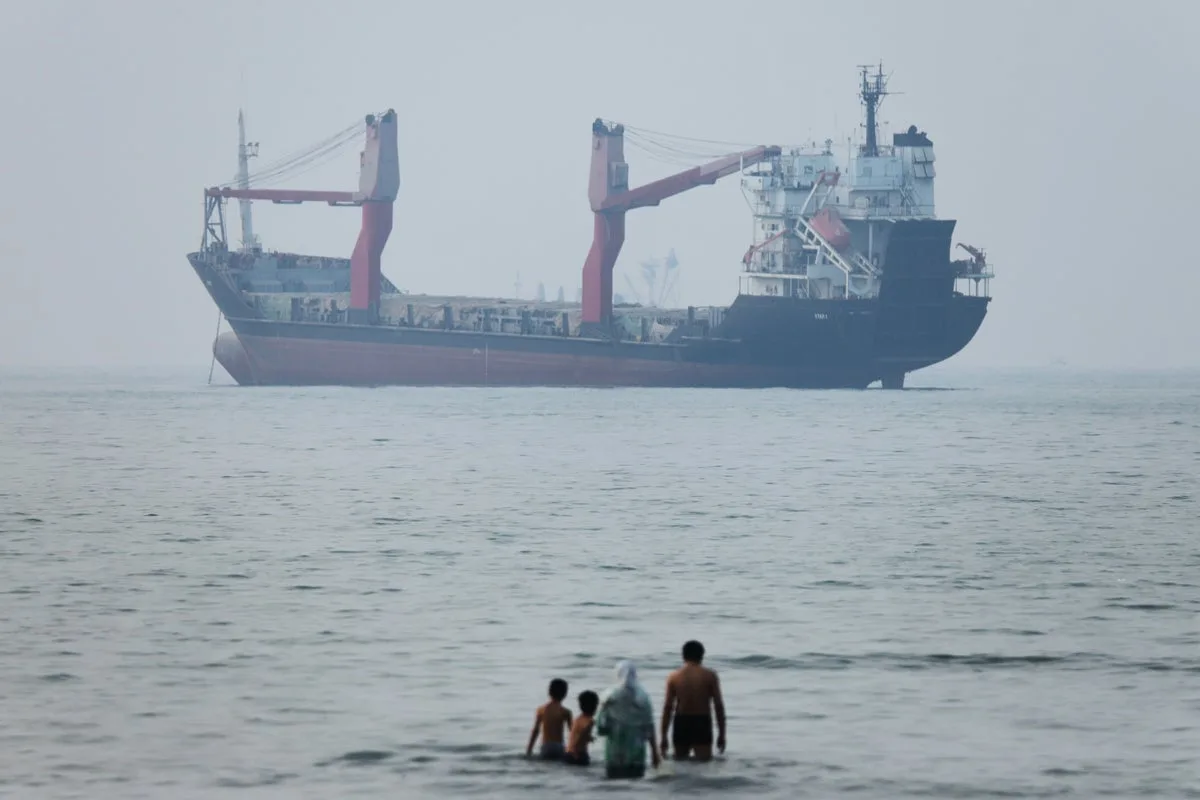
Sir Keir Starmer has urged a return to the US-Iran ceasefire after what he described as a “challenging” two days, following President Donald Trump’s declaration that the interim truce was over. The Prime Minister warned that UK household bills were likely to be affected unless the situation stabilised, and stressed the importance of reopening the Strait of Hormuz.
Speaking to reporters, Sir Keir said the recent escalation had presented additional challenges, but he insisted that the focus must remain on restoring the ceasefire and implementing the understanding between Washington and Tehran. He highlighted the multinational reassurance mission led by the UK and France, which aims to safeguard the critical shipping lane, adding that the impact of higher energy prices was already visible at petrol stations.
President Trump, speaking at the Nato summit in Turkey, said he no longer wished to deal with Iran, describing the Tehran leadership as “scum” and “dishonourable”. His comments came after US forces launched a wave of strikes on Iranian targets, which Washington said was in response to Tehran’s targeting of tankers in the Strait of Hormuz. Iran said it had retaliated with strikes against Bahrain and Kuwait.
The renewed hostilities sent Brent crude oil up by around 6.5% to 79 US dollars a barrel on Wednesday morning, compounding uncertainty in global markets. A declaration agreed by Nato leaders in Ankara said Iran must never possess a nuclear weapon and called on Tehran to fully respect freedom of navigation in the Strait of Hormuz.
In a statement on X, US Central Command said its forces had struck over 80 targets on July 7, including air defence systems, command networks, coastal radar sites and anti-ship missile capabilities, as well as more than 60 Islamic Revolutionary Guard Corps boats in and near the strait. The action was described as an immediate response to recent Iranian attacks on three commercial vessels, including the Marshall Islands-flagged M/T Al Rekayyat, the Saudi-flagged M/T Wedyan, and the Liberian-flagged M/T Cyprus Prosp.




