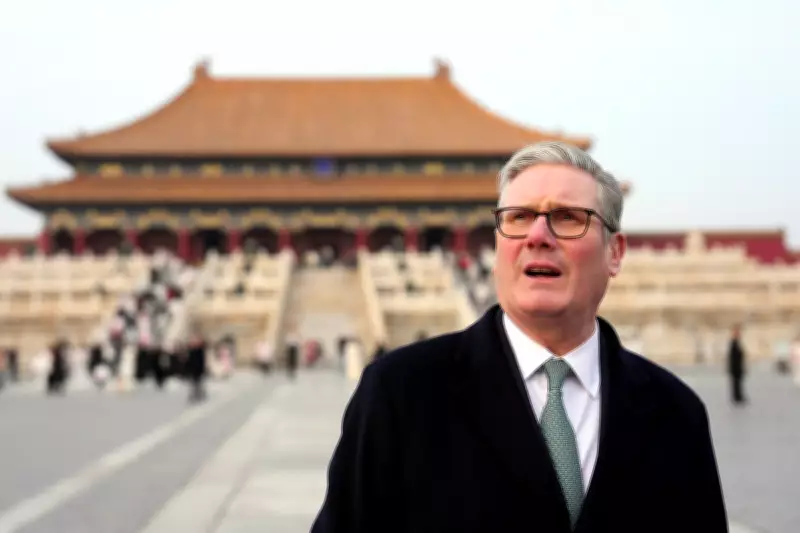
Sir Keir Starmer has wrapped up his contentious diplomatic mission to China, holding final meetings with business leaders in Shanghai before departing for Japan. The Prime Minister's visit, the first by a UK leader since 2018, aimed to bolster economic connections with the world's second-largest economy despite significant political backlash at home.
Trade Agreements and Economic Benefits
During what Starmer described as "productive" discussions with President Xi Jinping, several tangible agreements were reached that promise direct benefits for British businesses and citizens. Most notably, tariffs on Scotch whisky exports to China will be halved to just 5 per cent, providing a substantial boost to the iconic Scottish industry.
Additionally, UK citizens planning short visits to China will no longer require visas for stays under 30 days, simplifying travel arrangements between the two nations. The Prime Minister emphasised these developments during his address to the UK-China Business Council, stating he had "the British people in mind" throughout the negotiations.

Major Investment Announcement
The economic dimension of the visit was further strengthened by Sir Pascal Soriot, chief executive of British pharmaceutical giant AstraZeneca, who announced a massive 100 billion yuan (£10.4 billion) investment in China by 2030. This commitment will expand medicines manufacturing and research and development capabilities, representing one of the most significant business developments from the trip.
Controversy and Criticism
Despite these economic gains, Starmer's approach has drawn sharp criticism from political opponents who accuse the government of "kowtowing" to Beijing. Shadow policing minister Matt Vickers expressed concerns that the government might not fully appreciate "the threat posed to our national security by China," particularly referencing allegations of Chinese espionage activities in Parliament.
The Prime Minister has advocated for a "more sophisticated" relationship with Beijing, arguing that engagement rather than isolation serves British interests better given China's central role in global supply chains.
Human Rights Discussions
Starmer faced pressure to raise several sensitive human rights issues during his meetings, including:
- The imprisonment of Hong Kong pro-democracy campaigner Jimmy Lai
- The treatment of the Uighur minority in Xinjiang
- Chinese sanctions against British MPs
- Beijing's purchase of Russian oil despite Western sanctions
Downing Street described these conversations as "respectful discussions" that formed "part and parcel of the reason to engage" with Chinese leadership. However, officials declined to provide specific details about the exchanges, maintaining only that the government's position calling for Jimmy Lai's immediate release remains unchanged.
Strategic Partnership and Future Relations
Beijing characterised the meetings as establishing a foundation for a "long-term, stable and comprehensive strategic partnership," with Chinese readouts emphasising that China does not "pose a threat" to other nations. Number 10 has left open the possibility of a future UK visit by President Xi, whose last state visit to Britain occurred in October 2015.
On the Ukraine conflict, both leaders were reportedly "clear about the shared aim to see the war brought to an end," though specific agreements or commitments were not detailed in official statements.
The Prime Minister now travels to Tokyo for a working dinner with Japanese counterpart Sanae Takaichi, continuing his Asian diplomatic tour amid ongoing debates about the appropriate balance between economic engagement and security concerns in UK foreign policy.