
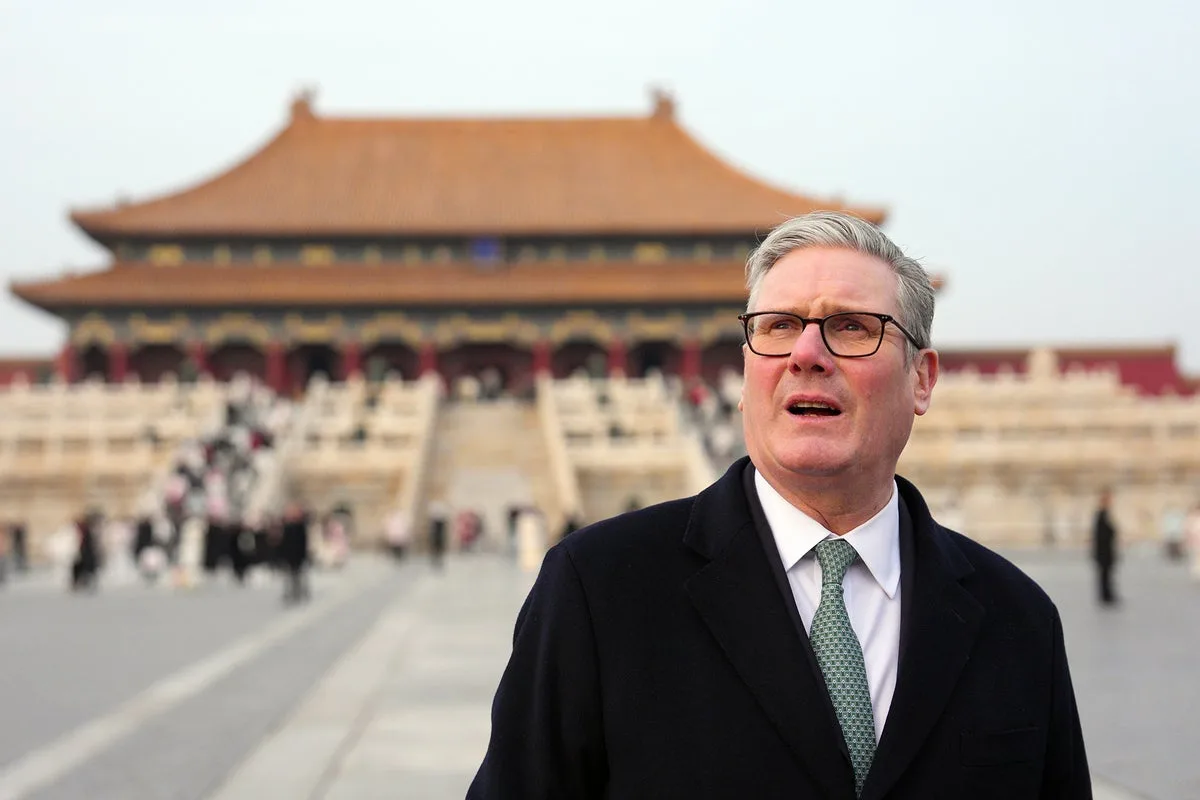
Sir Keir Starmer is concluding a controversial visit to China, aiming to strengthen economic ties, as he holds final meetings with businesses in Beijing. The trip, which has drawn criticism from political opponents, will see him travel to Shanghai before heading to Tokyo for a working dinner with his Japanese counterpart, Sanae Takaichi.
The prime minister has advocated for a "more sophisticated" relationship with Beijing, a stance that has led to accusations of "kowtowing" to President Xi Jinping. Despite the controversy, the visit has yielded tangible agreements, including a halving of tariffs on Scotch whisky to 5 per cent. Additionally, UK citizens planning visits to China for under 30 days will no longer require a visa.
Sir Keir stressed the financial benefits of an improved relationship with China, which is the world's second-largest economy and a major part of global supply chains, in his meeting with Mr Xi. "It is with the British people in mind that I am here today," he said. He also addressed the UK-China Business Council, where chief executive of British pharmaceutical firm AstraZeneca Sir Pascal Soriot announced an investment of 100 billion yuan (£10.4 billion) in China by 2030 to expand medicines manufacturing and research and development.
No 10 also left the door open to a future visit to the UK by Mr Xi, whose last state visit to Britain was in October 2015. The Prime Minister's trip to China is the first by a UK premier since 2018. Sir Keir has faced calls to raise the jailing of Hong Kong pro-democracy campaigner Jimmy Lai and the treatment of the Uighur minority with the Chinese leadership. He said they had a "respectful discussion" on those issues and that this was "part and parcel of the reason to engage".
Downing Street declined to be drawn on details of discussions on contentious issues including Mr Lai, MPs sanctioned by China, the Uighur community and Beijing's purchase of Russian oil hit by western sanctions seeking to cripple its war effort in Ukraine. His official spokesman would not say whether Sir Keir told the Chinese president that Mr Lai should be released, but said the Government's position calling for his immediate release has not changed. According to his son, the 78-year-old British national has spent five years in solitary confinement in treatment which amounts to "torture" under Hong Kong's new national security law.
On Ukraine, the Prime Minister's spokesman said both leaders were "clear about the shared aim to see the war brought to an end". Beijing said the leaders agreed both sides should develop a "long-term, stable and comprehensive strategic partnership", with a Chinese readout saying the country will not "pose a threat" to other nations. Shadow policing minister Matt Vickers told the Press Association on Thursday: "I think people across the country are concerned as to whether Government really understands the threat posed to our national security by China. They've not bought into the idea that you should be over there kowtowing to people who've been sending spies into Parliament."




