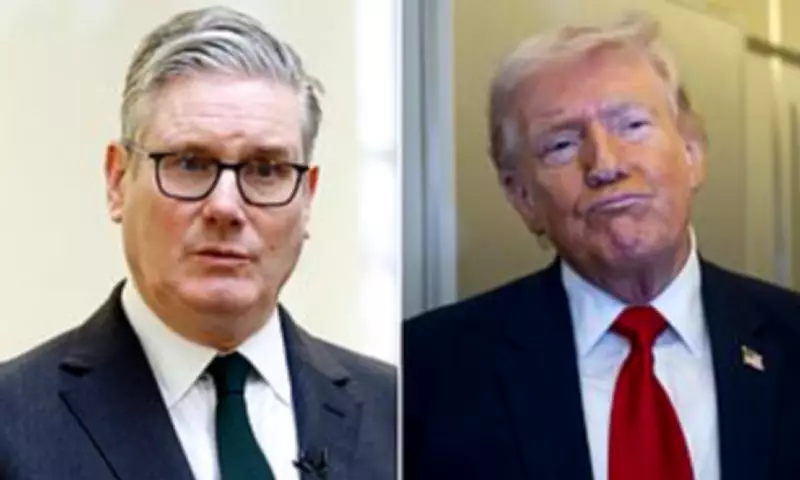
Prime Minister Sir Keir Starmer has hinted at a notably chilly telephone exchange with former US President Donald Trump, firmly stating that decisions regarding Britain's national interests rest solely with him. This declaration comes amidst a barrage of pointed criticisms from Mr Trump, who has openly mocked Sir Keir's leadership and questioned Britain's strategic support in the Middle East.
Tensions Escalate Over Iran Policy
The diplomatic rift emerged after Sir Keir declined to endorse American and Israeli military strikes against Iran, a move that provoked sharp rebukes from Mr Trump. The US President took to his Truth Social platform to deride the Prime Minister, asserting, "We don't need people that join wars after we've already won!" and sarcastically noting that Sir Keir "is not Winston Churchill." Further jabs were aimed at reports suggesting Britain might deploy aircraft carriers to the region, intensifying the public spat.
A 'Special Relationship' Under Strain
With the longstanding UK-US alliance described as deep in crisis, Sir Keir and Mr Trump engaged in a phone conversation on Sunday. However, during a visit to a London community centre on Monday, the Prime Minister offered little indication that the discussion had successfully mended fences. Instead, he pointedly emphasised, "Decisions about what's in Britain's best interests are decisions for the Prime Minister of Britain," underscoring his autonomous stance in foreign policy matters.

Sir Keir elaborated on the ongoing cooperation, stating, "It's really important to emphasise that the US and the UK are working together every single day, as they always have. In relation to Iran, the US are now using UK air bases under the agreement that we've reached. Intelligence is being shared daily, and our military personnel are co-located with US forces in the same bases." Despite this operational collaboration, the Prime Minister reiterated that ultimate strategic choices remain his prerogative.
Domestic Political Fallout and Support
Interestingly, the public disagreement with Mr Trump appears to be bolstering Sir Keir's standing among Labour MPs, following weeks of speculation about his political future. Senior Labour backbencher Dame Emily Thornberry praised the Prime Minister's decision, calling it "right" for Britain to avoid involvement in the US and Israeli attacks. She remarked, "It is very, very unusual for a British PM to say no to an American president. The last time it happened was Harold Wilson – so it was a long time ago. But it was right because there wasn't a plan, it isn't in Britain's interests, and it's not legal."
Other Labour backbenchers have lauded Sir Keir for playing an "absolute blinder" in distancing the UK from American actions, welcoming the strategic split with Washington. This sentiment aligns with opinion polls indicating that more British voters oppose joining strikes against Tehran than support such measures.
Opposition Criticism and Broader Context
In contrast, Tory leader Kemi Badenoch accused Sir Keir of being "too slow" to respond to the Iran crisis and "on the back foot." She claimed the Prime Minister had been distracted by domestic issues, including the Peter Mandelson scandal and internal staffing losses. Mrs Badenoch argued, "He has been too slow to recognise what was coming down the line. We now know he was warned about these strikes much earlier – he did absolutely nothing. He was too slow to let the US use our air bases, too slow to protect our troops in Bahrain and Cyprus, and HMS Dragon remains docked in Portsmouth."
Despite these criticisms, Sir Keir defended his handling of the Iran crisis, highlighting the continuous, high-level discussions with US counterparts. He affirmed, "The discussion with our US counterpart is happening at all levels, all of the time, every single day. That's the nature of the relationship." However, he firmly concluded that safeguarding Britain's interests is his ultimate responsibility, a stance that may redefine the dynamics of the so-called Special Relationship in the coming months.