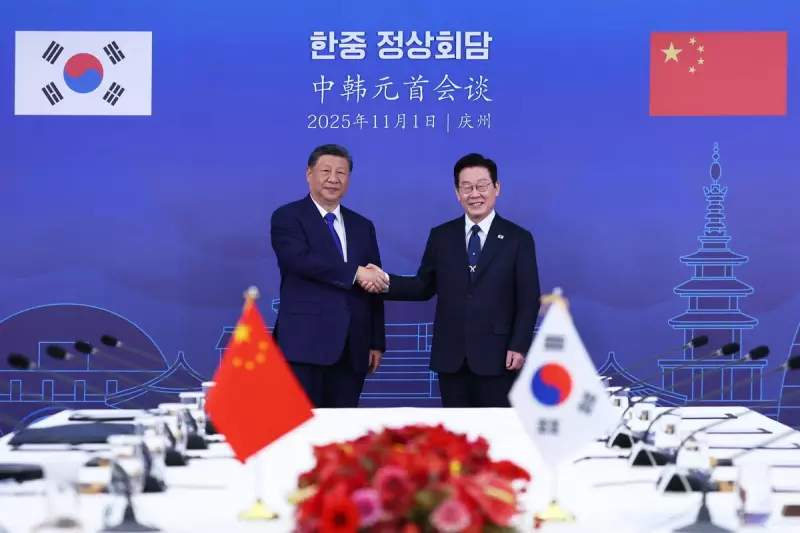
South Korean President Lee Jae Myung has embarked on a crucial four-day diplomatic mission to China, seeking to fortify bilateral relations at a time of rising regional tensions, particularly between Beijing and Tokyo.
A Strategic Visit Amid Regional Friction
The visit, which began on Monday 5 January 2026, is President Lee's first trip to China since he took office in June. It comes against a backdrop of heightened strain between China and Japan, sparked by remarks from Japanese Prime Minister Sanae Takaichi in November. She stated that Japan could intervene if China were to take action against Taiwan, a comment that significantly escalated diplomatic friction.
During his stay, President Lee is scheduled to hold a summit with Chinese leader Xi Jinping, marking their second meeting in as many months. In comments made to Chinese state broadcaster CCTV ahead of the trip, Lee emphasised his government's commitment to a relationship with Beijing founded on mutual respect.

He explicitly reaffirmed South Korea's adherence to the One China Policy regarding Taiwan, a key point of sensitivity for Beijing. Lee also described President Xi as a "truly reliable neighbour," signalling a desire for warmer ties.
Navigating Alliances and Seeking Common Ground
President Lee's visit is a delicate balancing act. While Seoul maintains a strong military alliance with the United States, Lee stated that this cooperation should not lead to confrontation with China. He acknowledged that past misunderstandings have hindered the bilateral relationship and stated the purpose of his journey was to overcome these issues.
"This visit to China aims to minimise or eliminate these past misunderstandings or contradictions, to elevate and develop South Korea-China relations to a new stage," Lee said.
A central item on the agenda is the security situation on the Korean Peninsula. South Korean officials, including National Security Adviser Wi Sung Lac, confirmed that Seoul will request China play "a constructive role" in persuading North Korea to return to denuclearisation talks. This follows a similar appeal made by Lee to Xi during their talks in November.
China, North Korea's primary ally, is widely suspected of not fully enforcing UN sanctions and providing clandestine aid to Pyongyang, actions seen as bolstering a buffer against US influence in the region.
Economic and Diplomatic Engagements
Beyond security, the leaders are set to hold what Adviser Wi described as "in-depth talks on substantive ways" to address shared economic and security challenges. The itinerary also includes meetings for President Lee with Chinese Premier Li Qiang and Zhao Leji, Chairman of the National People's Congress, on Tuesday.
The trip follows a week of major Chinese military exercises around Taiwan, which Beijing framed as a warning against separatist forces and "external interference." These drills were a direct response to a significant US arms sale to Taipei, which prompted China to sanction 20 American companies.
As President Lee engages with Chinese leadership, the world watches to see if this diplomatic push can indeed open a new chapter in Seoul-Beijing relations while navigating the complex web of alliances and tensions that define East Asian geopolitics.