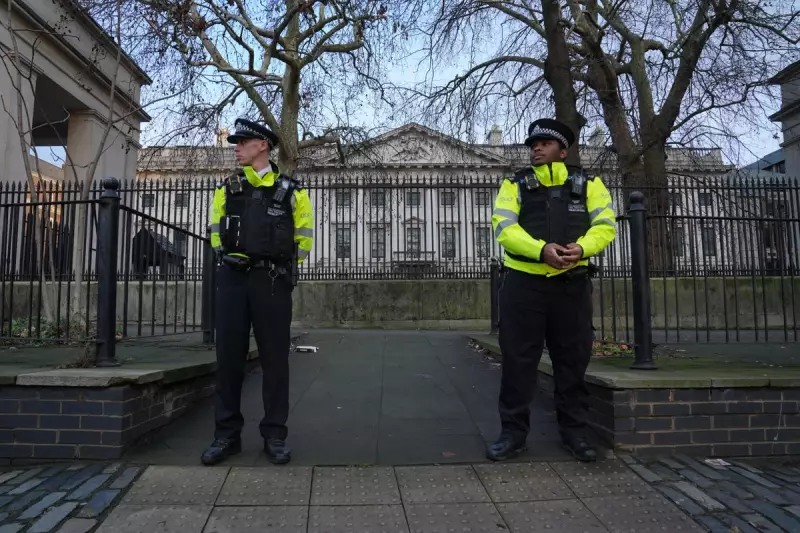
The United Kingdom has formally granted planning permission for a new Chinese embassy complex in London, a decision that has been reached despite substantial national security warnings from the country's foremost intelligence agencies. The approval follows intense scrutiny of multiple security risks associated with the diplomatic facility's proposed location and operational characteristics.
Intelligence Agencies Voice Substantial Apprehensions
Both MI5 and GCHQ have raised significant concerns regarding the embassy's proximity to critical national infrastructure, particularly sensitive fibre-optic communication cables. Intelligence assessments have highlighted potential vulnerabilities that could be exploited for espionage purposes, including the possibility of concealed rooms or technical installations designed for covert surveillance activities.
Transnational Repression and Legal Boundaries
Further security considerations involve the potential for transnational repression against Chinese dissidents and critics residing within the United Kingdom. The government has explicitly stated that the extra-territorial application of Hong Kong's national security law remains unacceptable and will not be tolerated on British soil, establishing clear legal boundaries for diplomatic conduct.

Mitigation Measures and Security Advantages
Security Minister Dan Jarvis has confirmed that a comprehensive package of mitigation measures has been developed to address the identified national security issues. While acknowledging that eliminating every potential risk is impractical, intelligence agencies have worked to implement safeguards to protect sensitive data and communications from potential compromise.
Interestingly, security officials have noted that consolidating China's diplomatic presence into a single, purpose-built site offers certain monitoring advantages for British security services. The concentrated footprint allows for more focused surveillance and security protocols compared to multiple dispersed diplomatic facilities across the capital.
Operational Restrictions and Policing Authority
In a significant concession, the British government has secured agreement that the embassy's public forecourt will not enjoy diplomatic immunity, thereby permitting normal policing and security operations in that area. This arrangement provides authorities with greater operational flexibility to maintain public order and security in the vicinity of the diplomatic compound.
The planning decision represents a delicate balance between maintaining diplomatic relations with a major global power and protecting essential national security interests. Former GCHQ chief Sir Jeremy Fleming has commented that while cybersecurity threats from state actors remain substantial, these concerns alone were insufficient to overturn the planning decision given the mitigation measures implemented.
The embassy development will proceed under what officials describe as unprecedented security oversight arrangements, reflecting the heightened sensitivity surrounding diplomatic facilities in an era of intensified geopolitical competition and technological espionage capabilities.