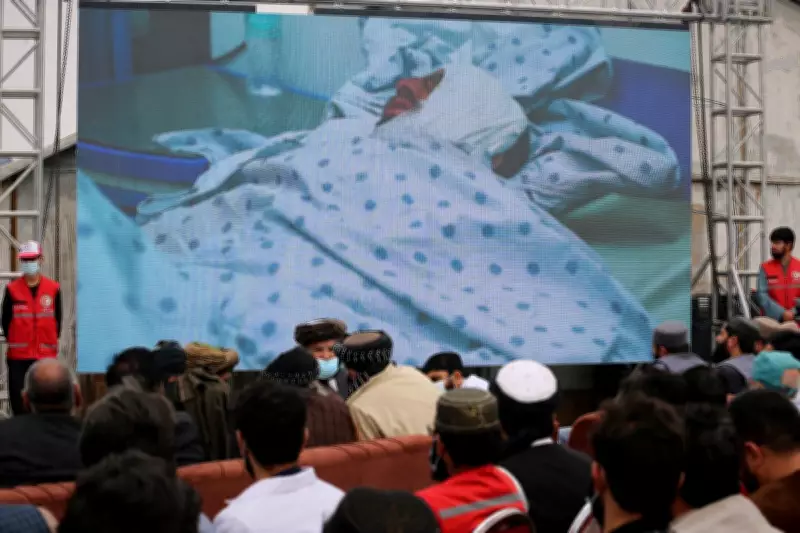
Dozens of people have been laid to rest in a Kabul cemetery during a second mass funeral for victims of an airstrike that devastated a drug rehabilitation centre in the Afghan capital earlier this month. The solemn ceremony on Thursday saw 60 coffins interred in individual graves within a large pit excavated by bulldozers, marking another tragic chapter in the escalating conflict between Afghanistan and Pakistan.
Rising Death Toll and Ongoing Conflict
Afghan officials have reported that hundreds of individuals lost their lives when a Pakistani airstrike targeted the Omid Addiction Treatment Hospital on March 16. The facility, which boasted 2,000 beds, was part of the Taliban government's initiative to address Afghanistan's severe drug addiction crisis. Health Ministry spokesman Sharafat Zaman confirmed on Thursday that the death toll has now reached 411, following the recent deaths of two wounded patients in hospital and the recovery of an additional body from the rubble. A further 263 people sustained injuries in the attack.
International Concerns and Diplomatic Efforts
The United Nations humanitarian affairs office has stated that the total casualty count remains under verification, while Pakistan has denied targeting civilians, asserting instead that it struck an ammunition depot. This incident occurs amidst heightened tensions, with Pakistan declaring an "open war" against Afghanistan last month. The conflict, which began in February, has involved repeated cross-border clashes and airstrikes inside Afghanistan, including several in Kabul.

Pakistan accuses Afghanistan of providing sanctuary for militants, particularly the Pakistani Taliban (Tehrik-e-Taliban Pakistan or TTP), who conduct attacks within Pakistan. Although separate, the TTP maintains close ties with the Afghan Taliban, which assumed power in 2021 during the tumultuous withdrawal of U.S.-led forces. Kabul has refuted these allegations.
Temporary Truce and Renewed Hostilities
In a bid to de-escalate the situation, a temporary ceasefire was brokered last week by Saudi Arabia, Turkey, and Qatar ahead of the Muslim holiday of Eid al-Fitr. However, the truce expired this week, leading to renewed fighting on Wednesday. Afghan officials reported that at least two civilians were killed and others wounded in eastern Afghanistan. Concurrently, the TTP announced it has resumed attacks inside Pakistan after observing its own three-day Eid ceasefire.
Impact on Drug Addiction Efforts
The Omid hospital, situated near Kabul's international airport and adjacent to the former NATO military base Camp Phoenix, was expanded from an existing drug treatment facility. Afghanistan's extensive poppy fields have historically supplied much of the world's heroin, contributing to widespread drug addiction exacerbated by decades of conflict and poverty. The Taliban government had prioritised combating this issue, making the strike a significant setback to public health efforts.
Challenges in Identification and Recovery
The airstrike triggered an intense fire at the hospital, resulting in severe damage to many victims' bodies, which officials say were too badly burned to be identified. This Thursday's funeral follows an initial mass funeral held on March 18 for over 50 victims, underscoring the scale of the tragedy.
The international community has expressed alarm over the conflict, particularly given the region's history with militant organisations such as al-Qaida and the Islamic State group, which continue to seek resurgence. As hostilities persist, the humanitarian toll mounts, casting a shadow over efforts to stabilise the area and address critical health crises like drug addiction.