In the midst of a relentless global news cycle, a significant development in Israel regarding sanctions has largely escaped international attention, despite its profound implications. As nations grapple with responses to a proposed West Bank settlement project that threatens to undermine the viability of a Palestinian state, a protest in Tel Aviv by a violent extremist settler group, already under UK sanctions since October 2024, highlights a critical truth: sanctions on extremist Israelis are proving effective, even in the absence of United States support.
The Backlash and Regulatory Concessions
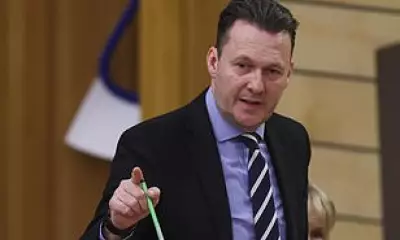
The protest was triggered by a new Israeli banking directive, hastily introduced to appease hardliners, which critics argue fails to adequately protect Israelis from international sanctions. Finance Minister Bezalel Smotrich, who himself faces sanctions from Australia, Canada, and the UK, responded by intensifying his campaign against the settler sanctions movement. Since its inception two years ago, Smotrich has publicly pressured Israeli banks and regulators to resist compliance with sanctions, vowing to use all available tools to prevent enforcement.
In February 2024, Smotrich openly criticized financial institutions for adhering to sanctions on Israeli settlers. The following month, as pressure mounted over banks' compliance with US regulations, the US Treasury issued unusually broad guidance, allowing Israeli banks to process transactions for basic needs of sanctioned settlers without risking penalties. This move effectively diluted the impact of sanctions by reducing enforcement ambiguity and maintaining financial normalcy for targeted individuals. Notably, no other sanctioning countries have issued similar accommodations specific to Israel.
Multilateral Pressure and the E1 Settlement Plan
The persistence of Israel's backlash against sanctions, even after the US lifted its own measures and provided accommodations, demonstrates that Washington's participation is not essential for maintaining pressure through economic tools. Israeli institutions continue to scramble to manage fallout from sanctions imposed by other nations, underscoring the viability of coordinated multilateral action. At a time when the United States increasingly bypasses the rules-based international order, the case for escalating sanctions has only strengthened, irrespective of shifting US priorities or peace plan developments.
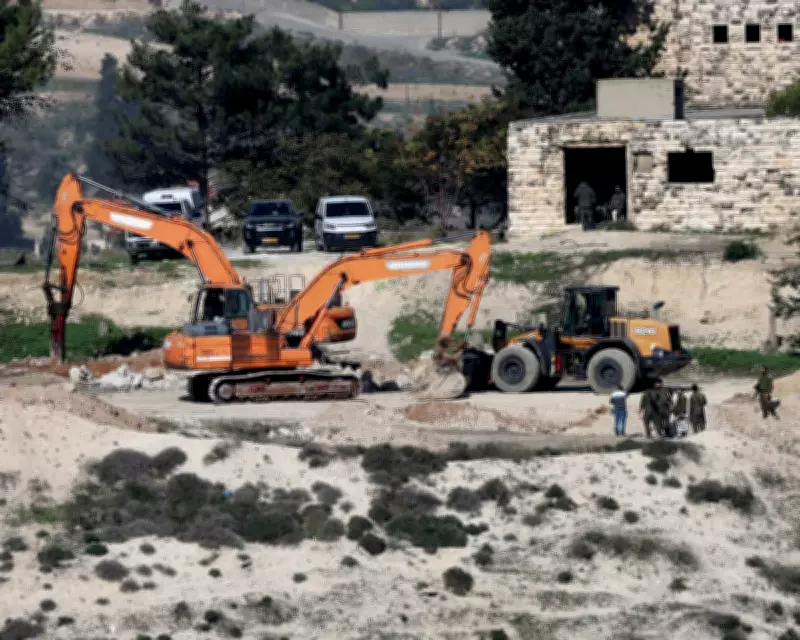
This lesson holds immediate relevance as governments face an opportunity to reinforce their opposition to the E1 settlement plan. The tenders, calling for proposals to develop 3,401 housing units in an area east of Jerusalem, are expected to be awarded on 16 March. Smotrich, who oversees the West Bank settlement planning body that approved the E1 plan, has simultaneously waged war on the sanctions movement, highlighting the urgency for international action.
Global Sanctions Coalition and Future Strategies
For emerging sanctions leaders—including Canada, the EU, the UK, Australia, Japan, Norway, and Singapore—the task now is to restart and escalate the use of targeted economic sanctions, the world's most widely employed foreign policy tool. Ahead of the 16 March tender awards, the Global Sanctions Coalition, comprising civil society organizations like Amnesty International Australia, has urged governments to announce decisive sanctions on any entities involved in the E1 project.
The advancement of the E1 plan will test whether nations are prepared to enforce their red lines or acquiesce to US-backed impunity for Israel. Until recent conflicts, key countries appeared to align with Donald Trump's Gaza peace plan while retreating from accountability efforts, as seen in the slowdown of new sanctions designations in 2025. However, the current moment offers a chance to pivot and establish a multilateral sanctions taskforce, similar to those created in response to Russia's 2022 invasion of Ukraine.
Regulatory Balance and Political Pressure
Israel's hardliners have already secured a key regulatory concession with Directive 412, issued by the Bank of Israel on 30 December 2025. This directive aims to balance the financial interests of sanctioned Israelis with banks' exposure to foreign sanctions risk, allowing discretion in managing risks related to money laundering and terrorist financing. While it prevents blanket denials of service and requires banks to specify available services for sanctioned individuals, it does not compel banks to ignore international sanctions entirely.
Even this compromise sparked protests, with Smotrich assuring that his campaign to shield Israelis from sanctions remains ongoing. The unresolved question is how long this regulatory balance will hold before hardliners seek to amend Israel's banking framework, potentially institutionalizing immunity from sanctions by weakening anti-money-laundering and counter-terrorist financing obligations.
The Risk of Inaction and Escalation
Without credible implementation and strategic escalation by sanctioning countries, sanctions aimed at addressing malign Israeli conduct risk losing effectiveness. Timidity in global sanctions efforts could allow hardliners to undermine Israel's core institutions, including the independence of its financial sector, to insulate malign actors from pressure. As construction tenders for the E1 plan approach, governments have an opportunity to develop a coherent sanctions strategy to translate opposition into tangible pressure on involved companies.
Absent immediate action, the international community may eventually be forced to escalate toward more sweeping measures against Israeli expansionism, such as sanctions on Israel's banking sector akin to those imposed on Russia or Iran. This underscores the need for proactive, multilateral efforts to uphold international law and human rights in the region.