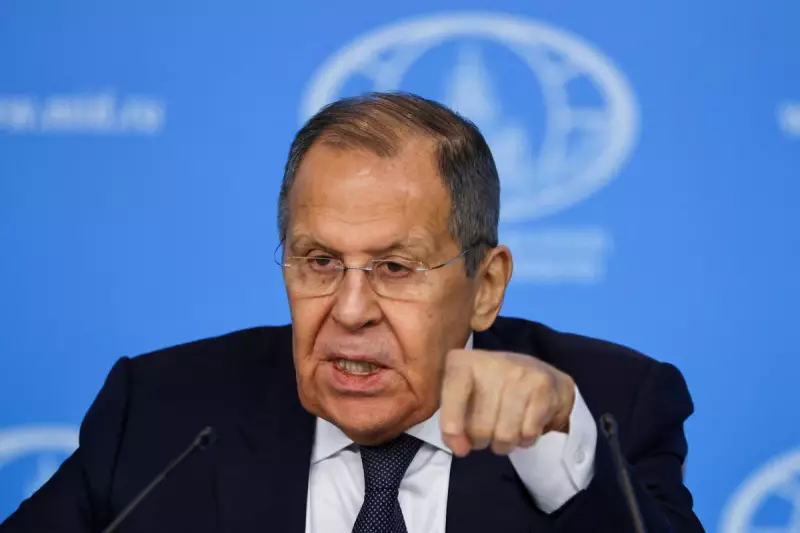
In a pointed diplomatic jab, Russia's Foreign Minister has taken aim at the United Kingdom's very name, suggesting it should no longer be considered 'Great'.
A Remark at the Annual Press Conference
The comments were delivered by Russian Foreign Minister Sergei Lavrov during his annual end-of-year press conference in Moscow on Tuesday 20 January 2026. While discussing historical colonialism, Lavrov turned his focus to Britain's official title.
"I think that Britain should be called simply Britain because 'Great Britain' is the only example of a country which calls itself 'Great'," Lavrov asserted to assembled reporters. He did, however, follow up with a brief "No offence," directed specifically at Ivor Bennett, a correspondent for Britain's Sky News, after his spokeswoman offered the journalist a chance to ask a question.

The minister acknowledged one other historical instance, citing the "Great Socialist People's Libyan Arab Jamahiriya" under the late Muammar Gaddafi. He was quick to add, "But it no longer exists," implicitly contrasting Libya's fate with Britain's enduring name.
The Wider Context of Tensions
This verbal barb is not an isolated incident but fits into a pattern of heightened animosity from Moscow towards London. As the United States, under the renewed presidency of Donald Trump, seeks to reset relations with Russia and broker peace in Ukraine, Britain has found itself elevated to the status of Russia's public enemy number one in official rhetoric.
On Russian state-controlled television, the archaic term "Perfidious Albion" is frequently used by news anchors. The UK is portrayed as a duplicitous global intelligence power, scheming to undermine Russian interests worldwide from Washington to Iran.
A Relationship Frozen in Distrust
The war in Ukraine has cemented a deep freeze in relations, with both Russia and Western nations, including Britain, accusing each other of conducting espionage campaigns on a scale not seen since the height of the Cold War. The UK government maintains that Russia represents a significant and active threat to European security.
Linguistically, the irony of Lavrov's comment is that in the Russian language, the United Kingdom is commonly referred to as "Velikobritaniya" – which translates directly as "Great Britain". His suggestion, therefore, appears to be a deliberate political critique rather than a linguistic observation, targeting a nation Moscow now casts as its primary antagonist on the world stage.