Russia and Ukraine Envoys Gather in Abu Dhabi for US-Brokered Peace Talks
Diplomatic representatives from Russia and Ukraine have assembled in Abu Dhabi for a new round of United States-brokered negotiations, aiming to find a resolution to the nearly four-year-long conflict. The talks, which commenced on Wednesday, are being facilitated by American officials in the United Arab Emirates capital.
Structure and Participants of the Diplomatic Meeting
Rustem Umerov, Ukraine's National Security and Defense Council chief, confirmed the meeting's details via social media, noting that delegations from Moscow, Kyiv, and Washington were all present. The planned two-day discussions began with a full plenary session involving all three parties, before breaking into smaller thematic working groups. The negotiators are scheduled to reconvene as a complete assembly at the conclusion of the talks.
The American delegation is expected to include special envoy Steve Witkoff and Jared Kushner, son-in-law to President Donald Trump, both of whom participated in last month's meeting in Abu Dhabi. These talks form part of a sustained US diplomatic initiative to broker an end to the hostilities, though previous rounds have yielded only incremental progress without achieving major breakthroughs on core issues.

Context of Escalating Military Actions
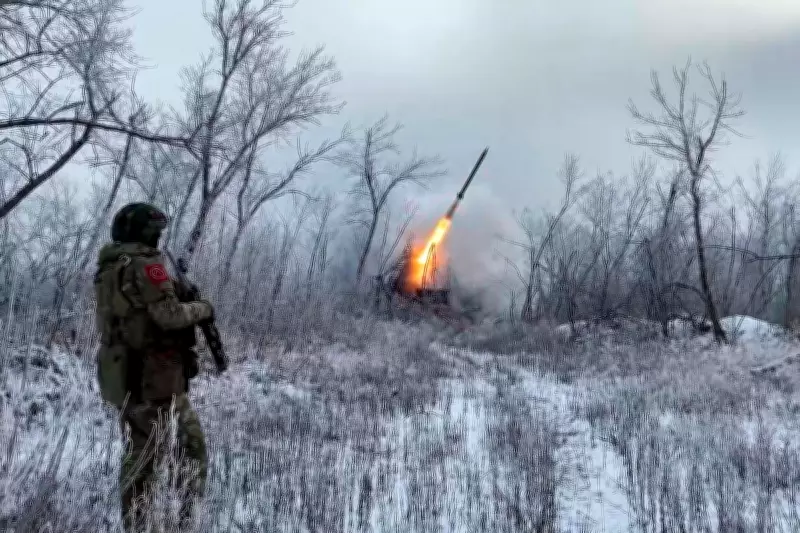
These diplomatic efforts unfold against a backdrop of heightened military aggression, with Ukraine expressing outrage over extensive Russian assaults on its energy infrastructure. Such attacks have become a recurrent feature each winter since Russia's full-scale invasion began on February 24, 2022. A significant bombardment occurred from Monday to Tuesday, involving hundreds of drones and a record thirty-two ballistic missiles, resulting in at least ten casualties.
This escalation persists despite prior indications that Russian President Vladimir Putin had assured President Trump of a temporary cessation of strikes on Ukraine's power grid. Ukrainian civilians are enduring one of the most severe winters in recent memory, with temperatures plummeting to around minus twenty degrees Celsius.
Official Statements and Strategic Analysis
Kremlin spokesman Dmitry Peskov declined to elaborate on the Abu Dhabi discussions, stating that Moscow intends to withhold commentary on the outcomes. He reiterated that Russia remains open to a peaceful settlement but will continue its military campaign until Kyiv accedes to its demands. Peskov justified the attacks on energy facilities by asserting they are linked to Ukraine's military operations.
Ukrainian President Volodymyr Zelenskyy condemned the renewed assaults on the power grid, accusing Putin of duplicity barely four days after a purported moratorium. Conversely, President Trump asserted that Putin had honoured his commitment regarding the temporary pause, while White House Press Secretary Karoline Leavitt remarked that Trump was unfortunately unsurprised by the resumption of attacks.
The Institute for the Study of War, a Washington-based think tank, analysed these developments as a component of Moscow's negotiation tactics. It suggested that the Kremlin might portray adherence to a short-term moratorium as a substantial concession to gain leverage in peace talks, while simultaneously stockpiling missiles for larger strike packages.
Broader Geopolitical and Humanitarian Implications
The Abu Dhabi talks coincide with the impending expiration of the final remaining nuclear arms treaty between Russia and the United States on Thursday. This presents an opportunity for Trump and Putin to extend or renegotiate the pact's terms, potentially averting a new nuclear arms race.
On the ground, the conflict continues to inflict severe humanitarian tolls. The Ukrainian air force reported that Russia launched one hundred and five drones overnight, with air defences intercepting eighty-eight of them. Strikes and falling debris were recorded at multiple locations, including residential areas in the central Dnipropetrovsk region, where a sixty-eight-year-old woman and a thirty-eight-year-old man were killed.

The southern city of Odesa also suffered a large-scale attack, damaging approximately twenty residential buildings and necessitating the rescue of four individuals from beneath rubble. These incidents underscore the ongoing volatility and human cost of the war, even as diplomatic channels remain active.