Russia Targets Students with Lucrative Offers for Drone Roles in Ukraine
Students across Russia are being enticed with significant financial packages to join drone units engaged in the conflict in Ukraine, serving as operators and engineers. This recruitment initiative is part of a broader strategy to bolster military ranks, as evidenced by documents showing companies in the Ryazan region have been assigned quotas to enlist workers for the army.
Intensified Recruitment Amid Battlefield Advances
The push to attract students comes as Russian forces continue to make progress on the battlefield in Ukraine, now in the fifth year of the war. US-brokered peace talks remain stalled due to the Iran conflict, prompting Moscow to diversify its recruitment methods. Despite this, Kremlin officials deny any shortage of recruits, with Dmitry Medvedev, deputy chairman of the Security Council, stating that over 400,000 people volunteered last year and more than 80,000 have joined so far this year.
Kremlin spokesman Dmitry Peskov confirmed that students are being encouraged to join the newly established drone forces, a division created at President Vladimir Putin's direction late last year. He described the offer as open to all, including workers, students, and the unemployed, emphasizing it as an opportunity to join a new type of military unit.

University Incentives and Financial Packages
Several Russian universities are actively promoting these opportunities. The Far Eastern Federal University in Vladivostok promises students who sign up for at least one year extendable academic leave, exemption from education fees, free accommodation, and grants. Additionally, it covers costs for military equipment and weaponry.
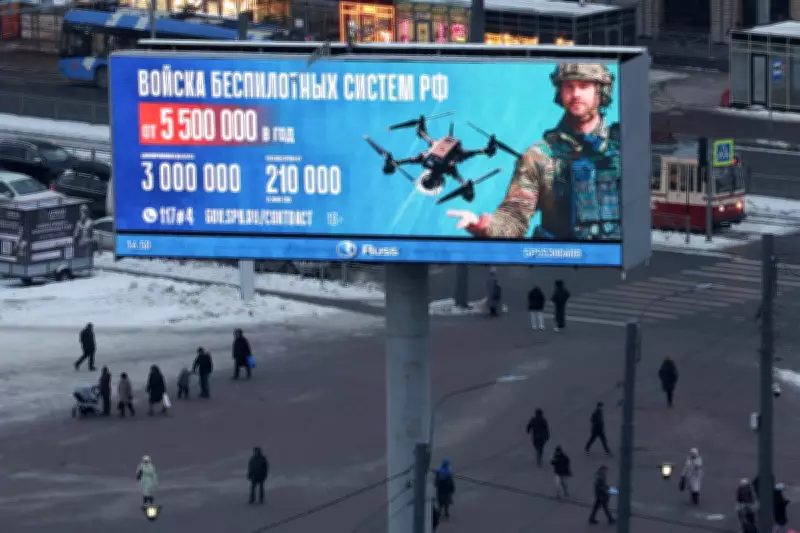
Financial incentives are substantial by local standards, including a first-year salary of 5.5 million roubles (approximately $68,433), a one-off payment of 2.5 million roubles after training, a monthly allowance of 240,000 roubles, and a 200,000 rouble payment from the university. The university stated this offers a unique platform for social and career advancement.
Other institutions, such as the Moscow State University of Civil Engineering and the Russian State Hydrometeorological University in St Petersburg, are offering similar deals, with the latter advertising annual payments up to 7 million roubles (about $87,000) for drone operators.
Criticism and Recruitment Pressure
Critics allege that the recruitment process sometimes involves undue pressure on students, particularly those who have failed exams or are in debt, with reports of threats like expulsion if they refuse to sign up. However, Reuters has not independently confirmed these claims, and Russian authorities maintain that participation is entirely voluntary.
The recruitment drive is complemented by a billboard campaign featuring a young drone operator with glowing eyes, titled "the new indispensables," aimed at appealing to a younger demographic.
Regional Quotas and Broader Implications
In the Ryazan region, Governor Pavel Malkov has mandated that private and public companies meet recruitment quotas for army contracts. Companies with up to 300 workers must provide two recruits, those with up to 500 employees three, and larger firms five recruits. The decree does not specify penalties for non-compliance, but it underscores the government's efforts to replenish military ranks through diverse channels.
This focus on students highlights Moscow's aim to inject skilled personnel into its drone forces, which play a crucial role in the attrition-based conflict. Drone operators, though often stationed away from front lines, are considered high-value targets by both sides, facing significant risks if their positions are exposed.