Russia has declared that "radical changes" are required to the United States' proposed peace plan for Ukraine, directly contradicting optimistic assessments from a senior American envoy who stated an agreement to end the conflict is "really, really close". The stark divergence in positions emerges as Ukrainian President Volodymyr Zelensky prepares for crucial talks with European leaders in London.
Moscow's Hardline Stance and US Optimism
On Sunday, President Vladimir Putin's top foreign policy aide, Yuri Ushakov, was quoted in Russian media stating that Washington must "make serious, I would say, radical changes to their papers" concerning Ukraine. He did not specify what alterations Moscow is demanding. This hardline rhetoric from the Kremlin casts a shadow over the negotiation process.
In sharp contrast, US Special Envoy for Ukraine Keith Kellogg told the Reagan National Defence Forum that a deal to end the war was now within reach. "We're almost there. We're really, really close," Kellogg asserted, describing the efforts as being in "the last 10 metres" – a phase he noted is always the most difficult. The outgoing envoy, who is due to step down in January, identified just two main outstanding issues: the future status of Ukraine's Donbas region and the fate of the Zaporizhzhia Nuclear Power Plant, which is currently under Russian occupation.
Diplomatic Moves on Multiple Fronts
The diplomatic push is unfolding across several continents. President Zelensky confirmed he held a "very substantive and constructive" call with Donald Trump's envoy, Steve Witkoff, and the former president's son-in-law, Jared Kushner. This discussion followed the third day of talks between Ukrainian and US officials in Florida. Zelensky stated that parties had agreed on "the next steps and the format" for further negotiations with America.
However, Ukraine's ambassador to the US, Olga Stefanishyna, injected a note of caution, acknowledging that "difficult issues remain", particularly concerning territory and security guarantees. Meanwhile, on the battlefield, the Russian Defence Ministry claimed its forces had taken control of two villages: Kucherivka in the Kharkiv region and Rivne in Donetsk. These reports have not been independently verified.
European Leaders Converge on London
Against this complex backdrop, a pivotal meeting is scheduled for Monday in Downing Street. President Zelensky will sit down with UK Prime Minister Sir Keir Starmer, French President Emmanuel Macron, and German Chancellor Friedrich Merz. UK Cabinet Minister Pat McFadden framed the moment as "really pivotal", emphasising that the principle behind the talks is for Ukraine to be able to decide its own future and obtain lasting security guarantees.
McFadden also suggested that Donald Trump's initial 28-point peace plan has "evolved since it was first presented", with European leaders playing a role in its development. The discussions are expected to address the concept of a European "reassurance force" to aid Ukraine's post-war recovery, a proposal that risks further provoking the Kremlin.
In a sobering historical parallel, Czech President Petr Pavel warned in an interview that Vladimir Putin's justification for the invasion – protecting Russian speakers – echoes Adolf Hitler's pretext for annexing Czechoslovakia's Sudetenland before the Second World War. Pavel argued that Western reluctance to fully uphold its principles could lead to a catastrophic victory for Russia.
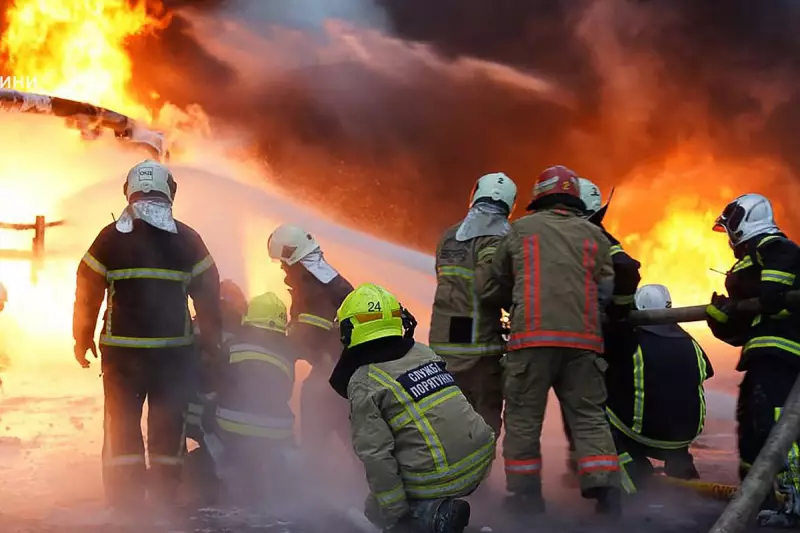
As diplomacy intensifies, the tangible reality of the conflict continues. In a separate development, the sanctioned Russian-linked oil tanker Kairos remains stranded off Bulgaria's Black Sea coast following a suspected Ukrainian naval drone attack, a reminder of the ongoing shadow war at sea. Simultaneously, British soldiers from 3 Rifles have been training in the Arctic with Finnish troops, honing skills for sub-zero warfare on NATO's border with Russia, underscoring the long-term strategic preparations underway.