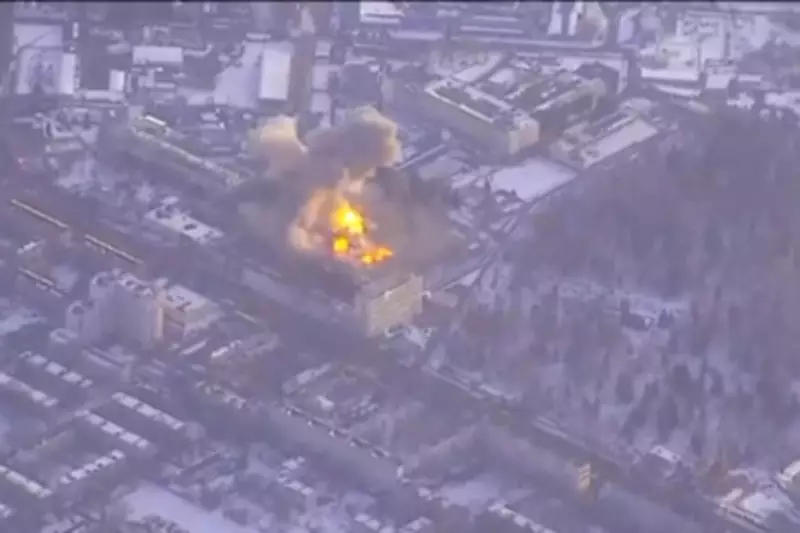
Russia has formally blamed the United Kingdom for its involvement in a devastating Ukrainian military strike on a missile production facility in the western Russian city of Bryansk. The attack, which occurred recently, resulted in seven confirmed fatalities and left 42 individuals injured, according to regional governor Alexander Bogomaz.
Details of the Bryansk Attack
Ukrainian forces targeted a key plant in Bryansk that manufactures critical missile components, a move described by Kyiv as a strategic military operation. In contrast, Moscow has condemned the assault as a 'terrorist attack', alleging it was deliberately aimed at civilian infrastructure and populations. The Russian Investigative Committee has provided preliminary findings, reporting that at least eight missiles were launched during the incident.
UK Missiles at the Centre of Controversy
Among the projectiles used, seven were identified as UK-made Storm Shadow missiles, which Russia claims were supplied by Britain to Ukraine. This allegation has led to sharp criticism from Russia's foreign ministry, which accuses the UK of violating international legal norms by providing such weaponry. The strike reportedly caused significant damage, affecting over 70 infrastructure facilities and vehicles in the area.
International Reactions and Broader Context
The incident has intensified diplomatic tensions, with Russia leveraging the event to criticise Western support for Ukraine. Meanwhile, Ukrainian President Volodymyr Zelensky's recent arrival in Paris for talks with French leader Emmanuel Macron underscores ongoing efforts to bolster international alliances. Russian President Vladimir Putin has publicly pointed fingers at the UK, framing the factory strike as part of a broader conflict narrative.
This development highlights the escalating nature of the Ukraine-Russia war, where accusations of external involvement and breaches of international law continue to fuel geopolitical strife. The use of advanced missiles like the Storm Shadow underscores the technological dimensions of modern warfare, raising questions about arms supply chains and their implications for civilian safety in conflict zones.