In a significant shift of rhetoric, US Secretary of State Marco Rubio has suggested the United States will not assume a day-to-day role in governing Venezuela. This statement on Sunday, 4 January 2026, directly contrasts President Donald Trump's announcement the previous day that America would be "running" the oil-rich nation following the military operation that ousted leader Nicolás Maduro.
A Strategic Pivot and Regional Fallout
Rubio's comments appeared designed to allay fears of a prolonged American nation-building endeavour. He insisted Washington would instead use its control over Venezuela's vast oil industry to force policy changes, stating the US expected this leverage to "lead to results." This nuanced approach stood in stark contrast to President Trump's broad declaration of temporary control.
The operation has sent shockwaves through the region. Venezuela's Defence Minister, General-in-Chief Vladimir Padrino López, condemned Maduro's "cowardly kidnapping," demanding his release and affirming the military's support for the new interim president, Delcy Rodríguez. Rodríguez, the former vice president, was installed by the loyalist Supreme Court, which declared Maduro's absence "temporary," bypassing the constitutional requirement for an election within 30 days.

Global Condemnation and Domestic Scrutiny
The US action has drawn sharp international criticism. The governments of Spain, Brazil, Chile, Colombia, Mexico, and Uruguay issued a joint statement condemning the involvement as "an extremely dangerous precedent for peace and regional security." Meanwhile, in Cuba—a key Venezuelan ally—concern simmered, with authorities rallying in support of Caracas and warning that the US threat "hangs over all of us."
Domestically, the move has sparked protests across the United States and divided political leaders. While Republican Senator Chuck Grassley likened it to the 1989 capture of Panamanian dictator Manuel Noriega, prominent Democrats voiced strong opposition. Senate Democratic Leader Chuck Schumer called Maduro "horrible" but argued, "You don't treat lawlessness with other lawlessness." Illinois Governor JB Pritzker and Senator Tammy Baldwin criticised the operation as unconstitutional and undertaken without congressional approval.
Uncertain Future and Wider Implications
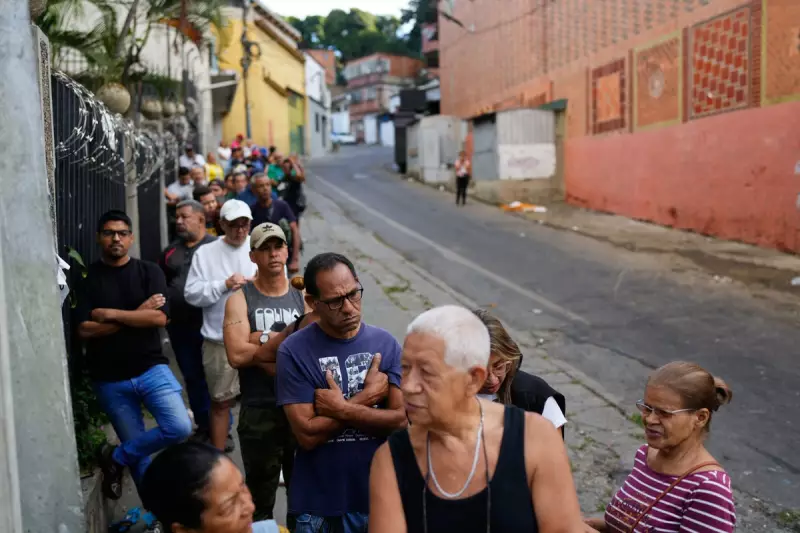
The path forward remains deeply uncertain. A tense calm prevailed in Caracas, with streets mostly empty. President Trump issued a stark warning to interim leader Delcy Rodríguez, suggesting she could "pay a very big price, probably bigger than Maduro" if she fails to align with US objectives. Meanwhile, Homeland Security Secretary Kristi Noem confirmed that Temporary Protected Status for approximately 600,000 Venezuelan immigrants in the US would not be reinstated, leaving them vulnerable to deportation.
The episode has also reignited tensions with other US adversaries. Iran displayed banners in Tehran warning US and Israeli soldiers, while Denmark's ambassador to the US felt compelled to assert Greenland's territorial integrity after provocative social media posts from a White House adviser's spouse. As Nicolás Maduro awaits trial in the notorious Metropolitan Detention Center in Brooklyn, the world watches to see if this intervention will stabilise Venezuela or plunge it—and the region—into further turmoil.