Rubio Warns US Won't Be 'Caretakers' of West's 'Managed Decline' in Munich Speech
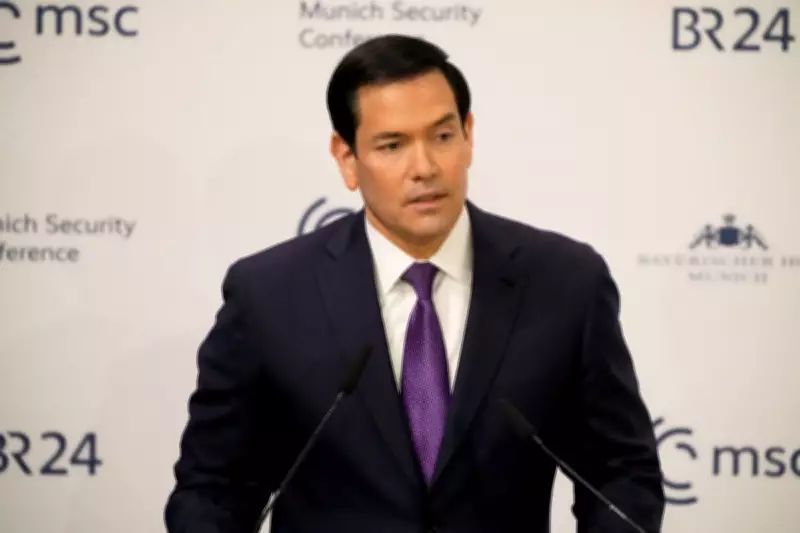
US Secretary of State Marco Rubio delivered a stark address at the Munich Security Conference, stressing the deeply intertwined destiny of the United States and Europe while issuing a sharp critique of past Western foreign policy approaches. His speech, delivered on Saturday 14 February 2026, stood in notable contrast to a previous critical speech by JD Vance, highlighting evolving dynamics within US strategic thinking.
A Rejection of Past 'Delusions'
Rubio was unequivocal in his assessment of recent history, labelling the much-discussed "rules-based global order" a 'dangerous delusion'. He further stated that institutions like the United Nations have demonstrably failed to address the world's most pressing global matters effectively. This rhetoric marked a clear departure from more traditional diplomatic language, signalling a desire for a fundamental reassessment of international cooperation frameworks.
The Secretary of State emphasised that America has 'no interest in being caretakers of the west’s managed decline', a phrase that underscored his call for proactive and reciprocal partnership rather than passive management of perceived geopolitical decay. He acknowledged shared responsibility between the US and Europe for past strategic errors, framing the current moment as one requiring a concerted effort to rebuild trust and capability.

Expectations for European Allies
A core theme of Rubio's address was the expectation of seriousness and tangible reciprocity from European allies. While affirming the necessity of the transatlantic bond, his message contained a clear directive for European nations to assume greater burdens and demonstrate concrete commitments to collective security. This call comes amid a broader European debate on strategic autonomy and defence spending.
Concerns among European delegates were palpable, particularly as Rubio's absence from a key meeting of Ukraine's allies at the same conference raised questions about the depth and consistency of US commitment to the ongoing conflict. This absence was interpreted by some as a symbolic gesture, potentially aligning with his rhetoric about re-evaluating the terms of engagement.
Contrasting Visions and the British Perspective
The conference also featured anticipated remarks from British political figures, adding another layer to the transatlantic discourse. Sir Keir Starmer is expected to call for significantly increased European defence spending and advocate for closer institutional ties with the European Union. His argument reportedly warns against over-reliance on America and cautions European nations against adopting inward-looking, isolationist policies in response to global challenges.
This juxtaposition of American and emerging European viewpoints highlights a critical period of recalibration for the Western alliance. Rubio's speech, rejecting the stewardship of decline and demanding a new, more equitable partnership, sets a challenging agenda for European capitals as they navigate their relationship with a United States redefining its global role and expectations.